Wormholes in Zalonia

Wormholes are an important concept because they connect our world with the universe that the world Azthanian is part of. Apparently, they can only be held open by exotic matter. The Soul Chaser is the only one capable of creating a wormhole to our realm. There are alien races that can create wormholes to Zalonia, but not to Earth. Wormholes happen when two sheets of spacetime are joined together. A wormhole closes because of gravity, so there would be a need for “negative energy” to hold them open. Negative energy is behind the acceleration of the universe’s expansion. Some believe they may exist at the center of very bright galaxies. Matter coming out of one side of the wormhole would collide with matter going in, and this would cause a spectacular display of gamma rays.

Unlike a black hole, a wormhole would leak some of the gravity from the other side. There are weird “odd radio circles” in the sky. Some believe that black holes are a type of wormhole that leads to a white hole.

Exotic matter does not behave like gases, liquids, or solids. Extremely cold helium is one example of exotic matter. It is called superfluid helium, which is a liquid that can climb walls. It might be a key ingredient in making wormholes. Exotic matter that could be related to wormholes is matter with negative mass. Matter with negative mass would push other matter away from it. ‘

In Zalonia, there is an alien race known as the gnonows. They have a base on one of the satellites that float around the planet of Aztharian. In the back of this satellite, there is a wormhole that is consistently open, which allows the Gnonows to return to their home planet at will.

There are sometimes wormholes that open for other alien species, but they don’t stay open for long. They are usually made because the alien was experimenting around. They have to leave quickly because the wormhole won’t last long. There have been some aliens who have gotten trapped in Zalonia for not returning to the wormhole in time.

Sign up for my Newsletter Here

Creating Life – By Ralph Ellefson

The Art of World Building Workbook – By Ralph Ellefson

Fantasy World Building: A Guide To Developing Mythic Worlds and Legendary Creatures – By Mark Nelson

Support Me on Patreon

White Holes of Zalonia

White holes are sometimes seen by the inhabitants of Zalonia. They appear as sudden explosions, and the medes don’t really understand them much. There is a science to it, though:

There are white holes found in space that create explosions and disappear immediately, kind of the opposite of black holes. From afar, White Holes look exactly like black holes. It is like a time reversal from a black hole. It is impossible to enter a white hole. Objects from a white hole can interact with objects on the outside, but nothing can interfere with the white hole. Only the Soul Chaser knows what they are. There is a theory that black holes turn into white holes when they die. This may happen when the black hole gets so small that it no longer obeys the common-sense rules of stars and billiard balls. Quantum randomness takes over and transforms the black hole into a white hole. Some think the white hole might explain the Big Bang.

There is also a theory that white holes are on the opposite side of a black hole. In other words, when something is sucked into a black hole, it explodes out from a white hole in a different part of the universe, or a parallel universe.

White holes could experience a belch. It is described as a black hole’s “time reversal,” a video of a black hole played backwards. Nothing can enter a white hole. Things can leave the white hole, but because nothing can get in, the interior is cut off from the universe’s past: No outside event will ever affect the inside. It would be like a singularity in the past that can affect everything in the outside. In a black hole, the outside universe can influence the inside of a black hole’s horizon, but the interior can’t affect the exterior. No one knows how a white hole might form. Playing a video backwards of a black hole doesn’t make physical sense.

If white holes did form, they probably wouldn’t exist for long. Any outgoing matter would collide with the matter in orbit, and the system would collapse into a black hole.

There is a question of what happens to the internal record when a black hole evaporates away? General relativity won’t let the information out, and quantum mechanics forbids its deletion.

Some think that a white hole is the death of a black hole, but that would violate the general relativity equations. Maybe the black hole grows so small that it no longer obeys the common-sense rules of stars and billiard balls. Quantum randomness takes over, and the black hole transforms into a white hole.

A while hole, similar to a mass to a human hair, wouldn’t have the gravitation of a black hole but would hold all the information swallowed in a previous life. Too small to attract orbiting matter, the white hole might remain stable enough to eventually spit out all the information accumulated by its forerunner. This means that white holes could dominate the universe one day.

The Big Bang’s explosion of matter and energy looks like potential white hole behavior. They are even mathematically identical at times.

White holes appear in the theory of eternal black holes. There are no observed physical processes through which a white hole could be formed. Supermassive black holes might be at the center of all galaxies, and Hawking and others have proposed that these supermassive black holes spawn a supermassive white hole. Hawking argued that the time reversal of a black hole in thermal equilibrium results in a white hole in thermal equilibrium (each absorbing and emitting energy to equivalent degrees).

White holes are predicted as part of a solution to the Einstein field equations known as the maximally extended version of the Schwarzschild metric, describing an eternal black hole with no charge and no rotation. Here, “maximally extended” refers to the idea that the spacetime should not have any “edges” for any possible trajectory of a free-falling particle (following a geodesic) in the space time, it should be possible to continue this path arbitrarily far into the particle’s future, unless the trajectory hits a gravitational singularity like the one at the center of the black hole’s interior. In order to satisfy this requirement, it turns out that in addition to the black hole interior region that particles enter when they fall through the event horizon from the outside, there must be a separate white hole interior region, which allows us to extrapolate the trajectories of particles that an outside observer sees rising up away from the event horizon. The Einstein-Rosen bridge can either connect two black hole event horizons in each universe (with points in the interior of the bridge being part of the black hole region of the spacetime) or two white hole event horizons in each universe (with points in the interior of the bridge being part of the white hole region). It is impossible to enter the bridge, though.

Here is a little for you science nerds:

Some researchers have proposed that when a black hole forms, a Big Bang may occur at the core/singularity, which would create a new universe that expands outside of the parent universe (Fecund universes).

A 2012 paper argues that the Big Bang itself is a white hole. It further suggests that the emergence of a white hole, which was named a “Small Bang”, is spontaneous—all the matter is ejected at a single pulse.
In 2014, the idea of the Big Bang being produced by a supermassive white hole explosion was explored in the framework of a five-dimensional vacuum by Madriz Aguilar, Moreno and Bellini

For white holes to exist, there can’t be a single speck of matter within the event horizon.

Loop quantum gravity

In theory, a black hole singularity would compress down until the smallest possible size predicted by physics. Then it would rebound as a white hole. But because of the severe time dilation effect around a black hole, this event would take billions of years for even the lowest mass ones to finally get around to popping.

WHAT WHITE HOLES ARE IN ZALONIA

  • White holes don’t just release matter…
  • They release possibilities, timelines, and broken pieces of reality

WHAT THEY ACTUALLY DO

1. Reality Spill Points

Effect:

White holes eject things that don’t belong

  • creatures from unknown realms
  • fragments of other timelines
  • objects that shouldn’t exist

2. Time Fracturing Zones

Effect:

Time becomes unstable near a white hole

  • moments repeat
  • people experience future memories
  • time speeds up or slows down

Danger:

Someone could:

  • age rapidly
  • relive the same moment endlessly

3. Memory and Identity Distortion

Effect:

White holes don’t just affect reality—they affect minds

  • people remember things that never happened
  • identities begin to blur
  • someone might “remember” another life

Creepy angle:

Two people might remember being the same person


4. Raw Magic Eruption

Effect:

White holes flood the world with unfiltered magic

  • spells become wildly powerful
  • magic mutates unpredictably

Danger:

  • magic users lose control
  • spells gain unintended effects

 5. World Alteration Events

Effect:

Land itself changes

  • forests grow overnight
  • mountains crack open
  • new ecosystems appear

👉 reality is rewritten locally

 6. “Observers” Are Drawn to Them

Effect:

White holes attract:

  • powerful beings
  • unknown watchers
  • possibly your gnonows

Lore idea:

Some entities don’t want the white holes to stay open


THE BIG RULE

White holes are unstable—and eventually collapse.

When They Collapse:

  • everything they released becomes unstable
  • creatures may vanish
  • people may disappear
  • entire areas may reset or distort

RARE EVENT: WHITE HOLE STORM

Multiple white holes appear at once:

  • reality breaks across regions
  • time fractures everywhere
  • magic becomes uncontrollable

This could be a major series-level event

Read More About White Holes

Sign up for my Newsletter Here

Creating Life – By Ralph Ellefson

The Art of World Building Workbook – By Ralph Ellefson

Fantasy World Building: A Guide To Developing Mythic Worlds and Legendary Creatures – By Mark Nelson

Support Me on Patreon

Comets of Zalonia


Like Earth, there are comets that pass by the skies seen from Aztharian. Some people believe that certain kinds of magic can be used when a comet is visible in the sky. There are certain magic spells that are related to certain comets, especially the ones that pass by more regularly. Here are the known comets and their purpose.

Zagarth

This comet passes by about every 83 years and remains in the sky and can be seen by the human naked eye for about 2 weeks. Species with stronger eye sight can see it for longer. It appears about 6 weeks when it comes to elves and about 12 weeks when it comes to the medes. It is believed that this comet increases psychic abilities and it is a good time to use the Mystic Prophecy cards.

Celestara’s Glimmer

Known for its radiant blue tail that lights up the night sky. It passes by every 233 years. The magical quality of this comet is Starlight Infusion, which temporarily enhances the caster’s magical abilities, making their spells more potent. The ritual is performed under the comet’s glow, the caster draws starlight into a crystal, which is then worn or held to channel the enhanced power. Celestara’s Glimmer: Appearing once every 233 years, it is said that those who make a wish upon Celestara’s Glimmer are granted clarity and vision for their future.

Frostfire Comet

Emits a shimmering, icy glow and is said to bring a chill wherever it passes. This comet comes around every 124 years. The type of magic used with this comet is called the Celestial Ward. It creates a protective barrier around a person or place, imbued with the comet’s energy. The ritual requires the caster to inscribe protective runes on the ground or on an object, invoking the comet’s name.

Dragon’s Breath Comet

Leaves a fiery trail and is associated with powerful elemental magic. This comet is the shortest one and comes around every 59 years. This comet wasn’t known until the Fifth Age, which is the only age that uses air, fire, water, earth, and spirit as the elements. Simple to very complex rituals can be performed when this comet comes around. Note:

Mystra’s Veil

Named after a legendary sorceress, this comet is said to veil the world in a mystical aura. The comet comes by every 147 years. This magic used with this comet is Astral Beacon:

Effect: Summons celestial beings or spirits to aid the caster. Ritual: Performed by lighting a special beacon or bonfire under the comet’s light, using specific herbs and incantations. Believed to be the manifestation of the sorceress Mystra’s power, this comet’s sighting is often accompanied by a surge in magical phenomena.

Glows with a golden light, believed to be a sign of divine favor. The comet comes around once every 401 years. and Rituals During Comet Sightings have to do with prosperity. However, one must approach the ritual in a certain way while facing the north and burning a green and brown candle. Magical Spells Seraph’s Wing.

Seraph’s Wing

A harbinger of hope, its golden light is seen as a divine blessing, and its arrival is celebrated with festivals and rituals of thanksgiving. Eclipse Enchantment Effect: Temporarily cloaks the caster or an object in shadow, rendering them invisible. Comes around every 72 years. Ritual: Must be cast when the comet is directly overhead, using a piece of obsidian and a reflective surface. Chrono

Shift Effect: Allows the caster to manipulate time slightly, either slowing it down or speeding it up. Comes around every 78 years. Ritual: Involves creating a timepiece infused with comet dust, which is used to channel the temporal magic.

Frostfire Comet Appearing during the coldest winters, it brings with it both destruction and renewal, as its icy flames cleanse the land. Usually, a destructive kind of magic comes from magic under this comet, which comes around every 90 years.

Dragon’s Breath Comet

Feared and revered, its appearance is often a sign of great change, marking the rise of new leaders or the fall of old empires. It orbits every 86 years and can be seen for over a week when it passes by. The magic used for this type of magic is generally dark and used on those who are under attack.

Like Earth, there are comets that pass by the skies seen from Aztharian. Some people believe that certain kinds of magic can be used when a comet is visible in the sky. There are certain magic spells that are related to certain comets, especially the ones that pass by more regularly. Here are the known comets and their purpose.

Zagarth

This comet passes by about every 83 years and remains in the sky and can be seen by the human naked eye for about 2 weeks. Species with stronger eye sight can see it for longer. It appears about 6 weeks when it comes to elves and about 12 weeks when it comes to the medes. It is believed that this comet increases psychic abilities and it is a good time to use the Mystic Prophecy cards.

Celestara’s Glimmer:

Known for its radiant blue tail that lights up the night sky. It passes by every 233 years. The magical quality of this comet is Starlight Infusion, which temporarily enhances the caster’s magical abilities, making their spells more potent. The ritual is performed under the comet’s glow, the caster draws starlight into a crystal, which is then worn or held to channel the enhanced power.

Celestara’s Glimmer: Appearing once every 233 years, it is said that those who make a wish upon Celestara’s Glimmer are granted clarity and vision for their future.

Frostfire Comet

Emits a shimmering, icy glow and is said to bring a chill wherever it passes. This comet comes around every 124 years. The type of magic used with this comet is called the Celestial Ward. It creates a protective barrier around a person or place, imbued with the comet’s energy. The ritual requires the caster to inscribe protective runes on the ground or on an object, invoking the comet’s name.

Dragon’s Breath Comet:

Leaves a fiery trail and is associated with powerful elemental magic. This comet is the shortest one and comes around every 59 years. This comet wasn’t known until the Fifth Age, which is the only age that uses air, fire, water, earth, and spirit as the elements. Simple to very complex rituals can be performed when this comet comes around. Note: Perhaps Xandria uses this magic in the fourth book.

Mystra’s Veil

Named after a legendary sorceress, this comet is said to veil the world in a mystical aura. The comet comes by every 147 years. This magic used with this comet is Astral Beacon: Effect: Summons celestial beings or spirits to aid the caster. Ritual: Performed by lighting a special beacon or bonfire under the comet’s light, using specific herbs and incantations. Believed to be the manifestation of the sorceress Mystra’s power, this comet’s sighting is often accompanied by a surge in magical phenomena.

Seraph’s Wing

Glows with a golden light, believed to be a sign of divine favor. The comet comes around once every 401 years. Magical Spells and Rituals During Comet Sightings have to do with prosperity. However, one must approach the ritual in a certain way while facing the north and burning a green and brown candle.

Seraph’s Wing: A harbinger of hope, its golden light is seen as a divine blessing, and its arrival is celebrated with festivals and rituals of thanksgiving.

Eclipse Enchantment

Effect: Temporarily cloaks the caster or an object in shadow, rendering them invisible. Comes around every 72 years. Ritual: Must be cast when the comet is directly overhead, using a piece of obsidian and a reflective surface.

Chrono Shift

Effect: Allows the caster to manipulate time slightly, either slowing it down or speeding it up. Comes around every 78 years. Ritual: Involves creating a timepiece infused with comet dust, which is used to channel the temporal magic.

Frostfire Comet

Appearing during the coldest winters, it brings with it both destruction and renewal, as its icy flames cleanse the land. Usually, a destructive kind of magic comes from magic under this comet, which comes around every 90 years.

Dragon’s Breath Comet

Feared and revered, its appearance is often a sign of great change, marking the rise of new leaders or the fall of old empires. It orbits every 86 years and can be seen for over a week when it passes by. The magic used for this type of magic is generally dark and used on those who are under attack.

Temple of Dreams (Lore of Zalonia)

The Temple of Dreams sits close to the center of Zalonia. It is a place people visit to have their dreams interpreted by priests and priestesses. To become a priest or priestess, one must study at the Magdad School, where dream magic is taught through years of discipline, meditation, and controlled exposure to the dream realm.

I have an upcoming series that will be based on a priestess from the Temple of Dreams who works alongside a Protector of Zalonia to solve problems that arise both within and beyond the dream world.

The Temple of Dreams is usually a peaceful place, but it is not without danger. It is prone to manifestations known as dream wraiths—entities born from nightmares or fractured visions. These wraiths can emerge into the waking world, feeding on fear and confusion. While there are always one or two trained practitioners on site capable of confronting such threats, an overwhelming surge of wraiths can force the temple to shut its doors until balance is restored.

There are also threats from the outside world. Certain factions and power-hungry individuals have long sought to control the Temple of Dreams, believing its power could grant insight into the future—or the ability to manipulate it. For this reason, the temple is guarded at all times by trained protectors. Legend holds that a curse falls upon anyone who attempts to seize the temple by force. Whether this curse is real or simply a deterrent is unknown, but few who have challenged the temple have ever been heard from again.

Within the Temple of Dreams, long rows of carefully arranged beds line vast, quiet chambers. Each bed is separated by thin curtains etched with protective symbols, designed to contain and stabilize the dreamer’s experience. Soft, dim light—often emanating from enchanted crystals—fills the space, creating an atmosphere that feels neither fully awake nor fully asleep.

At the heart of the temple lies the Inner Chamber, a sacred space reserved for the most powerful dream practitioners. It is here that the deepest and most dangerous dreams are explored. Some say this chamber contains a gateway—not just into dreams, but into something far older.

Those who enter the temple seeking guidance do not always leave with simple answers. Dreams in Zalonia are not passive illusions; they are reflections of deeper truths, hidden fears, and sometimes forces beyond human understanding. The priests and priestesses do not merely interpret dreams—they navigate them.

And sometimes… the dream pushes back.

Sign up for my Newsletter Here

Creating Life – By Ralph Ellefson

The Art of World Building Workbook – By Ralph Ellefson

Fantasy World Building: A Guide To Developing Mythic Worlds and Legendary Creatures – By Mark Nelson

Support Me on Patreon


Religion in Science Fantasy

Building Religions and Spiritual Beliefs in Science Fantasy: A World-Builder’s Guide

Religion and spirituality are powerful elements that shape civilizations, inspire conflict, and provide a sense of meaning in any world—whether real or fictional. In science fantasy, where technology and magic intertwine, belief systems can be even more complex, blending gods with cosmic forces, faith with science, and divine beings with interstellar travelers.

Crafting religions in a science fantasy setting allows for endless possibilities, from celestial deities ruling from deep space to mystical energy guiding civilizations. This episode explores how to create compelling religious structures, spiritual beliefs, and divine figures that enrich your world while maintaining internal logic. At times, I will use my own world of Zalonia.

1. The Foundations of Religion: Why Do They Exist?

Before diving into temples, rituals, or gods, consider why religion exists in your world. In both our world and fictional settings, religions typically arise to:

Explain the Unknown – People seek answers to life’s mysteries: Where did we come from? What happens after death? Why do celestial phenomena occur? In my Zalonia series, a race called the medes (eagle-like humanoids) are very interested in this aspect of religion. They want to have an explanation of everything, including how life came to be in the first place. While there is no set religion among the medes, they are still driven by curiosity.

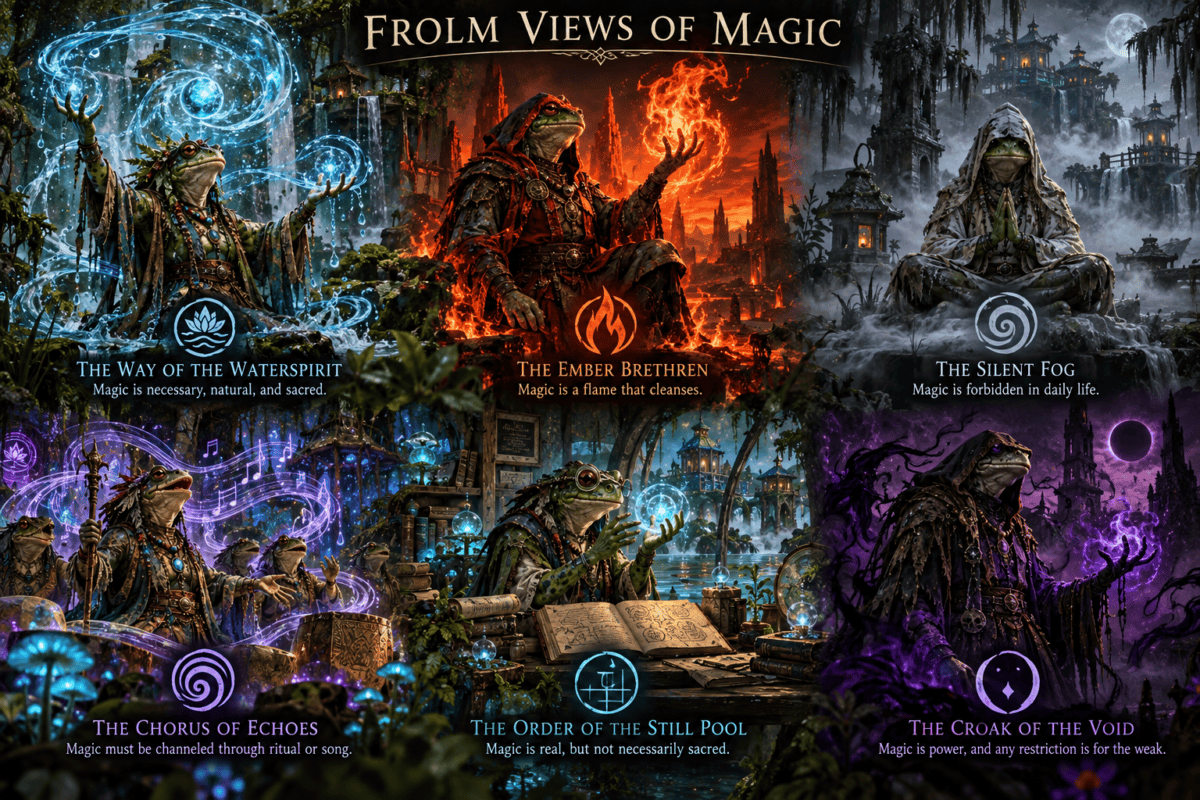
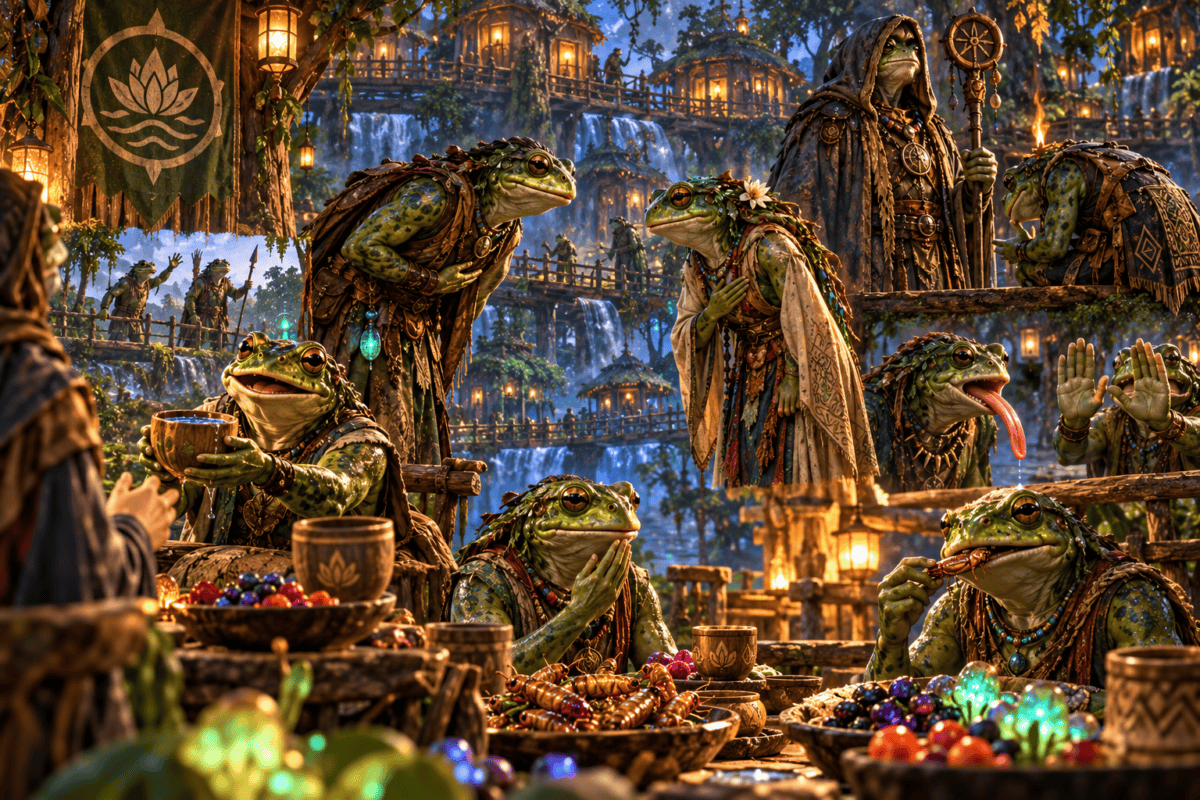
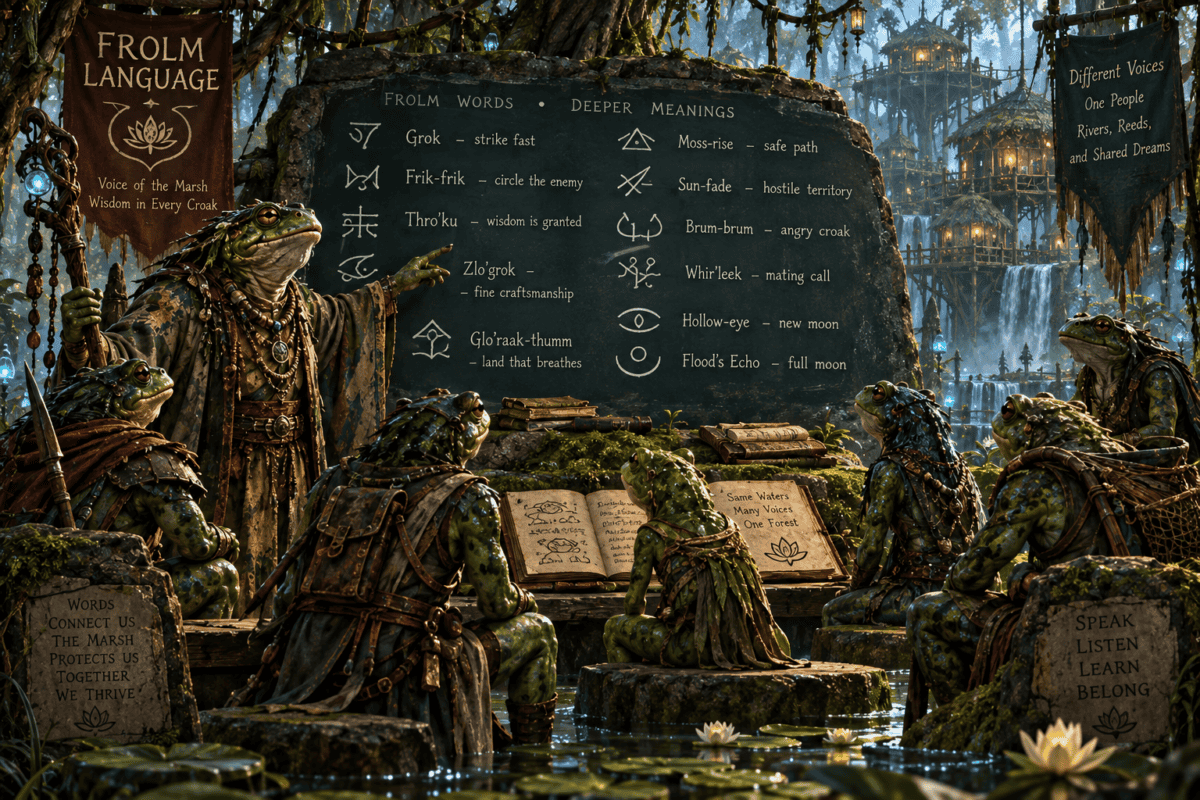
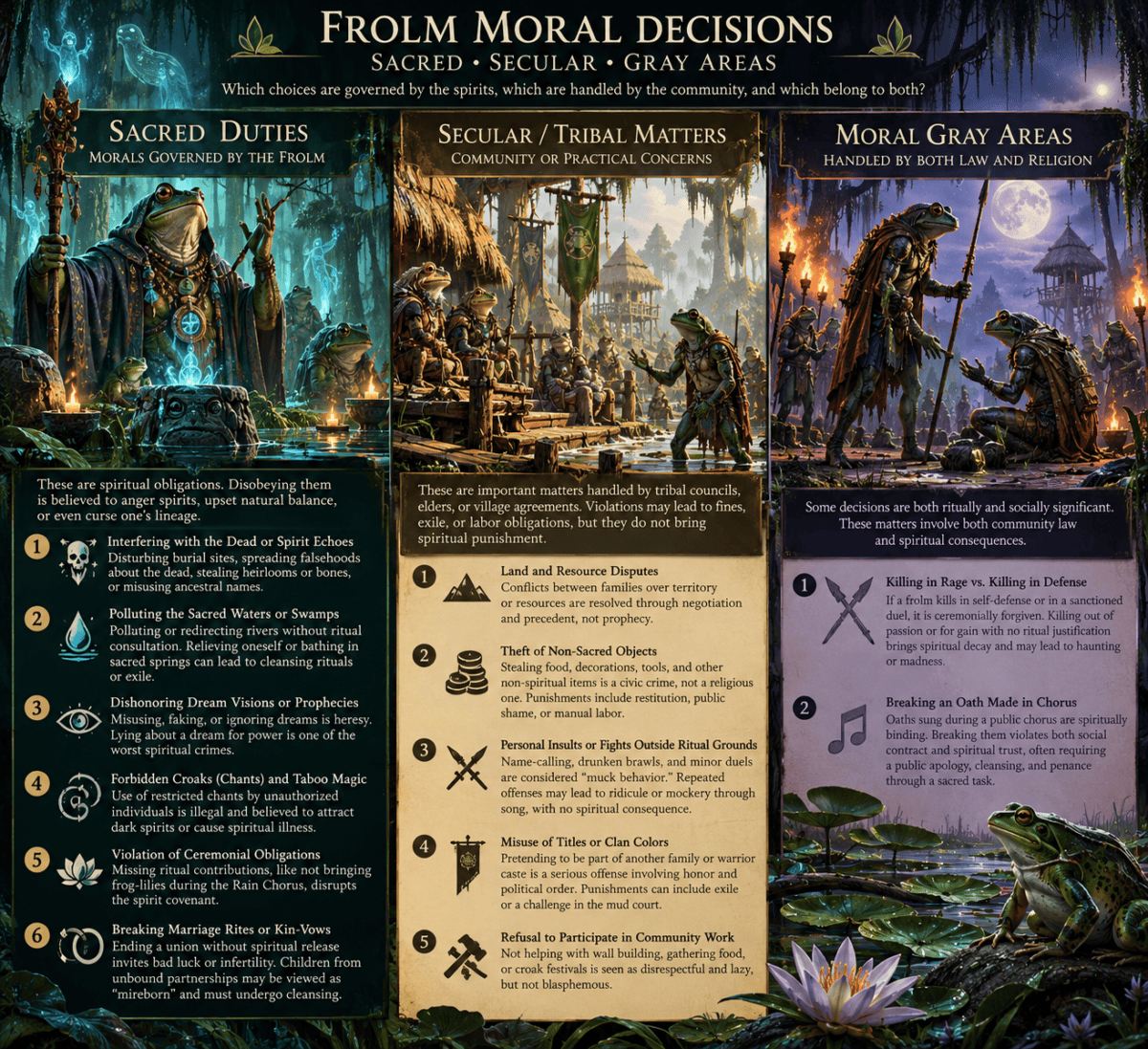
Provide Moral Guidance – Religion often dictates ethics, laws, and customs, shaping societal structures. Another race called the frolm in my book are very tribal-like. They often have religious ceremonies that are customary for them. They also have laws that are based on religious ideas and acknowledge many gods.

Offer Comfort and Community – Faith can provide hope in dark times and unite followers under shared beliefs. In my world, Teh Sxion are very drawn to religion. While they are often a species that sometimes are homeless and without food, they pray to the gods to help them out. They often gather together for religious purposes and give each other support. They are taught to be peaceful creatures, unlike some of the frolm deities who like war.
Serve Political or Social Control – Religious institutions might wield power, influence kings, or act as ruling bodies themselves. In Zalonia, some of the human rulers use religion as a way to rule over people. There are also aliens called gnonows that disguise themselves as gods in order to manipulate the population.

Bridge Science and Mysticism – In science fantasy, a religion might attempt to explain natural phenomena using magic, divine intervention, or lost technology. The magic system of Zalonia is complex, but there are some people who pay homage to the gods in order to channel their powers through that god. Some of the medes use religion as a way to explain things that seem unexplainable.

How This Translates into Science Fantasy:


A post-apocalyptic civilization might worship ancient AI systems as gods.
A spacefaring empire could see black holes as divine entities consuming sinful souls. In Zalonia, black holes can’t be seen, but white holes sometimes show themselves as an explosion. The medes are aware of he possibility of black holes but can’t prove their existance.

A planet-bound species may believe in spirits that guide their evolution, using psionics (refers to the use of psychic abilities, such as telepathy and telekinesis instead of prayer. Some of the magic user in Zalonia use this method to get things done.

2. Types of Religions in Science Fantasy

There are many ways to structure a fictional religion, each with its own implications for your world.

1. Monotheism – One Supreme Being

A single god or force oversees the universe. There are some monotheists within the world of Zalonia. One of the most popular deities is referred to as the Creatrix. Some only pay homage to her, but others worship other individual gods. Some believe in an all-encompassing deity that is the center of attention. Some people think their god is the only one.

Example: A futuristic religion that worships the “Prime Light,” an ancient supernova that birthed their galaxy.

Questions to Ask:

Is this god distant or actively involved in daily affairs? Are the god(s) personal, even if there isn’t much evidence of their existence? Or perhaps they have no trouble showing themselves and are heavily involved in your world. There might be a universal belief that accompanies all the species, or perhaps different territories acknowledge different gods.

Does the god have prophets, chosen ones, or avatars? In the land of Zalonia, there are a few prophets, but they may or may not get their information from gods. In a lot of places, it is illegal to give a prophecy, but catastrophic consequences can come just upon knowing something is going to happen.

There is the story of a prophet warning the Creatrix that the child she would bear would cause her great problems. Upon hearing this, she tried to abort the child but failed, and the child escaped. Later, the child returned to take vengeance upon the Creatrix. If the Creatrix hadn’t been given the prophecy in the first place, she might not have tried to abort the child.

Does technology challenge or support this belief? Some people believe that modern science contradicts religion. As your world progressive, so some turn away from the idea of god and trust in their technology more. In Zalonia, many of the medes (An eagle-like person) often doesn’t put trust into any deity.

2. Polytheism – A Pantheon of Gods

Multiple deities exist, each governing different aspects of life.

Example: A celestial pantheon where each god is an ancient alien race that shaped different worlds. In my Pentalogy series the elves and most of the people believe that there are several Gods and Goddesses often connected to Celtic Mythology. The Celtic Gods only appear in the Fifth Age. In the Fourth \ge many people were polytheistic, but the gods often appeared to people which accounts for their beliefs. The frolm generally have their own set of gods that they acknowledge.

Questions to Ask:

Do these gods interact with mortals, or are they abstract forces? In Zalonia, the gods communicate with certain people if they want to send a message. Whether or not this message is received depends upon how much the people believe in the gods. If they don’t believe in the gods, then they usually ignore the messages. Many of the gods have their own agendas and aren’t exactly trustworthy.

Do rival deities cause conflict, mirroring real-world polytheistic mythologies? In Zalonia, there are rival deities, often some follow the Creatrix while others follow the Soul Chaser. There is also Syvania who remains by herself and isn’t really for or against other deities.

Are gods linked to real celestial bodies, like stars or planets? In Zalonia, the 9 ancient ones are seen in the primary nine constellations seen in the night sky. A few gods related to some of the planets and the stars depending on which culture you’re talking about.

3. Animism – Spirits in Nature

Every tree, river, or animal has a soul or a guiding force. In some ways, the frolm are animist because they believe their gods are connected with their trees, ponds, and rivers. They believe all these things bring them life and are gifts from their gods. The Quintum often view the sea as a type of deity that can be calm or wrathful. They pay homage to this god often when they are going to explore the seas. The quintum are a race in Zalonia with four arms who build the best ships in the world. They have gills and can remain underwater for a long time.

Example: A jungle-dwelling species believes spirits inhabit massive bioluminescent fungi that provide wisdom.

Questions to Ask:

Can people communicate with these spirits? In Zalonia, some of the races can speak with spirits. For example, elves can talk to animals and certain humans can communicate with the trees. The trees only seem to speak with the less fortunate of people.

Are spirits good, neutral, or dangerous? It’s likely that all three types are present. In Zalonia, it is often believed that those who follow the Creatrix are good, those who follow Syvania are neutral, and those who follow the Soul Chaser are bad. However, this is too much of a simplification of how things work, especially when it comes to the Soul Chaser. The Soul Chaser is only bad during the First Age due to his anger at the Creatrix.

4. Ancestor Worship – The Power of the Past

The souls of the dead influence the living, offering guidance or punishment.
Example: Space travelers seek blessings from ancient “Stellar Elders,” the digital consciousness of their ancestors stored in vast databases. The frolm often pay homage to their ancestors as they are a very tribal species.

Questions to Ask:

Are ancestors truly present (as AI, spirits, or ghosts), or is it just cultural tradition? The frolm in Zalonia give a high importance to ancesters and will communicate with them throughout their forest.

Can they intervene in mortal affairs?

Are certain bloodlines considered divine?

5. Cosmic Energy & The Force-Like Belief System

A universal force or energy connects all living things, shaping reality itself. Some of the eagle-like medes believe this, but not all, as many medes are atheists.

Example: The “Astral Stream,” an energy field that lets trained individuals channel power through meditation.

Questions to Ask:

Is this force sentient, or just an energy to be manipulated? In Zalonia wizards often believe their magic comes from a universal source. They don’t exactly understand it, but they believe their magic comes from somewhere.
Can anyone access it, or is it limited to an elite few?
Does science recognize its existence, or is it dismissed as superstition?

3. Religious Structures: Temples, Priests, and Rituals

Religions aren’t just beliefs; they come with places of worship, spiritual leaders, and daily practices that define a culture.

Temples and Sacred Spaces

Are places of worship cathedrals of glass and metal, or living trees infused with magic? In the Fifth Age of Zalonia there are temples raised to acknowledge the various gods.

Do temples float in orbit around gas giants, or are they hidden underground? In Zalonia, this is something that the medes are curious about when it comes to other planets. With their sharp eyes combined with telescopes they can see the moons of the two gas giants and believe that there is a possibility for life on a few of them. They aren’t absolutely sure, but it does seem like one of the moons has some kind of station.

Are sacred spaces tied to natural phenomena, like eclipses, planetary alignments, or magnetic fields? In Zalonia, the quintum have a gathering when there is a full eclipse in the middle of the day. They dance and sing and thank the gods for what they have.

Priests and Religious Leaders

Are there scholars, mystics, cyborgs, or warrior-monks? There are many of these in Zalonia. The medes are often seen as scholars and know a lot about religion, whether they believe it or not. There are mystics who seem to keep to themselves most of the time.

Do they possess divine powers, cybernetic implants, or lost technological knowledge? Some magic users in Zalonia rely on the divine to cast their magic spells, while others rely on a universal energy.

Is the priesthood open to all, or is it inherited through noble bloodlines? The priesthood in Zalonia, especially in the Fifth Age are often chosen by the people and have to go to the magic school in Magdad to learn how to connect with the deity that they are going to access this power from.
Common Religious Rituals

Pilgrimages – Followers must visit a sacred place to achieve enlightenment. Some religions in Zalonia believe that everyone must at least try to visit the Temple of Dreams within their life time.

Sacrifices or Offerings – Gifts to the gods range from blood rituals to energy donations. In the early ages, the frolm sacrificed their children to the God of War, but when one of the frolm stood up against it, they found it to be a pointless act and banned sacrifices.

Prophecy & Visions – Certain individuals foresee the future through divine intervention or genetic enhancements. In Zalonia, giving prophecies is generally frowned upon. This is because they could have a self-fulfilling prophecy if they know their future. The story of the Creatrix and the Soul Chaser reflect upon this some. The Creatrix was given a prophecy when was with child that the child would bring about great destruction. Because of this warning, she attempted to abort the child. However, the child came out alive and escaped. Later, when the Creatrix created everything, her child, known as the Soul Chaser came to her creation and reeked havoc. He wanted to get revenge on the Creatrix for trying to abort him. This story tells of why most prophets don’t give away their prophecies.

Rites of Passage – Coming-of-age ceremonies involving tests of faith, combat, or intellectual pursuit. In Zalonia, the frolm have coming of age ceremonies, especially when one becomes a warrior when they turn thirty.

4. Religion and Conflict: Holy Wars, Schisms, and Taboos

Religious belief often leads to division, conflict, and change.

Holy Wars & Religious Crusades

Do spacefaring empires wage war over divine mandates?
Do religious extremists seek to exterminate non-believers?
Is faith used to justify colonization of new planets?

In Zalonia there are some religious that teach that non-believers should exterminate non-believes. Fortunately, only a minority of people follow religions like this.

Schisms & Heresies

Has a prophet or rogue AI challenged the existing order?

Do certain sects see technology as divine, while others see it as blasphemy?
Have rebel priests formed underground movements to oppose religious corruption?

In Zalonia there have been prophets who have gone rogue, especially during the Great Battle of the First Age when the Soul Chaser was trying to get people on his side to stand up against the Creatrix. There are also rebel priests who have formed underground movements to oppose religious corruption, especially if these religions promote such thing as killing others for their gods. There have been minor conflicts where this has happened on Zalonia.

Sacred Taboos and Laws

Are certain sciences forbidden because they intrude upon divine realms?
Do people refuse to set foot on a planet because it is “holy ground”?
Are specific numbers, colors, or symbols considered lucky or cursed?
In Zalonia, the sciences are generally not forbidden, especially with the medes who want to use science in order to gain knowledge. The number 9 is considered a holy number in Zalonia. It took 99 days for the Creatrix to create the world. There are 99 cards in the Mystic Prophecy Cards. Nine appears in various other places too.

5. The Role of Religion in Everyday Life

A well-integrated religion influences:

Government & Law – Is it a theocracy? Does the ruling class claim divine authority? In Zalonia it generally depends on where a person lives. In certain areas, there are people who claim divine authority. The most notable one was when King Etan had taken over most of the continent in the Second Age. He thought it was his divine right to rule and convinced many to follow him because he offered great rewards do those that enforced his rule of law.

Technology & Science – Are advancements seen as holy, or heretical? Most medes see advancements as good things. However, there are people in Zalonia who think technology can build better weaponry so they don’t see technology as a good thing.

Daily Life & Superstitions – Are people expected to pray at sunrise, avoid flying ships on certain days, or carry religious artifacts? In Zalonia, it generally depends on where a person lives and the prominent religion of that area. In the grand city of Tarvon, it is a tradition for the people their to face west in prayer during sunrise and east during sunset. This may seem like the opposite of what they should do, but in Zalonia the sun rises in the west and sets in the east.

6. Unique Science Fantasy Religion Ideas

The Celestial Shepherds

A species of sentient beings believes their souls are reincarnated into stars.
Astronomers act as priests, reading constellations as messages from their ancestors.

In Zalonia, there are nine constellations that can be seen, and they aren’t made of the same material as stars are made of. Some people believe they are signs of certain things, such as prosperity and healing. Even the medes find them fascinating because they don’t sparkle like stars generally sparkle. They are also symbols of the Nine Ancient Ones, the deities that people believe everything came from.

The Biotech Cult

You could have Worshipers believe in “genetic purity”, bio-engineering their bodies to mimic divine forms.

Elders splice their DNA with “godly” genes harvested from ancient alien remains.

The Eternal Code

Perhaps there’s a religion based on sacred digital texts left behind by an ancient AI.

Or the faithful embed scripture into their neural implants and recite prayers in binary.

Final Thoughts: Crafting a Living Religion

A well-designed religion isn’t just a backdrop—it’s an active force in your world. It influences characters, cultures, conflicts, and progress. Ask yourself:
How does this religion shape daily life? In Zalonia, the frolm often recite prayers in the morning, midday, and at night. Some of the people pray at random times if they believe in any of the deities. The medes are known not to pray at all; even the ones who do believe in a god of some sort usually don’t pray to them.

What role does science or magic play in its beliefs? Some in Zalonia believe that the magic comes from the gods. This is sometimes true depending on the magic. There are religious studies at the school in Magdad that teach about the gods but these studies are not a requirement for graduation. The school believes it is up to the people for what they believe in.
Does faith bring people together, or divide them?

By blending science, spirituality, and culture, your world will feel richer, more immersive, and truly alive.

What unique religious beliefs exist in your science fantasy world? Share your ideas below!

Sign up for my Newsletter Here

Creating Life – By Ralph Ellefson

The Art of World Building Workbook – By Ralph Ellefson

Fantasy World Building: A Guide To Developing Mythic Worlds and Legendary Creatures – By Mark Nelson

Support Me on Patreon