Frolm Jobs and Occupations

Frolm are generally given jobs that they have a talent for. There are various jobs among the frolm that keep their society going. To become a warrior is often the most sought-after position, and a frolm has to be 30 years old to go on a Warrior’s quest to prove their worthiness. However, warriors aren’t always at war, and many fulfill other duties in times of peace. Here are some of the jobs that they can do:

Bogkeepers – These frolm protect the water sources and make sure that ponds, streams, and sacred pools stay clean and undisturbed. They may sometimes clean the water with nets to help the water remain fresh.

Mud Architects – Most frolm homes are made from the use of mud, so mud architects are set to build homes and other important places with mud, woven reeds, and bioluminescent fungi. They tend to make very sturdy and long-lasting homes.

Tree Hollow Carvers – They help to shape living trees into storage spaces or ceremonial sites. They are experts at doing this so they don’t harm the trees. This is usually done with larger trees because they supply more room.

Glowmoss Tenders – These are frolm who cultivate luminescent moss that provides natural lighting. This natural lighting is usually put on village paths and homes. It is very decorative in appearance.

Marsh Navigators – These are frolm experts who chart the safest water routes through the forest’s twisting rivers and floating islands. This helps people who are traveling through the forest. These frolm often put up symbols signifying the safest paths.

Defenders & Warriors

Swamp Guardians – These are trained fighters that protect the jungle. They also protect their communities from predators, cave trolls, and those who might attack the Great Frolm Forest.

Leapblades – These are elite warriors, and they use their powerful legs to launch themselves at enemies, with sharp blades or weapons. A frolm must be able to jump at least 25 feet in the air in order to become a Leapblade.

Mist Trackers – These are frolm who hunt enemies by trailing them through the thickest of fogs. Their eyes are tested before they become one of these, and they are generally young frolm because young frolm have sharper sight.

Shadow-Fins – These frolm often remain underwater and are warriors that guard the sacred pools and river passages. They are good at silently swimming and stealth attacking.

Venom Harvesters – This force of the frolm army is specialized in gathering dangerous venom from animals and plants and using it to put on their weapons. Some harvesters focus on finding venoms that can heal frolm.

Nature-Based Roles

Raincallers – These are shaman-like frolm that perform ritual chants and dances that cause it to rain.

Frogspawn Caretakers – These are protectors of young frolm eggs and tadpoles. They ensure their survival in the hatchery pools.

Moss Weavers – These are frolm that focus on growing and weaving moss-based fabrics to be used for clothing, bedding, and insulation.

Root Healers – These are herbalists who use such things as jungle plants, fungi, and minerals to create healing pastes and tonics.

Mist Farmers – These frolm grow fog-dependent plants and bioluminescent crops. They often tend to floating gardens on ponds.

Cultural & Spiritual Occupations

Croak Singers – These frolm perform and use resonating vocal harmonies to tell stories, teach history, and soothe those in ill health.

Echo Dancers – These are acrobatic warriors who leap and tumble through the air. This mimics the movements of forest creatures. They can sometimes access frolm prey that can otherwise be difficult to catch.

Spiritwalkers – These frolm are priests and/or mystics who act as mediators between the frolm and the spirits of water, jungle, and ancestors. They sometimes mediate between frolm clans when there is a serious disagreement.

Water Oracle – This is a rare frolm that claims to see visions in the ripples of sacred pools and helps those in leadership positions. There are some frolm who pretend to see these visions, which can cause a disruption in the clan. If it is found out that the frolm is pretending to see a vision, it could lead to that frolm being exiled.

Ritual Painters – These are artists who tattoo or paint symbols on warriors who are preparing for battle or for coming of age events.

Food & Trade

Glowfruit Foragers – These are frolm that gather bioluminescent fruit that only grows under certain moons and moon phases.

Insect Farmers – These are breeders of crickets, glowworms, and beetles. This helps give the frolm a protein-rich food source for the inhabitants.

Mudbrew Masters – These are creators of fermented mushroom drinks. Depending on the kind of mushroom, this drink can have two effects: one is to help with deep relaxation, and the other is for heightened awareness.

Spore Traders – These are merchants who deal in rare and enchanted spores. They have medicinal and alchemical properties.

Pond-Fisher – These are fishers who catch, breed, and release rare amphibious critters into marsh pools that are carefully controlled.

Crafting & Artisanship

Reed Flute Makers – Just as the name suggests, they are carvers of musical instruments that produce soft and haunting melodies through the jungle air.

Shellsmiths – These are crafters who make armor and tools from the hardened shells of creatures within the forest.

Mudmask Artisans – They are artists who create ceremonial masks with colorful clay and enchanted swamp water.

Poison Ink Masters – These are scribes who write sacred texts and secret messages with ink made from non-lethal toxins that only the frolm can handle safely.

Biolume Dye Makers – These are extractors of glowing pigments which are from plants and fungi. They are used for body paint, ritual decorations, or even regular clothing.

Leadership & Diplomacy

Chief Elder – This is an elder who presides over a frolm Hamlet. He often leads councils on deciding if someone is guilty or innocent and what the punishment is if guilty.

Prophecy Interpreter – There are some frolm hamlets with a prophecy interpreter who is specialized in understanding prophecies that have been written down. They can also act as dream interpreters.

Elder Croakers – These are council members who help to resolve disputes and pass down wisdom and knowledge through traditional storytelling.

Trade Froggers – These are traveling merchants who barter exotic goods with neighboring races. They are often required to navigate through dangerous jungle paths.

Bog Emissaries – These are diplomats who are sent to speak with rival clans and outsider settlements.

Ceremonial Judges – These are respected figures who oversee rituals, trials, and punishment ceremonies. They usually serve the role of a chief elder if none are available.

Unique Jobs Based on Their Frog-Like Physiology

Leap-Couriers – These are high-speed messengers who jump across vast distances in order to deliver urgent messages.

Rain Harvesters – These are collectors of purified rainwater. This rainwater is used in potions and sacred ceremonies.

Echo Locators – These are scouts who use croaks and clicks to map out such things as tunnels, underwater ruins, and hidden caves.

Jungle Wall Climbers – These are specialists who use their sticky hands and feet to scale along cliffside temples and treetop villages.

Mud Camouflage Experts – These are guides who train warriors how to blend in with swamp terrain using natural pigments.

How These Jobs Shape Their Society

These jobs give them a deep connection to water – Many of these roles focus on preserving water, protecting sacred pools, and controlling rainfall.

They give them symbiosis with nature – Different from industrialized civilizations, the frolm depend on biodegradable materials and sustainable farming.

These jobs puts a emphasis on community – Many of the jobs involve group effort rather than individual effort, which reinforces communal Survival.

They keep cultural storytelling and rituals alive – Several roles include song, body paint, spiritual practices, and dance to honor their ancestors and the forest.

Frolm: Lesser Laws

Support Me On Patreon

Sign up for my Newsletter on the right side

Get Curse of Kredaria for Free

Warrior’s Age

A warrior must be 30 or over to go to war, but under 400. This keeps younger and inexperienced frolm from joining at a young age.

The Glowfruit Rule

Glow fruit, which is a rare and bioluminescent delicacy, can only be harvested during the Festival of Sacred Bloom. Only limited quantities are allowed to be gathered. If someone harvests too many, they may get banned from the next festival and be required to plant and nurture new glowfruit trees.

The Silence of the Moonlit Marsh

When the regular moon is full, frolm aren’t permitted to make loud noises in the Moonlit Marsh because they may disturb nocturnal spirits. If someone breaks this law, they must offer a symbolic gift, such as rare insects or glowing moss, to the march spirits during a special ritual. This law keeps the frolm respectful of the forest.

The Pact of the Great Trees

Frolm are not permitted to cut down a living green without permission being granted by the Forest Elders, and they usually only approve of this if the tree poses a threat or is diseased. Breaking this law will require the offender to plant at least ten saplings and take care of them until they are fully grown

The frogspawn covenant

Anything related to a frog, such as tadpoles and frogs themselves, is protected at all costs. They are symbols for the future of the frolm. This offense is punished with banishment from breeding pools for one season. This law is in place for the frolms’ survival.

The Leap of Passage

Frolm youth are required to do a ceremonial leap from a special tree into a deep pond. This is a rite of passage to adulthood. If they don’t make this leap then they may not have the right to participate in certain community decisions. This is meant to strengthen cultural

The Law of Shared Spoils

Anything caught from a successful hunt or a foraging expedition, must be shared with the entire village. There must be special portions that are received by the elderly and sick. Those who refuse to acknowledge this may be temporarily banned from hunting or foraging. On top of that, the offender must make an offering to the community. This insures that no one in the village goes hungry and also supposed communal well-being.

The Guardian’s Vow

Frolm warriors, also known as Bogkeepers, need to swear to protect their territory from outsiders. This helps to ensure the safety of the hamlet. If one neglects his duty, the warrior must undergo a purification ritual and then spend an entire season patrolling the outskirts of the swamps alone. This helps to reinforce the importance of vigilance and protection of the frolm.

The Glowstone Edict

Glowstones are magical crystals that illuminate the forest. They are only allowed to be mined during specific lunar phases with the supervision of an elder miner. If someone is caught mining without permission, it can result in the confiscation of the crystals and a mandatory month of service in the mines to restore balance. This law makes sure that overmining doesn’t happen and retains the preservation of glowstones.

The Ritual of Rain

During times of drought, it is mandatory for all the frolm to participate in a community-wide raid-calling ritual which is led by a Raincaller. A Raincaller is a highly respected shaman who often oversees a territory and has more authority than hamlet leaders. If someone doesn’t attend without a good reason, this will result in a symbolic “thirsting day” where the individual isn’t allowed to drink from the sacred water. This law helps to strengthen unity and ensures collective effort during droughts.

The Boundary Accord

Frolm aren’t allowed to cross the boundaries of their territory without special permission from the council. These risks could expose their location to possible threats. If a frolm breaks this law, he must endure a period of isolation and reflection in a guarded section of the marsh. The purpose of this is that it protects frolm from outer dangers and ensures the secrecy of their homeland.

The Feast of First Fruits

The first fruits of the harvest season must be offered to the forest and tree spirits during a feast before any of it is consumed or stored. Those who break this law must fast for a day and make reparations by preparing the feast itself. This law honors the forest and tree spirits and shows thankfulness for the land’s bounty.

The Marchlight Law

This law requires travelers to carry marshlights (bioluminescent lanterns) during the night so they don’t disturb nocturnal predators or step into dangerous bogs. If one breaks this law, then it is mandatory to provide service as a night guide for the village for eight days (A week in Zalonia). The purpose of this law is to ensure the safety of travelers and maintain harmony with the nocturnal ecosystem.

The Pack of the Croaking Chorus

During certain parts of the year, the frolm must join in the Croaking Chorus to call for rain or to celebrate the changing of seasons. If one refuses to participate without a good reason, they are required to care for the village’s elder frogs for a season. This helps to strengthen cultural identity and reinforces their bond with the Great Frolm Forest and weather cycles.

The Spirit Grove Prohibition

It is strictly forbidden for one to enter the Spirit Grove without permission from the elders. The Spirit Grove is a sacred part of the forest where powerful spirits and ancient trees reside. Someone who disobeys this law results in a purification ritual along with a year of service as a caretaker of the grove. The purpose of this law is to protect the most sacred area of their territory and maintain the balance between the frolm and the spirits.

The conflict of oaths

If two oaths come in conflict, they must bring it before the leader of that community, and if things aren’t resolved, it is voted on by 13 frolm randomly selected. The majority wins.

Asking permission

Theft is unusual to the frolm since they believe that everything is collectively owned. However, it is respectful to ask someone if they need something rather than just taking it unexpectedly.

Voting laws

Frolm can vote for the area’s council once they turn 23 and can vote for the leader at the age of 31. At 22 frolm are considered adults even though their life has basically just begun.

Campaigning is prohibited

Frolm leaders don’t campaign for a position of power like we are used to in our society. Instead, voters discuss among themselves who should be nominated. No more than nine frolm can be nominated at a time. After they vote for the nine, they choose the top three and then vote between them on who the leader is going to be. The council has many more nominees, and the top thirteen are chosen.

Frolm Discussion

There are mostly friendly discussions among the frolm as to who to vote for and about religion and the gods. Frolm don’t mind being silent in the midst of others. It doesn’t get awkward as it does with humans. Sometimes there can be debate on the interpretation of the thirteen main laws. Sometimes they discuss laws that should be implemented.

A Warning for Lesser Crimes

Frolm who don’t follow the rules often get a warning the first time if it is a minor offense. The second time, some action is taken, such as the frolm’s right to visit other villages. A third offense could cause the frolm to be thrown in one of their prisons for a few days to try to teach the rebellious frolm a lesson. Frolm typically aren’t that rebellious and are good at keeping to frolm traditions.

See Also

Overview of the Frolm

Frolm Holidays and Ceremonies

Support Me On Patreon

Sign up for my Newsletter on the right side

Books to Read(Affiliate Links)

Creating Life – By Ralph Ellefson

The Art of World Building Workbook – By Ralph Ellefson

Fantasy World Building: A Guide To Developing Mythic Worlds and Legendary Creatures – By Mark Nelson

The 13 Sacred Laws of the Frolm


Sign up for my newsletter on the Right

Get Curse of Kredaria for free

Support Me on Patreon

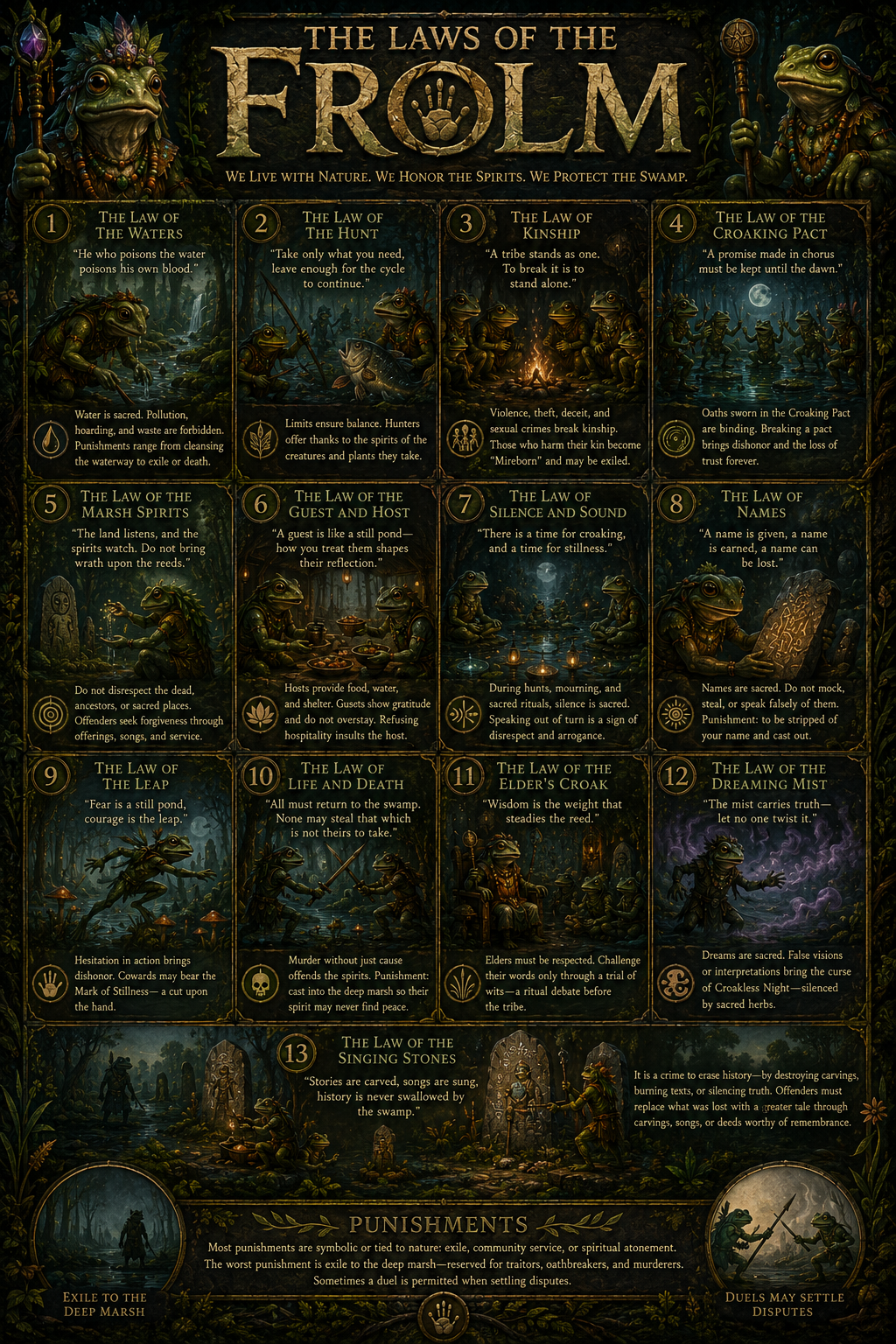
The Frolm, being a tribal amphibian-humanoid species, have laws that are deeply connected to nature, survival, community, and the balance of their swampy environment. Their laws are both practical and spiritual, ensuring harmony among their people and the ecosystem.

1. The Law of the Waters

“He who poisons the water poisons his own blood.”

Since water is sacred to the frolm, they place it in high regard and forbid pollution, hoarding, and wasting water. If someone comes along and contaminates a sacred waterway or a stream, they will be punished depending on the offense. If it is a small breach of the law, they may be required to purify the waterway. However, under more extreme crimes, the criminal can be exiled or even put to death.

2. The Law of the Hunt

“Take only what you need, leave enough for the cycle to continue.”

This law has to do with how much one can take from nature. For example, there are limits on hunting and fishing because there needs to be a balance that is maintained. Hunters are required to leave an offering to the spirits they hunt and the plants they take.

3. The Law of Kinship

“A tribe stands as one. To break it is to stand alone.”

There are many ways this law can be broken, such as violence, theft, deceit, sexual crimes, and so on. If they harm their kin unjustly, they are considered to be “Mireborn” (outcasts), and this can even lead to exile.

4. The Law of the Croaking Pact

“A promise made in chorus must be kept until the dawn.”

There is an action among the frolm called the Croaking Pact, which is a tribal ritual of agreement. If a frolm swears an oath of this kind, they must uphold their pact. If they don’t, it could cause dishonor for the lawbreaker.

5. The Law of the Marsh Spirits

“The land listens, and the spirits watch. Do not bring wrath upon the reeds.”

The frolm see nature as being spiritual, and therefore it is forbidden to anger the spirits of the land. This can happen by disrespecting the dead, destroying sacred sites, or speaking ill of their ancestors. The penalty for breaking this law isn’t as extreme as some of the other penalties. Those who offend must seek forgiveness through rituals, such as offering carvings, songs, and sacrifices of time where they work as servants.

6. The Law of the Guest and Host

“A guest is like a still pond—how you treat them shapes their reflection.”

Among the frolm, hospitality in itself is sacred. If someone is hosting, they are required to offer food, water, and a place to rest. For the guests, they must not overstay their welcome and show gratitude to the ones helping them out. If a guest refuses hospitality without a good reason, it is seen as an insult to the host.

7. The Law of Silence and Sound

“There is a time for croaking, and a time for stillness.”

Silence is very important in frolm rituals. During hunts, mourning rituals, and sacred ceremonies, frolm are required to be quiet at certain times. They are careful not to speak out of turn or disrupt deep thought because it is a sign of disrespect and arrogance.

8. The Law of Names

“A name is given, a name is earned, a name can be lost.”

Names are very important in frolm society. For example, they avoid learning the names of their enemies because it could cause empathy and distraction on the battlefield. Frolm earn a second name if they do great deeds. These names must never be mocked, stolen, or spoken falsely. The punishment for this is to have one’s name stripped, in which they would be “Nameless,” and an outcast to society.

9. The Law of the Leap

“Fear is a still pond, courage is the leap.”

When one hesitates in times of action, it is seen as a weakness. In hunts, battle, and when difficulty presents itself, a frolm must act decisively because cowardice brings dishonor. A frolm warrior who runs away without cause may be given a Mark of Stillness to show their shame. The cut is generally made on the hand.

10. The Law of Life and Death

“All must return to the swamp. None may steal that which is not theirs to take.”

The greatest crime among the frolm is murder. Taking life without a just cause is considered an offense to the very spirits of nature. However, in times of self-defense, sacred duels, and war, one can kill. Those who unjustly murder are thrown into the deepest parts of the swamp so their spirit may never find peace.

11. The Law of the Elder’s Croak

“Wisdom is the weight that steadies the reed.”

An elder’s wisdom is considered sacred, and they must be respected when they speak. It is disrespectful to interrupt an elder unless there is an emergency. If a frolm wants to challenge an elder’s words, it must be done through a trial of wits, which is a ritual debate before the tribe.

12. The Law of the Dreaming Mist

“The mist carries truth—let no one twist it.”

Dreams are viewed as sacred messages, and it is frowned upon not to tell the truth about a vision or give false prophecies. The only ones who may interpret dreams for others are the shaman or the elder of a certain tribe. Frolm, who spread false visions, may be cursed with something called the Croakless Night. It is a punishment where they are made to drink a certain herb that takes away their speech for a time.

13. The Law of the Singing Stones

“Stories are carved, songs are sung, history is never swallowed by the swamp.”

History is important to the frolm so it is considered a crime to erase history. Whether it’s by the destruction of sacred carvings, burning old texts, or silencing truth. A frolm that breaks this law is supposed to replace it with a greater tale through carvings, songs, or actions worthy of remembrance.

Most punishments are symbolic or tied to nature, such as exile, community service, or spiritual atonement. The worst punishment is to be exiled to the deep marsh, which is reserved for traitors, oathbreakers, and murderers.

Sometimes a duel is permitted when settling disputes

See Also:

Overview of the Frolm

Frolm Holidays and Ceremonies

Support Me On Patreon

See also:

Frolm Basic

Frolm Holidays and Ceremonies

Sign up for my Newsletter on the right side

Books to Read(Affiliate Links)

Creating Life – By Ralph Ellefson

The Art of World Building Workbook – By Ralph Ellefson

Fantasy World Building: A Guide To Developing Mythic Worlds and Legendary Creatures – By Mark Nelson