Building a Science-Based Magic System in Fantasy Worlds


Science-Based Magic System

Introduction

In fantasy worlds, one of the most captivating elements is often the magic system. Some stories keep magic shrouded in mystery, barely explaining its inner workings, while others dive deeply into the mechanisms behind every spell and incantation. For writers, developing a unique magic system is an exciting way to set their world apart, especially in science fantasy, where magic can be combined with scientific principles.

In my created world of Aztharian, I’ve blended science with magic to create a unique system. This approach opens up endless possibilities, allowing for magical abilities that interact with the laws of physics, biology, and chemistry. Whether building a new world from scratch or expanding an existing one, incorporating scientific elements into magic can add complexity and make it even more immersive. Here’s a look at how to design a science-based magic system, with examples from Aztharian and tips to inspire your own creations.

1. Establishing the Foundations of a Science-Based Magic System

To create a science-driven magic system, consider grounding it in principles inspired by real science. Whether it’s physics, chemistry, or biology, using established scientific concepts can lend a level of believability to your world, especially in a genre where magic is expected to have logical rules.

Defining the Source of Magic

Begin by defining the source of magic in your world. In a science-based system, magic might be harnessed from specific particles, forces, or energy sources. This approach can allow you to create limitations and rules for magic, making it feel more grounded.

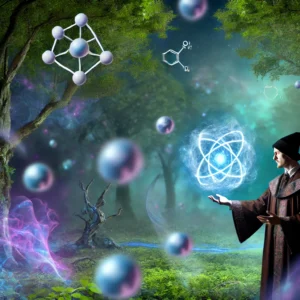
Antimatter: In Aztharian, I designed a magic system called “inner magic,” where spells are powered by antimatter. Antimatter can release immense energy upon interacting with matter, making it a potent, dangerous power source. This brought challenges—namely, how to prevent catastrophic explosions every time a spell was cast. To solve this, I imagined that the very essence of the world in Aztharian was built from a “neutral” material unaffected by either matter or antimatter. This neutral essence allows magic users to tap into antimatter without risking a fatal reaction, creating a stable yet robust form of magic.

Dark Energy: Another form of magic in Aztharian is derived from dark energy, a mysterious force that’s poorly understood even in modern science. In Aztharian, dark energy magic is raw, volatile, and often forbidden, as it’s primarily used to harm others. This magic type isn’t just dangerous; it’s secretive, often passed down through generations or guarded by hidden societies. Its unpredictability and misdirection abilities make it elusive to law enforcement, adding an aura of mystery and fear around dark energy practitioners.

Setting Rules and Limitations for Balance

When magic is rooted in scientific principles, it’s essential to set rules and limitations. By building restrictions into the system, you create a balance that prevents magic from being an all-powerful force.

Energy Requirements: Perhaps spells require enormous energy, limiting how often they can be used. In the case of antimatter magic, users might be physically drained after casting a powerful spell, needing rest or sustenance to replenish their energy.

Complexity of Spells: Some spells might need advanced knowledge of chemistry or physics to work properly. If a character lacks this expertise, their spells might be weaker or prone to failure, encouraging them to pursue study and practice.

2. Exploring Different Types of Science-Based Magic

With a science-based approach, magic can take many forms, each drawing from different scientific fields. Here are a few to consider:

Physics-Based Magic

Using physics as a foundation, your characters could manipulate matter and energy on a molecular or atomic level.

Quantum Manipulation: Characters could influence the behavior of particles at a quantum level, bending probability to their advantage. Perhaps they can affect particle entanglement, allowing them to communicate instantly with others across distances.

Control: Imagine a system where characters can influence gravity, allowing them to levitate objects or even themselves. This control could come from manipulating gravitational fields, giving rise to defensive or offensive tactics.

Biology-Based Magic

Biological manipulation allows for magic that affects living organisms, from healing to harm.

Cellular Healing: In a scientifically-rooted magic system, a healer might use magic to accelerate cell regeneration or stimulate immune responses. They could draw on knowledge of anatomy and physiology to repair injuries, making their healing grounded in science.

Genetic Manipulation: Magic users could temporarily alter their genes to grant themselves new abilities, like enhanced strength or speed. However, this kind of magic might come with risks, such as genetic instability or unintended mutations.

Chemistry-Based Magic

Chemistry opens up the world of potions, elixirs, and even alchemical transformations.

Potion Making: In Aztharian, certain characters create potions that require knowledge of chemical reactions. A love potion, for instance, could be crafted by combining elements that affect emotions or behaviors. Invisibility potions might alter light-reflecting molecules in the skin, effectively “cloaking” the user.

Explosive Reactions: A fire mage might need to understand combustion and use ingredients that spark specific reactions. For example, a spell that produces flames might require a mix of flammable materials or a catalyst that ignites upon activation.

3. Introducing Forbidden Magic: The Appeal of Dark Energy

Forbidden or dark magic often carries moral and ethical implications, making it a compelling narrative device.

Creating Dark Magic Societies

Dark magic practitioners could form underground networks or guilds, teaching forbidden spells and offering protection to each other. These groups might have unique rituals, symbols, or secret languages, deepening the mystery surrounding them. The secrecy and mistrust associated with dark magic can create tension, especially if law enforcement or rival magical factions try to crack down on these societies.

Dark Magic as a Tool for Manipulation

Since dark energy magic in Aztharian allows for deception and misdirection, practitioners often use it for clandestine activities. Characters skilled in this magic might be adept at planting illusions, clouding memories, or hiding their tracks, making them difficult to capture or identify. This could be an ideal tool for spies, assassins, or anti-heroes, adding depth to your character roster.

4. Endless Possibilities: Combining Magic and Science in New Ways

The beauty of science-based magic systems is that they can evolve in limitless ways. Here are some additional ideas to inspire your own system:
Molecular Manipulation: Imagine a form of magic where practitioners manipulate atoms or molecules to change the structure of objects. This could allow characters to turn stone into metal or transmute base elements into valuable materials.

Weather Manipulation: For those interested in meteorology, a character might control weather patterns by influencing air pressure, moisture levels, and wind currents. This could allow for everything from creating rain to summoning powerful storms.

Electrical Magic: Characters could harness electricity by controlling ions in the air, creating lightning or powering devices. This approach might draw on scientific principles of conductivity and electromagnetism, making the spells more realistic.

5. Designing Your Own Science Fantasy Magic System

If you’re creating a science fantasy world, start by selecting a scientific principle that interests you. Ask yourself the following questions:

What scientific principle or field will serve as the foundation of the magic system? (e.g., physics, chemistry, biology)

What are the rules and limitations? (Consider energy requirements, rare ingredients, or skill level.)

Who can access this magic, and how is it learned? (Is it taught in schools, passed down in families, or discovered accidentally?)

What are the social implications of this magic? (Is it revered, forbidden, or feared?)

Using science as a basis, you can create a magic system that feels authentic, logical, and rooted in real-world principles.

Conclusion

Designing a science-based magic system adds layers of complexity and realism to a science fantasy world. By drawing on scientific fields like physics, biology, or chemistry, you can create magic that feels both powerful and grounded in logic. In Aztharian, antimatter and dark energy form the basis of two unique magical paths, each with distinct rules and consequences.

Blending science with magic invites readers to imagine how magic might work in our own world, offering a captivating mix of the mystical and the rational. Whether it’s healing magic that requires knowledge of anatomy or potions that rely on chemical reactions, this approach enriches your fantasy setting and enhances the experience for readers.

Creating Life – By Ralph Ellef

The Art of World Building Workbook – By Ralph Ellefson

Fantasy World Building: A Guide To Developing Mythic Worlds and Legendary Creatures – By Mark Nelson

Support Me on Patreon

Get the electronic version my book, “Curse of Kredaria” for free at various websites including Amazon.
Creating Government Systems in Fantasy Worlds


Aliens and the Government in a Fantasy World

The form you have selected does not exist.

Creating Government Systems in Fantasy Worlds

Introduction

In both fantasy and science fiction, world-building goes beyond geography, magic systems, and character development. A well-crafted government structure adds realism, depth, and intrigue to your world, shaping everything from political alliances and social hierarchy to how characters navigate power and justice. In this blog, we’ll explore ideas for building government systems in fictional worlds, touching on monarchy, councils, alien influence, and more.

Whether your world has monarchs, elected councils, or mysterious alien overlords, government structures can deeply impact your story. Let’s delve into how to create these systems and explore ways they might interact with the inhabitants of your world.

1. Establishing the Government in Your Alien Species

If you’ve created an alien species, consider their government setup. Is it similar to earthly governments, or does it operate on principles that are uniquely alien? Perhaps their governance style reflects their cultural values or physical traits. Alien governments might be:

Centralized Empires: An authoritarian regime where one powerful leader or council controls vast regions and subjugates various planets or races. Such a government might have a strict hierarchy, with each level monitoring the loyalty and obedience of the levels below it.

Collective Councils: A decentralized government where each member has a say in decisions, perhaps casting votes as part of a planetary or interstellar council. These aliens might have a council made up of representatives from different regions or factions, balancing power and unity.

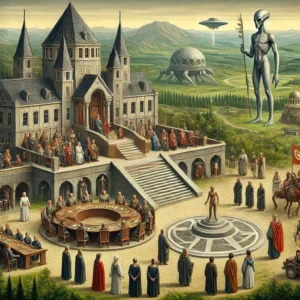
Manipulative Shadow Leaders: Some alien species may have infiltrated other civilizations, subtly guiding or controlling their governments for their own purposes. These aliens might present themselves as deities or trusted advisors, using their advanced technology or wisdom to steer the native population.

In your world, aliens could influence or manipulate the existing governments, whether through overt control or covert guidance. In some cases, they might even establish a puppet government, presenting themselves as “benevolent overseers” while subtly enforcing their own agenda.

2. Crafting Governments in Fantasy Worlds: Kingdoms, Councils, and Beyond

When creating governments in a fantasy world, consider the structures that best fit the society, geography, and technology level. In a medieval-inspired setting, you might use monarchies, councils, or tribal leadership. In other cases, a more democratic or council-based approach might fit. Let’s explore some options.

Monarchies and Nobility

In many fantasy worlds, monarchies remain a popular choice, with kings, queens, and their nobility ruling over kingdoms. Monarchies can be structured in various ways:

Absolute Monarchies: The king or queen has complete control, with all laws and policies stemming from their rule. Nobles may play a role but are ultimately subservient to the monarch.

Constitutional Monarchies: A council or parliament shares power with the monarch. This creates a political dynamic where the monarch’s influence is checked by a governing body, adding complexity to the system.

Noble Hierarchies: In some worlds, regional nobility plays a significant role in governance, ruling over towns or provinces. These nobles may pledge loyalty to the crown but have autonomy in their territories, creating opportunities for alliances, betrayals, and rivalries.

For example, in my world of Zalonia, there are kings and queens who oversee their realms, but many cities and villages have their own councils of twelve members who handle local governance. Larger councils, such as those in major cities, sometimes influence smaller councils in nearby villages, creating a tiered system of authority.

Councils and Village Governance

In smaller communities or democratic regions, councils may be the governing body. Councils are ideal for settings where decisions are made collectively, reflecting the needs and values of each community. Councils can operate differently depending on their structure:

Local Councils: Small villages may have a council that deals with everyday issues, representing the people’s voices. In Zalonia, the village of Kredaria has a council of twelve that manages local affairs, although it is influenced by a larger council in the nearby city of Mhea. Kredaria’s council can address minor issues, but it consults Mhea’s council for larger decisions, such as law changes.

City Councils with Regional Influence: In larger cities, councils may extend their power beyond city borders, influencing nearby towns or villages. This setup could lead to power struggles between councils, especially if smaller communities resist city-imposed decisions.

Federations of Councils: Some fantasy settings use a federation of councils, where each town or city has its own governing body, and representatives meet for important regional decisions. This setup allows for diverse perspectives and fosters alliances.

Direct Democracy: In some societies, every individual may have a voice in every major decision. In Zalonia, the eagle-like medes operate under a direct democracy. All medes cast individual votes on issues, including sensitive topics like reproduction. Given their millennia-long lifespans, this policy prevents overpopulation by limiting reproduction to maintain balance.

3. Exploring Unique Alien Government Systems

Aliens bring a chance to create truly original government systems. An alien society could be governed in ways we would find unusual or even incomprehensible. Here are a few examples:

Social Collectivism: Some aliens may have a highly cooperative, collectivist society without centralized leadership. They could make decisions through consensus, valuing collective well-being over individual authority.

Technological Rule: Aliens might rely on advanced artificial intelligence or predictive technology to govern. This AI-driven system could analyze data to predict outcomes and make decisions, leaving minimal human or alien intervention in daily governance.

4. Alien Influence on the Governments of Your Fantasy World

Your alien species might secretly manipulate the local governments in your fantasy world, using them as proxies to control resources or populations. Alternatively, the aliens might offer guidance, teaching the locals new technologies or social systems to improve their governance. Here are some possibilities:

Secret Manipulation: The aliens could work behind the scenes, controlling the rulers of different kingdoms through mind control, technological bribes, or even magic. The rulers, believing the aliens to be gods, might carry out their will without question.

Beneficial Rule: Alternatively, the aliens could be genuinely benevolent, offering assistance to the local rulers. They might help to avert wars, heal the sick, or teach the locals advanced knowledge. These aliens could even be welcomed as wise rulers in some regions, gaining the trust of the people.

5. Government Dynamics and Laws: Handling Crime and Justice

How does your government handle crime and justice? The structure of your judicial system can add realism and intrigue to your world.

Court Hierarchies: Some governments have a tiered court system where smaller crimes are handled locally, while more severe offenses go to a higher court. For example, Zalonia has smaller courts for minor issues, but serious crimes are judged by the central council or even by the king.

Juries and Trials: If your world has a legal system with juries, consider who serves and how they’re selected. Are juries drawn from the nobility, or are they common people? Do certain cases call for a larger jury, or can serious cases lead to a gathering of wise leaders?

Cross-Jurisdictional Law: If your world has different kingdoms or territories, it’s possible that criminals fleeing one jurisdiction might be protected by another. This could create tension, with rulers threatening war over extradition rights or treaty breaches.

6. Magic and Governance: Are Leaders Required to be Magical?

In a fantasy world, magic may influence leadership. Perhaps rulers are required to possess magical abilities, or maybe magic is forbidden among the governing class.

Magic as a Requirement: In some societies, magical ability could be a prerequisite for leadership. This would make rulers both political and magical authorities, balancing both spheres of power.

Magic-Free Zones: In other cases, magic might be outlawed within government circles, with rulers relying solely on logic, tradition, or military power. Such a ban on magic could stem from past abuses of power, where magic led to tyranny or unrest.

Magicians as Defenders: Some worlds could establish an order of magicians specifically tasked with protecting the realm from external threats, including aliens or otherworldly creatures. These magicians could act as an elite force, blending politics and mystical guardianship.

Conclusion

Creating a government system in your fantasy or science fiction world brings richness and realism to the setting, providing context for social dynamics, conflict, and alliances. From alien manipulators to local councils, each type of government structure offers new story opportunities and adds depth to your world.

When building a government system, think about how it shapes the daily lives of your characters, the flow of power, and the potential conflicts that arise from these structures. Whether it’s a kingdom ruled by magic-wielding monarchs or a society influenced by alien overseers, a well-developed government will add depth and intrigue to your world. Have fun creating government systems in a science fantasy world.

Sign up for my Newsletter Here

Books (Affiliate Links)

Creating Life – By Ralph Ellefson

The Art of World Building Workbook – By Ralph Ellefson

Fantasy World Building: A Guide To Developing Mythic Worlds and Legendary Creatures – By Mark Nelson

Support Me on Patreon

By my book, “Curse of Kredaria” for free at various websites.

Fantasy Science World Building Introduction

Welcome to the Wondrous World of Science Fantasy World Building!

Hello, fellow dreamers, creators, and world-builders! Welcome to Nate Foy’s Fantasy blog, a sanctuary where imagination meets science to craft the most mesmerizing realms you’ve ever ventured into. Whether you’re an aspiring writer, a seasoned world-builder, or simply a fan of fantasy, this blog aims to be your ultimate guide in creating worlds that are not just magical but also scientifically plausible.

Why Science Fantasy World-Building?

Fantasy world-building is an art and a science. It’s the canvas where we paint dragons soaring through crystalline skies; enchanted forests whisper secrets and civilizations of mythical beings thrive. But have you ever wondered how these fantastical elements interact with the laws of physics, astronomy, geology, and biology? That’s where this blog comes in. We’ll delve into the nitty-gritty of how to make your world not just fantastical but also believable.

What to Expect?

Here, we’ll explore a plethora of topics that will elevate your world-building skills to new heights:

Physics in Fantasy: How do the laws of physics bend when magic comes into play? What happens to gravity in a world with floating islands?

Astronomical Wonders: From designing celestial bodies to understanding the significance of cosmic events, we’ll make your world’s sky as intriguing as its land.

Geological Marvels: Learn how to create landscapes that are as diverse as they are magical. Think enchanted forests, volcanic terrains, and more!
Species and Ecology: Crafting the flora, fauna, and sentient beings that inhabit your world is no small feat. We’ll discuss how to make them biologically plausible yet utterly captivating.

However, with science fantasy, you can have an old-fashioned world full of swords, mythological creatures, etc. There can be people who live like they are in the 1800s but simultaneously have aliens and other science fiction creatures in their world.

Why Should You Listen to Me?

As a fiction author with a penchant for speculative fiction, I’ve spent years crafting my own science fantasy world. And now, I want to share all these insights with you. Each blog post will offer not only theoretical knowledge but also practical examples from my own world-building journey. I have spent a lot of time building my world and still have a long way to go. However, I have studied the idea of creating a science fantasy world.

Join the Adventure into the art of Science Fantasy World Building!

So, if you’re ready to embark on this exciting journey, make sure to subscribe and never miss an update. Together, we’ll explore, create, and, most importantly, dream. Because in fantasy world-building, the only limit is your imagination.

Welcome aboard, and let the world-building begin!

Sign up for my Newsletter on the right side

Books to Read(Affiliate Links)

Creating Life – By Ralph Ellefson

The Art of World Building Workbook – By Ralph Ellefson

Fantasy World Building: A Guide To Developing Mythic Worlds and Legendary Creatures – By Mark Nelson

Support Me on Patreon