Sign up for my Newsletter Here
Get Curse of Kredaria for free
Support Me on Patreon
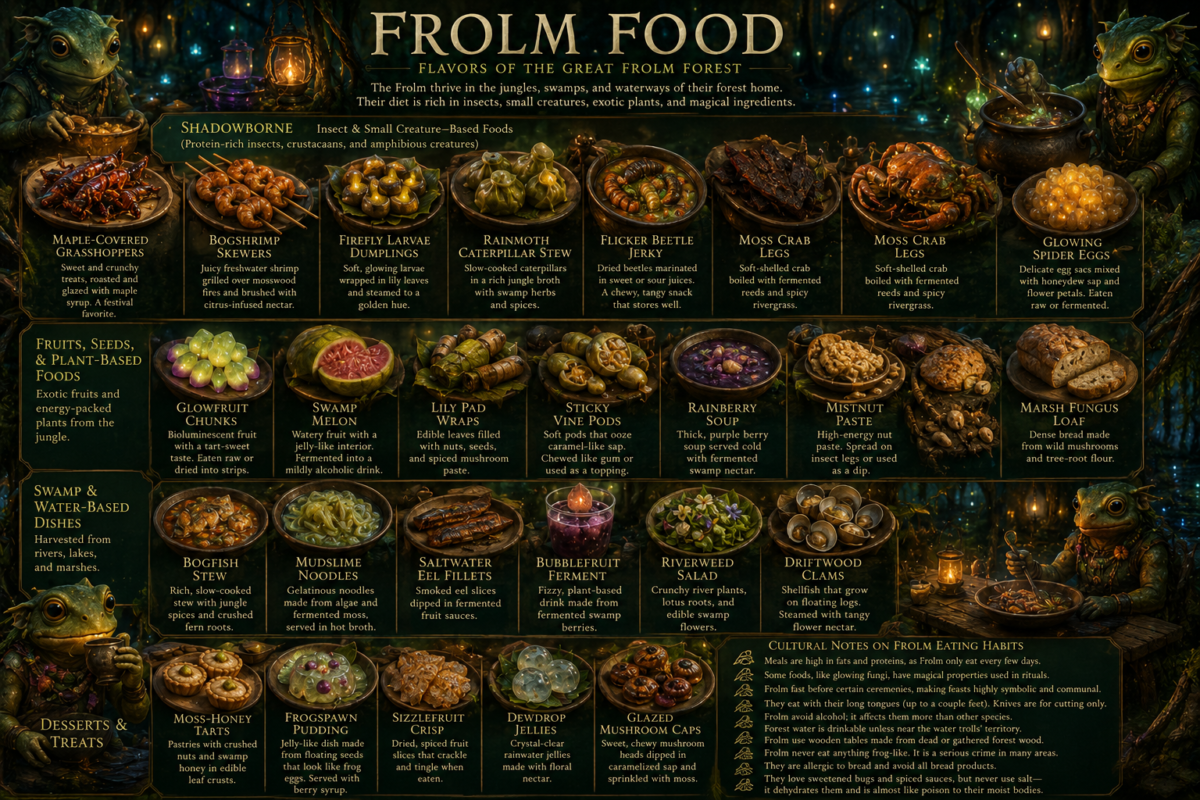
Insect & Small Creature-Based Foods
(Because they are frog-like, they often enjoy such things as protein-rich insects, crustaceans, and amphibious creatures)
Maple-Covered Grasshoppers
This is their favorite treat and is often used at festivals. It is a sweet and crunchy food made from roasted grasshoppers glazed with maple syrup
Bogshrimp Skewers
These are large, juicy freshwater shrimp, typically found in jungle pools. They like to grill it over mosswood fires and then brush it with citrus-infused nectar.
Firefly Larvae Dumplings
These are soft, glowing larvae that are wrapped in edible lily leaves. They are steamed which gives off a faint golden hue.
Rainmoth Caterpillar Stew
This is a slow-cooked dish made with large caterpillars that absorb the flavors of jungle broth and swamp spices.
Flicker Beetle Jerky
This is where beetles are dried and marinated with juices that are sweet or sour. They create a chewy, tangy snack that store well for long journeys. They are the frolm’s equivalent to the mede seeds.
Moss Crab Legs
This is a soft-shelled crab which grows near the Frolm’s water habitats. It is boiled with fermented reeds and spicy rivergrass.
Glowing Spider Eggs
These are a delicacy of spider egg sacs that are mixed with honeydew sap and crushed flower petals. They are generally eaten raw or fermented for added flavor.
Fruits, Seeds, and Plant-Based Foods
Because the frolm live in a jungle, their diet includes such things as exotic fruits and energy-packed plants.
Glowfruit Chunks
This is a bioluminescent fruit with a tart-sweet taste. These are usually eaten raw or dried into chewy strips.
Swamp Melon
This is a large watery fruit with a jelly-like interior. It is sometimes fermented into a mildly alcoholic drink.
Lily Pad Wraps
These are large edible leaves that are filled with several nuts, seeds, and spiced mushroom paste.
Sticky Vine Pods
These are soft, nutty pods which ooze a caramel-like sap when they are cracked open. They are often chewed like gum or as a topping on food.
Rainberry Soup
This is a thick, purple berry soup. It is served cold and mixed with fermented swamp nectar.
Mistnut Paste
This is a high-energy nut better made from ground jungle nuts. They are sometimes spread on roasted insect legs or can be used as a dip.
Marsh Fungus Loaf
This is a dense, spongy bread made from combining wild mushrooms and tree-root flour
Swamp & Water-Based Dishes
Being amphibious, frolm eat food from rivers, lakes, and marshes
Bogfish Stew
This is a rich, slow-cooked fish stew which is infused with jungle spices and thickened with crushed fern roots.
Mudslime Noodles
This is a gelatinous, translucent noodle. It is made from algae and fermented swamp moss and served in a hot broth.
Saltwater Eel Fillets
These are tender slices of eel that are smoked over an aromatic wood and dipped in fermented fruit sauces.
Bubblefruit Ferment
This is a fizzy, plant-based drink which is made from soaking swamp berries until they are naturally fermented and become mildly alcoholic
Riverweed Salad
This is a cold dish made from such things as crunchy river plants, lotus roots, and edible swamp flowers
Driftwood Clams
These are a shellfish that grows on floating logs. It is harvested and steamed with tangy flower nectar.
Desserts & Treats
Moss-Honey Tarts
These are soft pastries usually made from crushed nuts and honey from the swamp. They are baked and contain edible leaves.
Frogspawn Pudding
This is a jelly-like dish that is made from small floating seed that look like frog eggs. They are generally served with berry syrup.
Sizzlefruit Crisp
These are dried, spiced fruit slices which crackle and tingle a bit when eaten due to their natural effervescence.
Dewdrop Jellies
These are crystal-clear rainwater-based jellies made with floral nectar and served in costly cups.
Glazed Mushroom Caps
These are sweet, chewy mushroom heads that are dipped into a caramelized sap. They are often sprinkled with dried moss flakes, depending on the frolm’s taste.
Cultural Notes on Frolm Eating Habits
Because they only eat every few days, their meals are generally high in fats and proteins. There are some foods, such as the glowing fungi, that have magical properties to them and are sometimes used in rituals. Some frolm fast before certain ceremonies, which creates a more symbolic feel around the feast. There are certain feasts that are communal, depending on the celebration
Frolm only use knives for cutting; otherwise, they eat with their tongues, which can stretch a couple of feet.
Frolm generally don’t consume alcohol because it is unhealthy for them, more so than other species.
The water within the forest is usually drinkable unless it is around where the water trolls live, since they pollute the water. Frolm generally stay away from this part of the forest.
Frolm generally use rectangular tables that are made from the wood they gather in certain places of the forest. They often use dead wood to build them.
Frolm won’t eat anything that is frog-like because they feel like they are connected with the frogs. In fact, it is considered a severe crime in some areas within the Great Frolm Forest. They are also allergic to bread products, and can even break out in hives if they touch anything that has to do with bread.
Frolm like sweeten bugs as their favorite, and sometimes they like them with spices and homemade sauces. They don’t use salt at all because they react poorly to salt. It is almost like a poison to them because it will dehydrate them, and frolm are dependent on staying moist.