Blog

Comets of Zalonia

Sign up for my newsletter on the Right

Get Curse of Kredaria for free

Support Me on Patreon

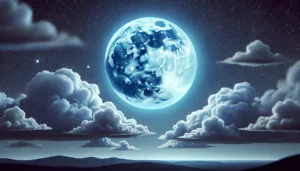
Like Earth, there are comets that pass by the skies seen from Aztharian. Some people believe that certain kinds of magic can be used when a comet is visible in the sky. There are certain magic spells that are related to certain comets, especially the ones that pass by more regularly. Here are the known comets and their purpose.

Zagarth

This comet passes by about every 83 years and remains in the sky and can be seen by the human naked eye for about 2 weeks. Species with stronger eye sight can see it for longer. It appears about 6 weeks when it comes to elves and about 12 weeks when it comes to the medes. It is believed that this comet increases psychic abilities and it is a good time to use the Mystic Prophecy cards.

Celestara’s Glimmer

Known for its radiant blue tail that lights up the night sky. It passes by every 233 years. The magical quality of this comet is Starlight Infusion, which temporarily enhances the caster’s magical abilities, making their spells more potent. The ritual is performed under the comet’s glow, the caster draws starlight into a crystal, which is then worn or held to channel the enhanced power. Celestara’s Glimmer: Appearing once every 233 years, it is said that those who make a wish upon Celestara’s Glimmer are granted clarity and vision for their future.

Frostfire Comet

Emits a shimmering, icy glow and is said to bring a chill wherever it passes. This comet comes around every 124 years. The type of magic used with this comet is called the Celestial Ward. It creates a protective barrier around a person or place, imbued with the comet’s energy. The ritual requires the caster to inscribe protective runes on the ground or on an object, invoking the comet’s name.

Dragon’s Breath Comet

Leaves a fiery trail and is associated with powerful elemental magic. This comet is the shortest one and comes around every 59 years. This comet wasn’t known until the Fifth Age, which is the only age that uses air, fire, water, earth, and spirit as the elements. Simple to very complex rituals can be performed when this comet comes around. Note:

Mystra’s Veil

Named after a legendary sorceress, this comet is said to veil the world in a mystical aura. The comet comes by every 147 years. This magic used with this comet is Astral Beacon:

Effect: Summons celestial beings or spirits to aid the caster. Ritual: Performed by lighting a special beacon or bonfire under the comet’s light, using specific herbs and incantations. Believed to be the manifestation of the sorceress Mystra’s power, this comet’s sighting is often accompanied by a surge in magical phenomena.

Glows with a golden light, believed to be a sign of divine favor. The comet comes around once every 401 years. and Rituals During Comet Sightings have to do with prosperity. However, one must approach the ritual in a certain way while facing the north and burning a green and brown candle. Magical Spells Seraph’s Wing.

Seraph’s Wing

A harbinger of hope, its golden light is seen as a divine blessing, and its arrival is celebrated with festivals and rituals of thanksgiving. Eclipse Enchantment Effect: Temporarily cloaks the caster or an object in shadow, rendering them invisible. Comes around every 72 years. Ritual: Must be cast when the comet is directly overhead, using a piece of obsidian and a reflective surface. Chrono

Shift Effect: Allows the caster to manipulate time slightly, either slowing it down or speeding it up. Comes around every 78 years. Ritual: Involves creating a timepiece infused with comet dust, which is used to channel the temporal magic.

Frostfire Comet Appearing during the coldest winters, it brings with it both destruction and renewal, as its icy flames cleanse the land. Usually, a destructive kind of magic comes from magic under this comet, which comes around every 90 years.

Dragon’s Breath Comet

Feared and revered, its appearance is often a sign of great change, marking the rise of new leaders or the fall of old empires. It orbits every 86 years and can be seen for over a week when it passes by. The magic used for this type of magic is generally dark and used on those who are under attack.

Like Earth, there are comets that pass by the skies seen from Aztharian. Some people believe that certain kinds of magic can be used when a comet is visible in the sky. There are certain magic spells that are related to certain comets, especially the ones that pass by more regularly. Here are the known comets and their purpose.

Zagarth

This comet passes by about every 83 years and remains in the sky and can be seen by the human naked eye for about 2 weeks. Species with stronger eye sight can see it for longer. It appears about 6 weeks when it comes to elves and about 12 weeks when it comes to the medes. It is believed that this comet increases psychic abilities and it is a good time to use the Mystic Prophecy cards.

Celestara’s Glimmer:

Known for its radiant blue tail that lights up the night sky. It passes by every 233 years. The magical quality of this comet is Starlight Infusion, which temporarily enhances the caster’s magical abilities, making their spells more potent. The ritual is performed under the comet’s glow, the caster draws starlight into a crystal, which is then worn or held to channel the enhanced power.

Celestara’s Glimmer: Appearing once every 233 years, it is said that those who make a wish upon Celestara’s Glimmer are granted clarity and vision for their future.

Frostfire Comet

Emits a shimmering, icy glow and is said to bring a chill wherever it passes. This comet comes around every 124 years. The type of magic used with this comet is called the Celestial Ward. It creates a protective barrier around a person or place, imbued with the comet’s energy. The ritual requires the caster to inscribe protective runes on the ground or on an object, invoking the comet’s name.

Dragon’s Breath Comet:

Leaves a fiery trail and is associated with powerful elemental magic. This comet is the shortest one and comes around every 59 years. This comet wasn’t known until the Fifth Age, which is the only age that uses air, fire, water, earth, and spirit as the elements. Simple to very complex rituals can be performed when this comet comes around. Note: Perhaps Xandria uses this magic in the fourth book.

Mystra’s Veil

Named after a legendary sorceress, this comet is said to veil the world in a mystical aura. The comet comes by every 147 years. This magic used with this comet is Astral Beacon: Effect: Summons celestial beings or spirits to aid the caster. Ritual: Performed by lighting a special beacon or bonfire under the comet’s light, using specific herbs and incantations. Believed to be the manifestation of the sorceress Mystra’s power, this comet’s sighting is often accompanied by a surge in magical phenomena.

Seraph’s Wing

Glows with a golden light, believed to be a sign of divine favor. The comet comes around once every 401 years. Magical Spells and Rituals During Comet Sightings have to do with prosperity. However, one must approach the ritual in a certain way while facing the north and burning a green and brown candle.

Seraph’s Wing: A harbinger of hope, its golden light is seen as a divine blessing, and its arrival is celebrated with festivals and rituals of thanksgiving.

Eclipse Enchantment

Effect: Temporarily cloaks the caster or an object in shadow, rendering them invisible. Comes around every 72 years. Ritual: Must be cast when the comet is directly overhead, using a piece of obsidian and a reflective surface.

Chrono Shift

Effect: Allows the caster to manipulate time slightly, either slowing it down or speeding it up. Comes around every 78 years. Ritual: Involves creating a timepiece infused with comet dust, which is used to channel the temporal magic.

Frostfire Comet

Appearing during the coldest winters, it brings with it both destruction and renewal, as its icy flames cleanse the land. Usually, a destructive kind of magic comes from magic under this comet, which comes around every 90 years.

Dragon’s Breath Comet

Feared and revered, its appearance is often a sign of great change, marking the rise of new leaders or the fall of old empires. It orbits every 86 years and can be seen for over a week when it passes by. The magic used for this type of magic is generally dark and used on those who are under attack.

  • Sign up for my Newsletter Here

Get Curse of Kredaria for free

Ancient Mysteries of Zalonia

White Holes of Zalonia

Phantom Moons

The Lost Age

Temple of Dreams (Lore of Zalonia)

Sign up for my newsletter on the Right

Get Curse of Kredaria for free

Support Me on Patreon

The Temple of Dreams sits close to the center of Zalonia. It is a place people visit to have their dreams interpreted by priests and priestesses. To become a priest or priestess, one must study at the Magdad School, where dream magic is taught through years of discipline, meditation, and controlled exposure to the dream realm.

I have an upcoming series that will be based on a priestess from the Temple of Dreams who works alongside a Protector of Zalonia to solve problems that arise both within and beyond the dream world.

The Temple of Dreams is usually a peaceful place, but it is not without danger. It is prone to manifestations known as dream wraiths—entities born from nightmares or fractured visions. These wraiths can emerge into the waking world, feeding on fear and confusion. While there are always one or two trained practitioners on site capable of confronting such threats, an overwhelming surge of wraiths can force the temple to shut its doors until balance is restored.

There are also threats from the outside world. Certain factions and power-hungry individuals have long sought to control the Temple of Dreams, believing its power could grant insight into the future—or the ability to manipulate it. For this reason, the temple is guarded at all times by trained protectors. Legend holds that a curse falls upon anyone who attempts to seize the temple by force. Whether this curse is real or simply a deterrent is unknown, but few who have challenged the temple have ever been heard from again.

Within the Temple of Dreams, long rows of carefully arranged beds line vast, quiet chambers. Each bed is separated by thin curtains etched with protective symbols, designed to contain and stabilize the dreamer’s experience. Soft, dim light—often emanating from enchanted crystals—fills the space, creating an atmosphere that feels neither fully awake nor fully asleep.

At the heart of the temple lies the Inner Chamber, a sacred space reserved for the most powerful dream practitioners. It is here that the deepest and most dangerous dreams are explored. Some say this chamber contains a gateway—not just into dreams, but into something far older.

Those who enter the temple seeking guidance do not always leave with simple answers. Dreams in Zalonia are not passive illusions; they are reflections of deeper truths, hidden fears, and sometimes forces beyond human understanding. The priests and priestesses do not merely interpret dreams—they navigate them.

And sometimes… the dream pushes back.

Sign up for my Newsletter Here

Get Curse of Kredaria for free

Creating Life – By Ralph Ellefson

The Art of World Building Workbook – By Ralph Ellefson

Fantasy World Building: A Guide To Developing Mythic Worlds and Legendary Creatures – By Mark Nelson

Support Me on Patreon


Inventing Tectonic Logic for a Science/Fantasy World

Sign up for my newsletter on the Right

Get Curse of Kredaria for free

Support Me on Patreon

A science-fantasy worldbuilding guide

If your world has mountains, volcanoes, floating continents, shattered lands, or impossible geography, there’s an invisible question readers feel even if they don’t ask it:

Why does the world look like this? That’s where tectonic logic comes in.
You don’t need Earth-style plate tectonics—but you do need an internal system that explains how landforms form, move, collide, break, or heal. In science fantasy, tectonics can be magical, alien, artificial, or alive. What matters is that they shape history, cultures, disasters, and myths in a consistent way.

This guide shows you how to invent tectonic logic that feels grounded—even when physics is optional.

1. Start with the Role Tectonics Play in Your Story

Before mechanics, ask a narrative question:

What problems does your planet’s geology create?

Tectonic systems are engines of conflict:

  • Earthquakes that destroy empires
  • Continents drifting apart culturally and politically
  • Volcanic zones powering civilizations
  • Sacred fault lines dividing belief systems

If tectonics don’t affect history, trade, religion, or war, they’ll feel decorative instead of foundational.

2. Replace Plates with Something More Interesting

Earth uses rigid plates floating on a molten mantle. Your world doesn’t have to.

Here are alternative tectonic frameworks that work especially well in magical or alien settings:

A. Energy-Driven Tectonics

Instead of heat and pressure, movement is caused by:

  • Ley lines
  • Planetary mana currents
  • Exotic particles or cosmic radiation
  • Where energy converges:
  • Mountains rise
  • Reality thins
  • Cities flourish—or collapse
  • Where energy drains:
  • Land sinks
  • Deserts spread
  • Civilizations die

This lets geology respond to magic usage, not just time.

B. Living Tectonics

The planet itself is alive—or hosts something that is.

Examples:

  • A world-beast whose muscle shifts continents
  • Crust made of regenerative bio-stone
  • Fault lines acting like nerves
  • Earthquakes become:
  • Pain responses
  • Immune reactions
    Signs of illness or awakening

This turns geology into a character, not a background system.

C. Artificial or Engineered Tectonics

Ancient builders may have shaped the planet intentionally.

Possibilities:

  • Planetary stabilizers holding continents in place
  • Gravity anchors buried beneath landmasses
  • Failsafe collapse systems
  • Over time:
  • Maintenance fails
  • Knowledge is lost
  • “Natural disasters” are actually system errors

This is especially effective for hollow worlds, ringworlds, or post-precursor settings.

3. Mountains Should Tell a Story

Mountains aren’t random. They’re scars, pressure points, or growths.

Ask:

  • Do mountains form where energies collide?
  • Are they crystallized magic overflow?
  • Are they the exposed skeleton of the planet?
  • Different origins create different cultures:
  • Mountain peoples near energy convergence may develop mysticism
  • Volcanic societies may worship renewal and destruction
  • Floating mountain chains imply unstable gravity zones

A good rule: If you move the mountains, history must change.

4. Rethink Volcanoes and Fault Lines

In science fantasy, volcanoes don’t need magma.

They might erupt:

  • Raw mana
  • Living crystal
  • Nanotech ash
  • Reality-distorting energy
  • Alien spores
  • Fault lines could be:
  • Borders between dimensions
  • Zones of time distortion
  • Magical pressure valves
  • Civilizations would:
  • Build temples there
  • Harvest energy
  • Avoid them entirely
  • Weaponize eruptions
  • A “Ring of Fire” might be a Ring of Power, fiercely contested and mythologized.

5. Floating Continents Need Anchors

If land floats, something holds it there.

  • Possible anchors:
  • Gravitational nodes
  • Magnetic crystal lattices
  • Orbital resonance points
  • Planetary consciousness
  • These anchors become:
  • Strategic military targets
  • Religious pilgrimage sites
  • Points of catastrophic failure

Floating tectonics should still obey rules. Islands drift, collide, decay, or fall—just on different timescales.

6. Geological Time Doesn’t Have to Be Slow

Earth’s tectonics work over millions of years. Yours don’t have to.
In magical or alien worlds:

  • A century can reshape continents
  • Wars can crack the crust
  • Rituals can raise islands overnight
  • But consistency matters:
  • Fast tectonics = unstable societies
  • Slow tectonics = deep traditions and long memory
  • Match geological speed to narrative tone.

7. How Tectonics Shape Belief Systems

People explain geology long before they understand it.

  • Tectonic logic naturally creates:
  • Earth gods and sky gods
  • Myths of punishment or blessing
  • Sacred mountains and forbidden rifts
  • Prophecies tied to seismic events

Even if some characters know the truth, most won’t—and that tension is powerful.

8. Maps Should Reflect Your Logic

When drawing maps, ask:

  • Why are these continents shaped this way?
  • Why is this desert here?
  • Why does this ocean exist?

If you can explain every major feature using your tectonic system, your world will feel cohesive, not accidental.

You don’t need realism—you need cause and effect.

Final Thought: Tectonics Are Invisible Worldbuilding Muscle

Readers may never consciously analyze your planet’s geology—but they’ll feel when it’s missing.

  • Invented tectonic logic:
  • Grounds fantastical visuals
  • Generates organic conflict
  • Makes worlds feel ancient and alive

In science fantasy, tectonics don’t just move land. They move history.

Sign up for my Newsletter Here

Get Curse of Kredaria for free

Creating Life – By Ralph Ellefson

The Art of World Building Workbook – By Ralph Ellefson

Fantasy World Building: A Guide To Developing Mythic Worlds and Legendary Creatures – By Mark Nelson

Support Me on Patreon

Creating Continents and Sky Islands

Sign up for my Newsletter Here

Get Curse of Kredaria for free

Creating Life – By Ralph Ellefson

How to design gravity-defying landmasses that enrich your science fantasy world

Floating continents and sky islands—levitating landmasses suspended high in the atmosphere or orbiting through space—have long captured the imaginations of readers and creators alike. Whether powered by arcane forces, anti-gravity technology, or divine intervention, these elevated realms provide limitless potential for storytelling, exploration, and symbolism in science fantasy settings.

Let’s break down how to build these aerial wonders into a fully immersive world.

🌍 1. Origins: Why Are They Floating?

Before designing the aesthetics and culture, start by asking: what holds them aloft?

🧲 Scientific/Technological Origins

Antigraviton crystals embedded in the crust.

Ancient machines from a vanished civilization regulating gravity fields.

Electromagnetic repulsion zones generated by planetary poles.

🔮 Magical/Mythic Origins

The breath of gods or celestial dragons keeping the islands airborne.

Spellwork from a forgotten age that still clings to the rocks.

Floating trees whose roots keep entire landmasses airborne.

🪐 Cosmic/Interdimensional Causes

Planar overlaps: sky islands exist where dimensions leak into one another.
Planetary fracture during a cosmic war; pieces never fell.
Orbiting “living continents” circling a world-core.

🏞️ 2. Geography and Ecosystems

Sky islands allow you to create ecologies that are completely divorced from traditional climates.

Flora: Floating spores that ride wind currents; bioluminescent canopy forests; plants that feed on solar storms.

Fauna: Feathered gliders, skywhales, gas-filled arthropods, or flying amphibians adapted to thin air.

Weather: Inverse rainfalls, static-charged clouds, or jetstream-torn skies that make travel perilous.

Each island or continent might have its own microclimate, shaped by magical weather or cosmic alignment.

🏛️ 3. Societies in the Sky

Sky-based civilizations can embody isolationism, spirituality, innovation—or war.

✨ Cultural Ideas

Sky Monasteries: Pilgrimage destinations, only accessible by air rituals.
Aetherian Guilds: Technomages who regulate gravity and air-trade.
Falling Tribes: Nomads exiled from one island, trying to land on another before their levitation fails.
Stormforged Empires: Militaristic societies that use lightning chariots to conquer lower realms.

✒️ Social Stratification

Inverting traditional class hierarchies, perhaps those higher up in the sky are lower in caste—closer to danger and divine judgment. Or maybe the highest-floating continent is the seat of a theocracy or god-king.


🛠️ 4. Travel Between Floating Lands

Transport matters. How do characters get from one island to another?

  • Skyships powered by elemental engines or giant insects.
  • Teleportation rings that activate only during eclipses.
  • Wyrm-bridges: Living creatures forming temporary paths in the sky.
  • Tethered zipline networks anchored to orbiting moons.

The risks of falling, air piracy, or gravity flux zones can add drama and danger to even routine journeys.

🔍 5. Symbolism and Lore

Floating lands naturally carry rich symbolic weight:

Isolation vs connection

  • Ascension (to godhood, enlightenment, elitism)
  • Control of gravity as metaphor for power, freedom, or instability
  • Fall from the sky as punishment, apocalypse, or mythic origin

You could weave legends of a “Cradle of the Gods” that fell long ago—or of a future cataclysm where all skylands will descend in judgment.

🧩 6. Integration with the Wider World

Don’t let your sky islands float in narrative isolation. Tie them into:

  • Trade routes (e.g., rare minerals only found in high atmosphere)
  • Conflicts (e.g., ground nations vs. sky empires)
  • Religion (e.g., the heavens literally exist above the world)
  • Magic (e.g., gravity-defying runes only function on skylands)

A floating continent might become the key battleground in a war between cosmic forces—or a forbidden zone because of ancient technologies still pulsing in the rock.

🌌 Final Thoughts: Dream Bigger, Float Higher

Creating floating continents and sky islands allows your world to break the boundaries of traditional terrain and physics. Whether isolated sanctuaries, battle-scarred citadels, or ecosystems untethered from the ground, these elevated lands offer endless potential for vertical storytelling.
Give them a reason to float. Then give readers a reason to climb.

Sign up for my Newsletter Here

Get Curse of Kredaria for free

Creating Life – By Ralph Ellefson

The Art of World Building Workbook – By Ralph Ellefson

Fantasy World Building: A Guide To Developing Mythic Worlds and Legendary Creatures – By Mark Nelson

Support Me on Patreon


Crafting Fantastical Forests

Sign up for my Newsletter Here

Get Curse of Kredaria for free

Creating Life – By Ralph Ellefson

Types of Forests in Science Fantasy Worlds

Forests have long served as rich backdrops for fantasy tales—from enchanted glades hiding ancient secrets to misty jungles teeming with magic. But in science fantasy, forests can evolve into ecosystems that blur the line between biology and arcane or technological influence. Let’s dive into unique forest types you can craft to elevate your worldbuilding and immerse readers in wonder, mystery, and danger.

1. The Living Circuitwoods

Overview

These forests combine organic plant life with technological integration. Trees have bark laced with glowing circuits, and leaves pulse with data transmissions. Some trees can communicate with each other using bio-electric signals like an organic internet.

Use in Worldbuilding:

  • Druids may “upload” spells into the forest’s memory.
  • Ancient AI deities may slumber beneath the roots.
  • Data for maps, prophecies, or spells could be found encoded in the tree rings.

2. Mistglass Groves

Overview:

A forest made of semi-transparent crystal trees that hum in the wind. The mist is infused with magical particles that alter memory, emotion, or even reality. Navigation is disorienting as the environment changes with perception.

Use in Worldbuilding:

  • Used as sacred pilgrimage sites.
  • Home to seers or reality-bending mages.
  • Forest “blooms” may reveal past or future visions.

3. The Verdant Labyrinth

Overview:

A forest that is alive and sentient. It reconfigures its layout to protect its secrets—or trap intruders. No two paths through are ever the same. Legends tell of entire civilizations lost within.

Use in Worldbuilding:

  • Houses ancient magical creatures or exiled gods.
  • May serve as a test for heroes on a sacred quest.
  • Could be a punishment for war criminals sent to wander it eternally.

4. Gravemoss Forest

Overview:

  • A cursed or post-apocalyptic forest that feeds on death. The trees sprout from the remains of fallen titans, and the moss glows with necromantic energy.
  • Vines move like tendrils, pulling bones back into the soil.

Use in Worldbuilding:

  • Ideal place to gather death-based magic.
  • Home to necromancer cults or death druids.
  • Ghostly wildlife might appear and vanish.

5. Luminflora Expanse

Overview:

A bioluminescent rainforest with plants that glow in various colors depending on the magic saturating the soil. Some plants can sing, others cause hallucinations or heal wounds.

Use in Worldbuilding:

  • Source of rare magical ingredients.
  • Often protected by native species who believe it sacred.
  • Constantly shifting colors serve as warnings or omens.

6. Starbark Reaches

Overview:

Set on an asteroid or spacefaring worldship, these forests grow under artificial gravity domes. Trees are bioengineered with bark that absorbs starlight, while leaves glow with photosynthetic energy.

Use in Worldbuilding:

  • Used for oxygen and food on space stations.
  • Forest spirits might be fused with AI cores.
  • Cultures might worship the trees as guardians of life between the stars.

7. Ashroot Wastes

Overview:

A dying forest choked by volcanic eruptions or magical wildfire. Blackened trees still stand, but their roots have developed arcane adaptations to survive underground. Some trees move slowly through the ash.

Use in Worldbuilding:

  • Source of fire and shadow magic.
  • Dwellers may ride fire beetles or hunt magma serpents.
  • Used as symbolic settings for rebirth or revenge arcs.

8. Chronogroves

Overview:

Forests where time does not behave normally. A single day may pass outside while centuries drift inside. Trees grow in reverse, seasons collapse in on themselves, and relics from all eras can be found scattered on the forest floor.

Use in Worldbuilding:

  • Travelers might age or de-age.
  • Beings trapped in time may appear in your story.
  • Cultures may use this forest to escape or hide history.

9. Whisperwill Thickets

Overview:

A gentle, dreamlike forest filled with telepathic flora. The trees and flowers project emotions or thoughts into nearby minds. Some plants can “sing” to people’s subconscious, influencing behavior or offering comfort.

Use in Worldbuilding:

  • Site of deep meditation or magical training.
  • Dangerous if the forest is corrupted and implants nightmares.
  • Priesthoods may use it to hear divine whispers.

Final Thoughts

Forests in a science fantasy setting can be far more than backdrops—they can shape culture, magic, religion, and even technology. Consider what role your forest plays: is it a barrier? A sanctuary? A forgotten memory?
By blending the wild organic beauty of nature with mystical and technological possibilities, you’ll craft unforgettable places that breathe life into your world.

Sign up for my Newsletter Here

Get Curse of Kredaria for free

Creating Life – By Ralph Ellefson

The Art of World Building Workbook – By Ralph Ellefson

Fantasy World Building: A Guide To Developing Mythic Worlds and Legendary Creatures – By Mark Nelson

Support Me on Patreon