Sign up for my newletter on the right
Get Curse of Kredaria for free
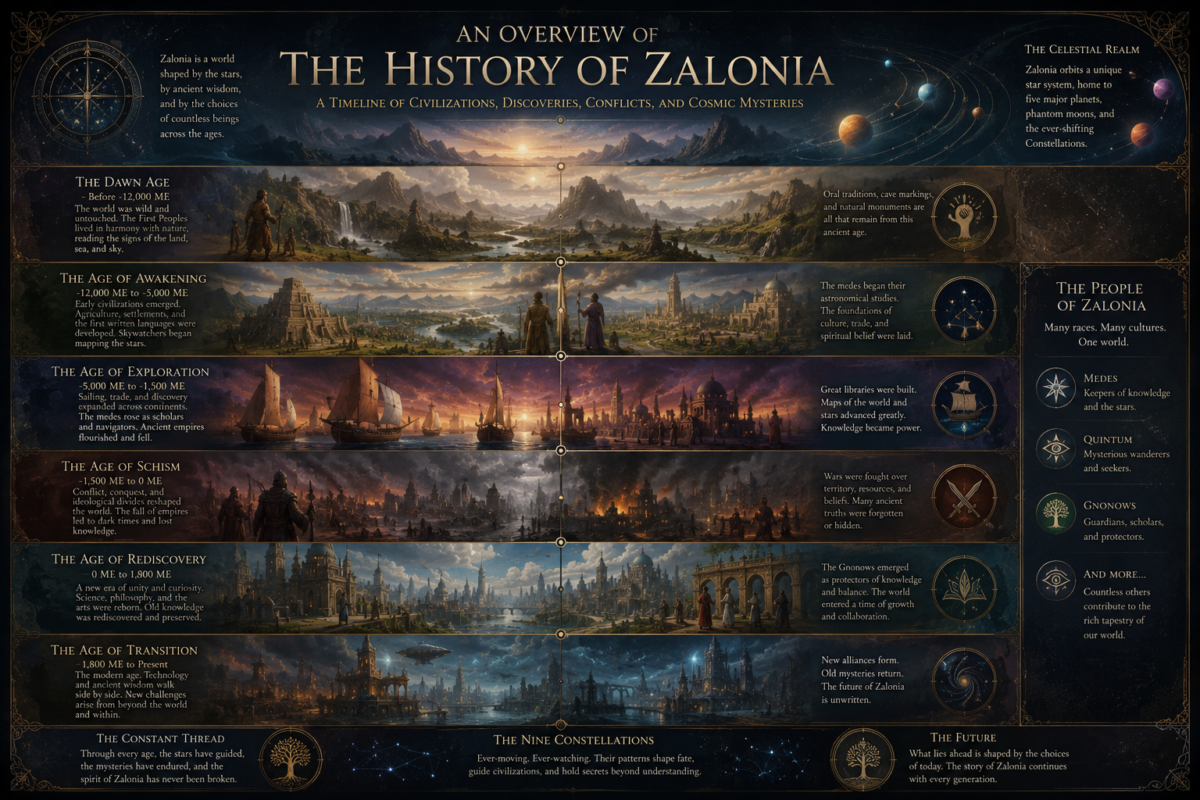
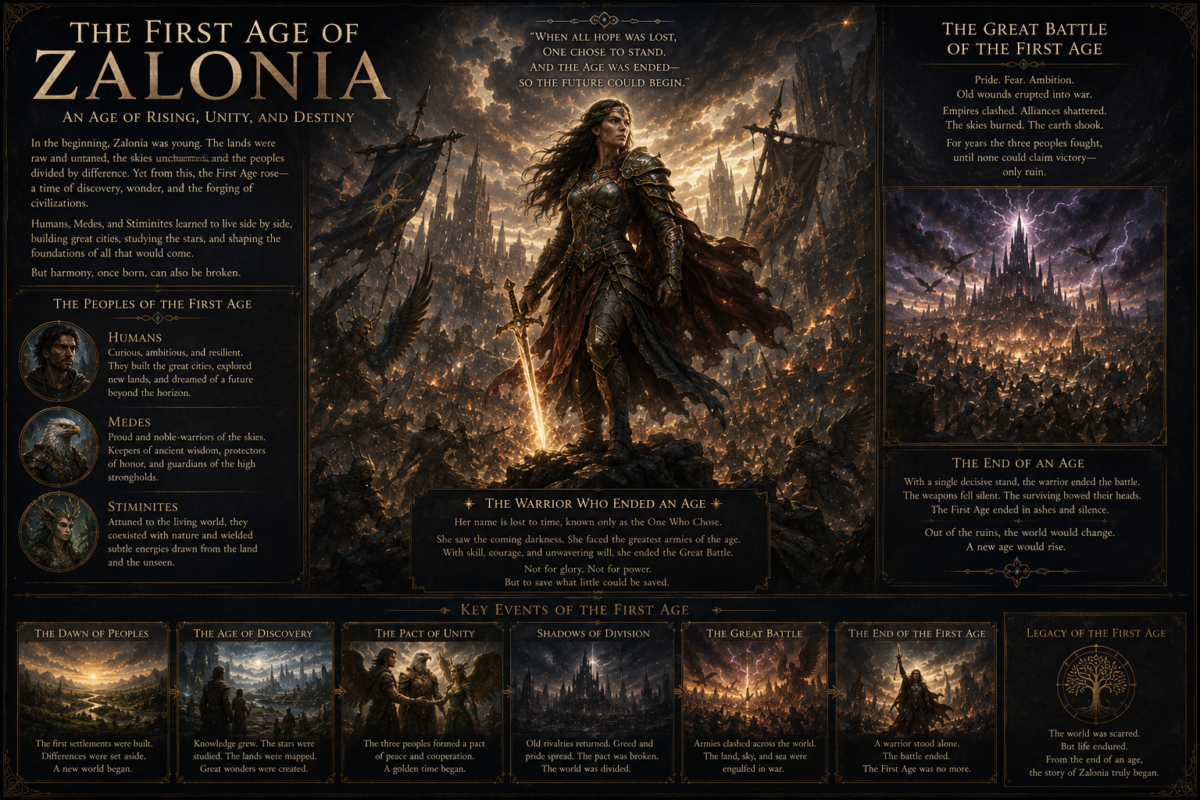
Long before the ages of tyranny and the lost, the First Age of Zalonia had begun.
The Creatrix wondered if anything ever roamed the lands; there seemed to be a time of death, which was buried under the planet. The wastelands stretched out wide over the planet, and the only other sign left that something once existed was a strange city.
The city was extremely large but uninhabited. As the Creatrix looked upon the city, she could see writings all over the walls of the buildings. The language was told in symbols that not even she could comprehend. Some of the buildings soared high into the sky, while others were short and small. The buildings came in all sizes and shapes. She walked among the streets of the empty city. The streets were clean, as if nothing had ever been there.
She could feel a sense of weakness as she walked through the city. She would not be able to destroy this city with her powers, as an ancient magic held the city together. The magic was strange and beyond her understanding. She wondered how this could be possible, as she believed that she was the only being in existence besides her son and the strange prophet who warned her of her son. Where did this magic come from? She used her spiritual eyes to view the threads of magic that were being used. They were more complicated than anything she had ever faced. This spell was intended to remain forever, as there was no known power that could undo it.
She didn’t know how she came to exist, as she had no memories of what came before. There appeared to be darkness and spheres of light, which she was only beginning to understand. She had decided that the world of Aztharian would be the place to form her creations. Zalonia was a large enough continent upon this world in which the Creatrix would perform her work, which took place in what later became known as Kredaria and spread throughout the lands.
The Creatrix’s son was her one burden. While pregnant, a prophet warned her of her son causing problems for her and her creation. Before he was born, she attempted to murder him. She used all her magic. One day, when she awoke, she noticed that she was no longer pregnant, nor was there a baby around. However, her son, the Soul Chaser, escaped into the darkness of the unknown universe. The Creatrix knew that one day he would return more powerful – So powerful that she would be unable to destroy him.
She created all the beings of the earth, human and nonhuman, along with the animals and plants, in 99 days, according to legend.
In the first 90 days, she created the plants, animals, mountains, valleys, lakes, rivers, oceans, deserts, etc. These were her special creations, which came with the final 9 days, making a total of 99 days for creation:
Day 91 – Rokers were created
Day 92 – Sxions were Created
Day 93 – Humans were recreated
Day 94 – Frolm were created
Day 95 – Elves were created
Day 96 – Medes were recreated
Day 97 – Quintum and spiritual beings were created
Day 98 – Deities were created
Day 99 – The Creatress imbued the world with her own style of magic, which included a strong sense of inner magic that wasn’t strong during the alleged Lost Age.
It soon flourished into a beautiful world which brought close to 10,000 years of mostly peace. The many races of the Zalonia worked together to form systems of government that were fair and just. Thieves and bandits were rarely found, and murderers would always seem to get caught.
The humans and Sxion spread out. The Medes went to the East, and the Quintum to wherever the sea was. The Lyrian elves went to the Northwest and the land of Lyria. The Frolm to the Great forest, and the woodland elves spread out. Rokers found rocky territory. with many mountains and deep caves.
There were only a handful of small wars that usually ended with a peace agreement. The Creatrix was proud of her creation and would often visit with the various races, at least according to some legends. She could take the form of anything she created and often learned from her own creation. Over the years, she grew in wisdom, but this wisdom brought with it a darkness. She knew that the peace wouldn’t last, and that bloodshed was the future of Zalonia.
Most species lived in small tribes. The elves gathered at Lyria between 480 and 612 First Age (1A). In 67 1A, the frolm found the Great Frolm Forest. The first city, Tarvon, reached a population of 10,000 by 712 1A. The medes founded their territory in 895 1A. Magicians founded Magdad by 2315 1A.
Humans have become the most populous and have lived throughout the world. Their reproduction rates were extremely high compared to the other races because they enjoyed making love and were very fertile.
The races of the world could soon feel that a darkness was upon them. They didn’t know what it was, as they could feel it coming from the sky. Days grew darker, and the sun’s light lost some of its power. Soon, a shadow came over the land.
It was soon after this time that the Creatrix’s son returned, and with him, he brought all his longings for vengeance.
It was 12439 1A when the first war of Zalonia broke out.
Then greed slowly entered. People wanted more comfort and would take from others. Wars entered the world at the hands of people who wanted money and power.
The elves became snobbish and stayed to themselves, besides the more friendly woodland elves.
The Soul Chaser created his own species to cause problems, but he could never unite all the elements necessary to create the races of the Creatrix. He sought revenge on the Creatrix for trying to destroy him and took it out on her creation. The Soul Chaser caused mass destruction.
Timeline
Before – Creatress and Soul Chaser –
Age 1 – 0 – Creation – The primary seven races of spoken language were created: Medes, Humans, Elves, Frolm, Sxions, Rokers, and Quintum. Animals and plants were also made. The Creation is rumored to have lasted 99 days, just like the Mystic Prophecy card deck has 99 cards. There are alternative beliefs among Zalonians in regard to how creation actually happened. Some believe it was a much slower pace and took place over billions of years through evolution. Some mede scholars believe this due to their research. It took place in Kredaria.
Age 1 – 65 – First Legal System – The first legal system and set of rules was set up in Tarvon. They were basic and set up mostly for safety.
Age 1 – 67 – Frolm Found the Great Frolm Forest – The frolm from creation went in the wrong direction in Zalonia in the beginning, and found it hard to survive. Some were able to return and went into the forest to find it more survivable for their species. In fact, as time went on, they evolved to the point where they could only survive in the Great Frolm Forest for a prolonged period of time. If they were away from the forest for too long, they would get weak and eventually die.
Age 1 – 70 – The Medes Invent Writing and calendars – Knowledge before this is a little hard to know. Humans often estimate 70 years since creation, but it could have been more than that. Medes generally believe the world is quite old and that living forms came about slowly through evolution.
Age 1 – 201 – Sashtan reaches a population of 1,000 and contains the Book of Knowledge – But people abandoned the city after a while because the land wasn’t very resourceful. There are generally a few medes who look after the Book of Knowledge, and there are often visitors. The library is actually quite small, and the Book of Knowledge is magical. It is used by certain color-coded keys that can unlock certain parts. It doesn’t unlock the same way for everyone, but gives knowledge according to need. People can fall into a different realm if the Book wills it and experience such things as history, other places in Zalonia, and so on.
Age 1 – 95-300 – Great Exploration – The great exploration took place, where various races explored the world. The greatest exploration was the ten-year exploration of the elves from the years 132-142 led by Prince Gerald. All survived this particular exploration.
Age 1 – 122 – Religion begins – The first religion was created in response to what happens after death. There were stories of the Creatrix and other deities, but little was known of the Soul Chaser. The 9 constellations became a theme in religion and magic soon after. The idea of religion began with humans, and they passed it to the Sxion. Later, the frolm would develop their own religion.
Age 1 – 480 – Elves Find Lyria – Lanugotiousian founded this land sometime within the time frame so this is just an estimate.
Age 1 – 501 – First Elven King Lanugotiousian – He is on the elven king card. He was the first one to find Lyria in 480, and many elves migrated there. He claimed kingship because of finding it and all the rulers of Lyria descend from him until it fell into the sea in the second age.
Age 1 – 606-617 – Surge in Magic – This was known as a period of time that many people wanted to learn magic but didn’t know much about the consequences. Magic was used before this but not well understood. The medes took up the study of magic to try to figure out how things worked.
Age 1 – 712 – Tarvon reaches 10,000 people – Human and Sxion were most of the population, but there were also medes, woodland elves, and quintum within the city at this time.
Age 1 – 895 – Medes founded their Northeastern territory – They were mysteriously led here by a mysterious force that has to do with the Isles of Desolation, which was once a large island full of medes and ancient wisdom before the nuclear holocaust of the lost age.
Age 1311 – 1969 – Mede “Queen” Joabie – She was the first real female leader to exist. She was known to refuse the wisdom of other medes and do her own thing. She ended up making many mistakes when trying to lead, and her well-intended arrogance brought her to an end when she thought she could leave the mede territory and go out on her own and remain safe in dangerous lands.
Age 1 – 2315-2321 – Magdad Founded. The search during the Magic Years, when people came into Magdad to learn magic, not knowing about the curse of magic. In Magdad, they sought to find a way to teach magic so it would be used appropriately. They also didn’t know that elves were pretty much doomed if they used magic. In the beginning, magic was generally used for positive things like healing and prosperity.
Age 1 – 2320-2512 – Mede “Queen” Ersella – Known as an extremely wise mede, she dedicated her life to study and assisted with leadership with wisdom and justice. She was very good at knowing who was guilty and who was not. Rather than leading with an iron fist, she showed with a kind heart. There were no battles when she was queen.
Age 1 – 3054 – 3091 – Human Queen Arubia – Ruled from Tarvon. Some consider her the most beautiful queen who has ever lived. Some even thought she was the Creatrix incarnate. She easily seduced her way to the top, and both her male and female soldiers almost always did what she asked without question. She had pitch-black hair to her waist and deep blue eyes. She stood six feet. Not only was she seductive, but she was also a master of weapons. Some criticized her because she owned male slaves. But the slaves were willing slaves. She never actually fought a battle. Instead she would enter enemy territory and mesmerize the men so easily that she would assassinate them with poison, a dagger, or whatever weapon she felt like. Her territory was never attacked. Even though historians sometimes believe negative things about her, she always made sure her people were fed and sheltered. In times of drought and hardship, she made her slaves and servants work extra hard so no one went hungry. She was the only leader in the First Age who was able to prevent anyone from starving or going homeless during her reign.
Age 1 – 4210 – 4232 – Human Queen Oliveria – She was spoiled by her parents while growing up and had very little empathy for those who suffered. She believed that imprisoning and executing the poor helped clear her territory for the noble and wealthy. However, this brought about problems, as the wealthy had no one left to work for them. The people eventually rebelled and removed her as queen.
Age 1 – 4539 – Mede Knight – Sir Gladit – Known as a pivotal leader in the first mede war. It appeared the medes were certain to lose the war, but Sir Gladit’s strategy turned the war around and the medes were victorious. The Mystic Prophecy card shows a mede in armor, holding a spear.
Age 1 – 5419 – Humans Romantic Folklore – The Love story of Princess Arubia and one of her servants begins and becomes the greatest love story ever told.
Age 1 – 5769 – Elven Queen Nire – Having an interest in magic at an early age, she went to Magdad to learn. However, because of the effects the use of magic had on her, they forbade her from learning. She decided to learn on her own and became quite strong with it. She was able to become queen of Lyria and hid her magical abilities from the elves. However, she was caught using magic eventually, and they attempted to banish her from the land. The darkness that magic-using elves face continued to corrupt her, so she refused to leave peacefully and used her magic. She was a good queen before the magic corrupted her. She honestly believed that learning magic would help her do good things. The story of Queen Nire is a classic tragedy. On the Mystic Prophecy cards, she is the Elf Queen Dark. She was one of the first elves known to be corrupted by magic. Before her, elves had very little interest in learning magic.
Age 1 – 7532 – 8163 – Mede “King” Oralis – Known as the first mede king (all were queens before), he led for 731 years. He just basically kept order and did nothing significant.
Age 1 – 8301 – 8923 – Mede “King” Eretium – began his leadership in the Mede territories as the second. He was over obsessed with knowledge and would have other beings put to death in order to understand the body. He was heartless and sought out world dominance but was assassinated by a frolm that “snuck” by the mede guards in order to get to him. Eretium is on the Mede king of darkness card.
Age 1 – 8658 – 9545 – Elven King Akkad – Akkad was a teacher who taught the art of peace among those who would listen. He warned of the dangers of war before the Soul Chaser’s Attack and was said to help spread peace among the elves.
Age 1 – 8854 – 9565 – Mede “King” Darekius – Began his rule in the Mede territories. He was the third king and was known as Darekius the Fair. He always worked to rule fairly and was able to prevent minor wars. He is on the original Mystic Prophecy deck as the mede king of light.
Age 1 – 9601 – 10223 – Elven Queen Aras – She was one of the last queens before the soul chaser returned. She had the gift of prophecy and gave warnings of what was to come. For a brief time, people considered her a liar because she died before anything was fulfilled. However, her prophecies were chronicled by one of her close servants and hidden in a place where she predicted they would be discovered when her prophecies were starting to be fulfilled. Her dire warnings spared Zalonia from being conquered for 9,000 years. Some considered her a dark elf. On the Mystic Prophecy cards, she is the Elf queen light.
Age 1 – 10054 – The Soul Chaser – Comes to Zalonia and begins to formulate his plans of getting back at the creatrix by enslaving the races of Zalonia.
Age 1 – 12621 – 12745 – Frolm “Queen” Amme – At an early age, she was one of the few female frolm to become a warrior. She was quickly recognized as one of the most skilled warriors among the frolm and was put in charge of the generals of armies. She successfully defended frolm against invasions from the soul chaser’s armies. In the Mystic Prophecy deck, she is the Queen frolm of light card.
Age 1 – 13576 – 13696 – Human King Arfound – the evil king ruled for 20 years. He used torture over any kind of superstition or just expecting someone who committed a crime. He was eventually poisoned by one of his servants who conspired with others who wanted to kill him. He was on the original human king of darkness card of the Mystic Prophecy deck.
Age 1 – 14870 – 14933 – Sxion Princess Umah – She despised her overly strict parents, so when an outside army attacked, she helped lead them through the caves so they could take advantage of a secret attack. The card shows a Sxion dressed in red, which symbolizes her inner anger, and is holding a torch in a cave.
Age 1 – 15461 – 15505 – Sxion “King” Atras – Was skilled in war and battle and worked to conquer various areas in Zalonia as the period grew darker and darker. He is the Dark Sxion King in the Mystic Prophecy Cards
Age 1 – 15467 – 15498 – Madam Krestan – She wanted to be the leader of the Protectors of Zalonia, and she seduced knights into her bed, where she poisoned them. She became the leader and wasn’t found out about her murders until after her death. The Mystic Prophecy card shows a woman dressed in skimpy knight clothes and holding a vial of dirty yellow liquid. She is in a temple of some sort.
Age 1 – 16755 – 16804 – Roker “King” Horese – Rokers generally don’t have kings, but sometimes they have leaders for various tribes. This “king” gathered over a thousand rokers together when the Soul Chaser were leading his followers to battle. Although greatly outnumbered, Horese was able to strategically place his army, which led to a victory. He is found on the Roker King of Light Mystic Prophecy card.
Age 1 – 16835 – 16876 – Roker “King” Merlo – Was king soon after Horese when the Soul Chaser made a comeback. They were ready for Horese’s strategy, but Merlo was much more devious and tricky when he invited the Soul Chasers men to a pre-battle feast. Many of the would-be attackers were poisoned. The Soul Chaser wasn’t able to conquer the Roker territory until 18234. His Mystic Prophecy card is the Roker King Dark card.
Age 1 16901 – 17101 – Quintum “King” Armillo – The final of the seven races to be overthrown by the Soul Chaser, as the Quintum generally lived near the sea ports of Zalonia. King Armillo won the first battle by drawing the quintum armies deep into the oceans, which they know how to navigate with almost perfection, and then attacked the Soul Chasers armies, making it an easy victory. He is found on the Mystic Prophecy cards as Quintum King Light Card.
Age 1 – 17233 – 19434 – Quintum King Fernadus – Quintum King Fernadus took the throne. The Soul Chaser was using his armies to tear down the wilderness before the oceans in order to defeat the quintum. Instead of using good strategies to deflect the Soul Chaser’s armies, Fernadus brought his armies to fight the Soul Chaser head-on. However, when he got to battle, he surrendered his armies in exchange for a high-ranking office in the Soul Chaser’s army. Some refer to this as “The Ultimate Betrayer.” He can be found on the Mystic Prophecy Card – Dark Quintum King Card.
Age 1 – 20,382-20,389 – The Battle of the First Age comes to a peek. The Soul Chaser captures many people and has turned many to be on his side in the war.
Age 1 – 20,388-20,389 – The Woke Phoenix dies and comes back as a woman.
See Also:
- The “Lost” Age of Zalonia
- The Second Age of Zalonia
- The Third Age of Zalonia
- The Fourth Age of Zalonia
- The Fifth Age of Zalonia
Sign up for my Newsletter on the right side
Books to Read (Affiliate Links)
Creating Life – By Ralph Ellefson
The Art of World Building Workbook – By Ralph Ellefson
Fantasy World Building: A Guide To Developing Mythic Worlds and Legendary Creatures – By Mark Nelson
Get Curse of Kredaria for free
Return to Tales of Zalonia