Incorporating Space Travel in Science Fantasy

Incorporating Space Travel in Science Fantasy: Blending Technology and Magic for Epic Journeys
Incorporating Space Travel in Science Fantasy

Introduction

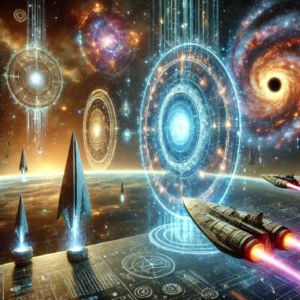
In the world of science fantasy, space travel holds a unique allure. Unlike traditional sci-fi, where space travel is often purely technological, science fantasy offers the freedom to combine advanced technology with mystical forces. Imagine starships powered by magic, teleportation methods linked to ancient rituals, or interstellar travelers who can slip between dimensions.

Blending science and magic allows for endless possibilities, opening up new pathways to create a compelling, immersive universe.

In my world of Aztharian, space travel plays a fascinating role. Though the inhabitants of Aztharian can’t travel through space themselves, an alien species known as the Gnonows has mastered the art of interstellar travel, often visiting and influencing the world. There are also other alien races that visit Zalonia through magical space travel. There are at least ten alien species that researchers in Zalonia know about. However, Zalonians themselves usually stick to the word with a few exceptions. Here’s a look at how you might create a science fantasy space travel system in your own world, with examples, questions, and ideas to spark your creativity.

1. Defining the Nature of Space Travel in Your World

The first step in designing a space travel system is to define the methods by which travel is achieved. Think about whether it’s accomplished solely through magic, advanced technology, or a blend of both.

Technology-Driven Space Travel

If your world leans heavily into sci-fi, consider space travel powered by technology. This could mean spacecraft with engines that rely on traditional physics, high-powered energy sources, or fuel systems that mimic nuclear energy or antimatter. Technology-driven travel allows for structures like spacecraft maintenance bays, space stations, and engineering challenges, adding realism and depth.

Mechanical Starships: For a science-leaning approach, you could design spacecraft that resemble the complex structures we see in modern space travel. Think rockets, space shuttles, or vast cruisers with control panels, engineering rooms, and complex fuel systems. In Azthanian, or at least close to it, aliens, which are known as gnonows, use high technology from their own universe. They have a whole satellite system that revolves around Aztharian like a miniature moon. Their ships are powered by electricity and don’t make any noise. The ships are roundish with a wing on each end. They can travel close to 500,000 miles per hour. It would only take them about half an hour to reach our moon from Earth. It takes about an hour to travel from their satellite to reach Aztharian.

Advanced Propulsion Systems: Gnonow ships are equipped with engines that generate powerful thrust, propelling them across galaxies. You could create propulsion systems that harness antimatter, nuclear fusion, or even solar sails that harness the power of stars.

Alien Aesthetic: Consider unique ship designs. The Gnonows’ ships resemble traditional flying saucers, while other alien races use craft shaped like pyramids or even biological organisms that pulse and grow. Each design adds a layer of intrigue and sets your races apart.

Magic-Infused Space Travel

Adding magic to space travel is a hallmark of science fantasy, allowing for unique and otherworldly methods of interstellar movement. Magic-based travel systems can work through spells, enchanted relics, or powerful mystical energy sources.

Spell-Powered Ships: Imagine starships that rely on runes and incantations to stay aloft. They could be fueled by mystical crystals or energy fields rather than conventional fuel. In the Tales of Zalonia, an alien race called the Elyndor uses magic to power their rocketships, making them capable of reaching speeds up to 100,000 miles per hour. The ships can create wormholes and go through them so they have access to many parts of many universes. They are explorers and will not fight unless their hand is forced.

Space Wizards: Certain elite space travelers or wizards could have the knowledge to navigate the stars through ancient spellcasting, creating paths through space where there are none. They could use magical maps or summon entities to guide them through the void. The Elyndor are known for these things and have the highest magical system there is.

Elemental Magic Engines: Ships might be powered by elemental magic such as fire, wind, or even darkness, giving them unique abilities in space. A ship powered by wind magic might generate invisible sails that harness the solar winds, while one powered by fire magic might leave a trail of blazing energy behind it. The Aethari are a species that use magic to fly their ships. They are very magical creatures and rarely rely on physical items when going from place to place.

2. Vehicles of Space Travel: Starships, Teleportation, and Wormholes

Once you decide on the source of travel power, think about the vehicles or methods by which interstellar journeys are made. In science fantasy, you’re free to explore ships, portals, wormholes, and even teleportation magic.
Traditional Starships with Magical Twists

Starships can serve as more than just transport; they can be integral to the story. Some starships might use traditional designs with futuristic features, while others rely on bizarre, fantastical forms.

Gnonows’ Spaceships: In Aztharian, the Gnonows use high-speed, saucer-shaped ships capable of holding various weapons like lasers, missiles, and bombs. These ships allow them to explore and interact with Aztharian’s inhabitants, maintaining a close watch on the planet from a satellite they orbit.

Living Ships: Imagine ships that are alive, with organic bodies that heal themselves, pulse with energy, and respond to their captain’s commands as if they were sentient beings. These living vessels could bond with their pilots, providing companionship as well as transport. An alien species called the draxul sometimes visits Aztharian. They are a hostile species, but they bond with their ships as if they were one. This allows them to control the ship with their minds. They have the fastest ships of all the alien species, reaching speeds up to 2 million miles per hour. They can also stop directly in mid-flight, which would kill most people, but because they are one with their ship, they are not harmed.

Dimension-Shifting Craft: Some starships might have the power to slip between dimensions, appearing and disappearing at will. They could leave faint afterimages or distort the space around them as they move between realities. An alien race known as the Keth’ra are small, brilliant engineers. They are able to create dimension-shifting craft and will help others build ships as long as they are friendly races.

Teleportation and Wormholes

Teleportation and wormholes are popular science fantasy concepts that offer immediate or near-instantaneous travel, creating dramatic plot possibilities.
Wormhole Travel: In Aztharian, the Gnonows create wormholes that allow them to traverse dimensions, instantly covering vast distances. Wormholes could be natural phenomena, harnessed by those who understand their mysteries, or engineered constructs that require high levels of magic or technology to open and control.

Teleportation Relics: Perhaps certain magical artifacts allow for short-range or long-range teleportation, letting characters bypass traditional travel methods entirely. The artifact could require activation through a spell or an energy source, making it a valuable and potentially dangerous item. The elyndor are an extra-terrestrial race that fly with a rock ship, but they can use the ship’s ability to create wormholes, and they will lead exactly where they need to. Fortunately, they are one of the more benevolent alien species.

Gateways to Other Worlds: For a more mystical touch, your world could have ancient, enchanted gateways that transport travelers across galaxies or dimensions. These gateways might be hidden, guarded by mythical creatures, or protected by magical wards that only the worthy can bypass. Throughout Zalonia, there are portals that lead to various versions of Zalonia that are different in ways that make it hard to survive. For example, one portal transports a person to an area where Zalonia is entirely covered with snow and ice. There are times people use these portals for a quick escape, only to find that they are in a worse situation.

3. Navigating Space Travel Challenges in Science Fantasy

Creating a dynamic space travel system means balancing the power of technology and magic with realistic challenges. Consider what obstacles travelers may face in your world.

High-Speed Travel and Time Effects

If your ships travel faster than light, think about the potential consequences. How does this impact time for the travelers? Will they experience time dilation, where time passes slower for them than it does back home? This could lead to fascinating narrative twists, where a traveler returns to find that centuries have passed.

Aging and Time Distortion: In Aztharian, the draxul’s high-speed travel could allow them to escape black holes or reverse time effects because they have ships that travel faster than the speed of light. They don’t have a high reproduction rate, so they will fly on these ships just to stay young so they don’t age.

Space Travel Strain: Traveling faster than light could put intense strain on both the body and the mind, requiring specialized training or equipment.

Characters could face physiological changes or mental fatigue after prolonged space journeys, adding stakes to each trip. The draxul seem immune to these problems, which is probably related to the armor they wear when they travel. They get the benefits of reversing age, but since they are few in number, they won’t attack Zalonia unless there are others attacking it. Their armor is good at shielding off going super fast, but they are not made for war. A sword or an axe can easily pierce through their armor.

Protective Magic or Technology Shields

In a science fantasy setting, space is filled with cosmic dangers. Shields—whether magical, technological, or a blend of both—can provide protection.
Energy Barriers: Advanced alien civilizations might use powerful energy fields that deflect space debris or enemy fire. These shields could require a steady power source or regular recharging, adding tension during extended journeys. An alien race called the myrr in Zalonia can visit Zalonia, and in times of war, they can put up defensive shields that will stave off enemies such as the laser guns the gnonows use.

Magical Aura: A ship might be surrounded by a magical aura that repels threats, providing defense against cosmic hazards and attacks. Perhaps these auras can only be activated by skilled wizards or a rare magical element, making them highly valuable and sought after. The gnonow uses renegade wizards for this purpose, making travel from their satellite to Aztharian easy. These wizards are especially helpful during the Great Battle of the Fourth Age. They also help shield the area where the Gnonows’ base is in Northern Zalonia.

Unknown Space Phenomena

Space is full of mysteries, and for science fantasy, these mysteries can be magical as well as scientific.

Dimensional Rifts: Ships could encounter rifts in space that lead to strange, uncharted territories, each with unique rules and environments. These rifts might be home to bizarre creatures, energy anomalies, or lost civilizations. The The elyndor sometimes in counter these and find themselves outside of the universe. Sometimes they can see the universe as a whole big flat shape full of galaxies, quasars, and other space items.

Sentient Nebulae: Imagine star systems where nebulae are sentient and aware of travelers passing through. These entities could communicate telepathically, offer guidance, or even impede journeys, forcing travelers to negotiate passage.

4. Building the Societies and Cultures of Space Travelers

Consider the cultural impact of space travel on your world. Some cultures might view space travel as a rare and revered skill, while others treat it as routine.

Elite Space Navigators: In Aztharian, only the alien Gnonows possess advanced space travel abilities, making them a formidable presence. You might have a class of elite space navigators who are highly trained in both technology and magic, respected or feared by those who stay planet-bound.
Intergalactic Diplomacy: Space travel could foster alliances or tensions between planets or species. Diplomatic ships might be equipped with advanced communication tools, allowing ambassadors to interact and negotiate with distant worlds.

Conclusion

Incorporating space travel in a science fantasy world offers a wealth of possibilities. By combining magical and technological travel methods, you can create a unique setting that stands out. Whether it’s starships powered by magic, wormholes that bend dimensions, or high-speed vessels equipped with advanced weapons, space travel adds depth, excitement, and intrigue to any science fantasy world.

By asking questions about the origins, mechanics, and social impact of space travel, you’ll bring new layers of realism and mystery to your setting, inviting readers to explore a universe where technology and magic coexist in harmony—or conflict.

Creating Life – By Ralph Ellef

The Art of World Building Workbook – By Ralph Ellefson

Fantasy World Building: A Guide To Developing Mythic Worlds and Legendary Creatures – By Mark Nelson

Support Me on Patreon

Get the electronic version my book, “Curse of Kredaria” for free at various websites including Amazon.


Bringing Aliens into a Fantasy World

Introduction

Fantasy and science fiction are two distinct genres, but what if you could merge them by bringing aliens into a fantasy world? Imagine a setting where medieval kingdoms, magic-wielding wizards, and dragons exist alongside advanced alien civilizations. In my own world of Aztharian, I’ve incorporated high-tech alien species into a traditional fantasy realm, creating new layers of intrigue, mystery, and conflict. While Aztharian’s technology level resembles that of medieval Earth, these aliens bring futuristic technology and ulterior motives, often presenting themselves as gods or supernatural beings to the native people. This blend of genres can open up fascinating storytelling possibilities.

If you’re considering adding aliens to your fantasy world, here are some ideas to get you started, along with key questions to help you define their role, motives, and interactions with your world’s inhabitants.

1. Alien Deities: Using Ancient Astronaut Theories in Fantasy

The idea that aliens might have influenced ancient civilizations, often presented as “ancient astronaut theories,” has fascinated people for decades. While these theories are controversial, they provide a compelling concept to explore in a fantasy world. Imagine that aliens with advanced technology once visited your world, leaving behind artifacts or knowledge that shaped its cultures. In Aztharian, some alien races known as the gnonows present themselves as gods, wielding their technology to awe and control the population.

Aliens could also have their own pantheons that they pay homage to. The gnonows in the Tales of Zalonia series have their own god, who is kind of a nasty and greedy god. He punishes the gnonows if they don’t steal enough of the purple gems from Aztharian. This is their only God and has power equivalent to the Soul Chaser. He was born from the Ancient One of Hate and a Second Generation deity named Alucia. He shows his presence during the Great Battle of the Fourth Age and fights the Soul Chaser.

How Alien “Gods” Influence Culture

When aliens pose as gods, they can manipulate civilizations, shaping religions, social hierarchies, and even influencing wars. They might grant technology or knowledge to those they favor or withhold it from those they deem inferior. The locals, unaware of the aliens’ true nature, could revere these beings and develop entire belief systems around them. This dynamic can add depth to your world, raising questions about faith, power, and manipulation.

Story Ideas with Alien Deities

Relics of the Gods: Create ancient relics that supposedly contain divine power but are actually alien artifacts. These relics might grant abilities or powers, but come with hidden dangers. In Aztharian, there are some artifacts that were made by the ancient aliens that the people of the planet wonder about. For example, there are ancient writings and the inhabitants of Aztharian believe them to be holy books when they were actually written by the aliens. There is also eleven strange statues that were built in the Desert Wastes and not even the highly intelligent medes know where they came from.

The Return of the Gods: Imagine that the aliens left long ago but have returned to reclaim their “kingdom” or reestablish control. How do the people react? Are they terrified, or do they rally against the “false gods”? This is what the Great Battle of the Fourth age is about. Some believe they were originally in our world during the Lost Age, but no one knows for sure.

2. Deciding on Alien Motives: Friend, Foe, or Observer?

When bringing aliens into your fantasy world, their motives will shape how they interact with its inhabitants. Here are some options to consider:

Hostile Aliens

In Aztharian, some alien species are hostile such as the gnonows, using their advanced technology to manipulate or subjugate the local population. They might see the natives as a lesser species, controlling them for resources, territory, or sheer amusement. Hostile aliens could even manipulate different factions within the world to incite wars or foster chaos, all while remaining in the shadows.

Benevolent or Curious Aliens

Not all aliens have to be enemies. Some could be peaceful explorers, visiting the planet to learn more about its cultures, resources, or magical systems. Perhaps they are intrigued by the presence of magic and seek to study it, offering technological insights in exchange for knowledge about magical practices. These aliens might even be allies, helping local populations develop or defend themselves against other threats. In Zalonia there is an alien race called the Fluabards that visit Zalonia here and there in order to explore or study. The inhabitants usually leave them alone because they aren’t doing anything to harm people. They play a part in aiding the Zalonians in the Great Battle of the Fourth age, but they are few in number and it is hard for them to bring many of their kind to travel to Zalonia.

Neutral Observers

Some aliens may choose not to interfere with the world at all, observing from afar and adhering to a “non-interference” policy similar to Star Trek’s Prime Directive. These aliens could be an elusive presence, occasionally spotted but never directly interacting with the locals. Such a dynamic can create an air of mystery around them, making them a subject of legends and speculation. Sometimes an alien can accidentally create a wormhole that leads to Zalonia. Usually these aliens are non-threatening unless they are attacked first. When they see an inhabit of Zalonia, they usually make a dash for the wormhole in order to escape. The medes refer to them as Batrixes.

3. Different Alien Species and Their Roles in Your World

Incorporating multiple alien species with different purposes or levels of technology can add complexity to your world. Each species could have its own agenda, causing tensions not only with the locals but also among themselves.

Types of Alien Roles

The Manipulators: Aliens who meddle in local affairs for personal gain, posing as gods or wielding power to control populations.

The Scientists: Those who visit purely for research, respecting the local ecosystem and studying the native species and magical phenomena.

The Explorers: Adventurous aliens who form alliances, help locals, or perhaps even fall in love with the people of your world, integrating into their society.

The Conquerors: A warlike species that sees the world’s resources as theirs to take, possibly triggering a planet-wide conflict.

How Alien Species Interact with Each Other

Consider creating rivalries or alliances between alien species. Perhaps one species tries to protect the world from the influence of another, creating a cosmic struggle with the local population caught in the middle. Or, two species could be vying for control over a unique resource found only on this planet, bringing their conflict directly into the world.

4. The Locals’ Reactions to Alien Visitors

How the inhabitants of your fantasy world react to aliens can vary widely based on cultural context, prior contact, and the aliens’ behavior. During the Fourth Age of Zalonia, the aliens start a continent wide battle in Zalonia.

Fear and Reverence

For many locals, the appearance of aliens with advanced technology would be terrifying. They may revere these beings as deities, fearing their wrath and seeking their favor. This could lead to the formation of cults, rituals, or even sacrifices in honor of the aliens. It was rumored that during the Lost Age of Zalonia, the gnonows convinced people that they were the gods and that they would destroy anyone who was disobedient to them. Their main goal was to gain a certain purple gem that is valuable on their home planet. Sometimes they would even get people to sacrifice someone who opposed them.

Curiosity and Adaptation

If the locals are used to alien visits, they may react with curiosity rather than fear. Over time, they might adapt by integrating alien technology, language, or customs into their own culture. In Aztharian, for example, certain tribes have come to expect periodic encounters with these “divine beings” and have even developed symbols and rituals that reflect this influence.

Resistance and Rebellion

If alien interference becomes oppressive, some groups might band together to resist, possibly forming underground movements to reclaim their autonomy. These rebels could seek to acquire alien technology or ally with sympathetic alien species, creating the potential for a sci-fi-inspired resistance storyline within a fantasy setting. One of the rumors among Zalonians is that during the Lost Age, there was a species called the stiminites who became slaves to the humans, digging for purple gems. One time, a stiminite rose up and created a rebellion against being used as slaves.

5. Alien Technology vs. Magic: Balancing Powers in Your World

When adding high-tech aliens to a fantasy world, it’s essential to consider how alien technology interacts with local magic systems. Does magic counteract technology, or do the two coexist without interference? In Zalonia, magic can be used to defend against Hi-tech weapons. Spells of protection can be used to minimize the damage that technological weapons can cause. The medes have figured out that the aliens weapons can be reflected back at them with the use of mirrors.

Magic That Thwarts Alien Technology

One option is to make magic an equalizing force against alien technology. Perhaps certain spells or magical wards can disrupt alien devices, forcing them to rely on non-technological methods when interacting with locals. You could even create an order of wizards dedicated to defending the world from extraterrestrial threats, using ancient spells to counteract alien invasions. In Zalonia there are a few wizards who learn how to reflect the alien races lasers back at them. However, very few wizards know this particular kind of magic because they don’t exactly what the aliens are using against them.

Technology That Mimics or Enhances Magic

Alternatively, alien technology could mimic or enhance magical abilities. In Aztharian, for example, certain aliens possess devices that appear to locals as powerful magical artifacts, furthering the belief that they are divine. They are actually using laser guns which also can be reflected by enchanted mirrors. The idea of using mirrors was discovered during the Great Battle of the Fourth Age in Zalonia. By incorporating elements that blur the line between magic and technology, you can create a seamless science-fantasy world where the two are interconnected.

6. Alien Travel and Cosmic Distance: How Do They Reach Your World?

How the aliens travel to your fantasy world can influence their level of involvement. Do they arrive via starships, or do they use advanced portals or wormholes? The aliens that visit Zalonia usually come from a satellite that revolves around the planet. There is a secret wormhole in the back of the satellite that leads to the aliens’ world. They have flying ships that can operate like a housefly which can be flown with only two people aboard. They have bigger ships if they want to bring a larger population of gnonows to the planet.

Starships and Spacecraft

Aliens with visible starships add a sci-fi aesthetic, creating opportunities for stories of alien invasions, crashed vessels, or cosmic exploration. Locals might see a landing starship as a sign of gods descending from the heavens, giving the aliens an aura of mystery and power. During the Great Battle of the Fourth Age in Zalonia, the medes have devices that can detect a ship that has entered the atmosphere and they try to send warnings to the places where it appears they are flying to. The aliens like to pose themselves as gods but not everyone believes them.

Wormholes and Portals

Alternatively, aliens might access the world through interdimensional portals or wormholes, allowing for quick, unpredictable visits. This method adds a mystical element to their arrival and departure, keeping locals in awe and maintaining an air of mystery. There are several portals in Zalonia that lead to different worlds. In the Elements Pentalogy, the main characters fall through a portal that takes them to a bizarre dimension. There are also other portals that lead to various other worlds. Sometimes people get stuck in them, never to return. There are various worlds that these portals can take them to, including different versions of Aztharian.

Conclusion: Building a Science Fantasy World with Aliens

Incorporating aliens into a fantasy world allows you to blend two genres, adding unique dynamics and endless storytelling potential. In my own world of Aztharian, alien species serve as powerful, sometimes manipulative figures, creating both allies and enemies among the locals. Whether you want aliens to be gods, conquerors, or curious explorers, they can add mystery, conflict, and cultural complexity to your setting.

As you build your world, ask yourself: What role do these aliens play, and how do they impact the lives and beliefs of the native people? By answering these questions and thinking through the implications of alien presence, you’ll craft a world that’s as wondrous as it is complex, inviting readers to explore a place where the boundaries between magic and science are beautifully blurred. In my world, there are four types of aliens that are hostile and six that are either neutral or good. I have an alien race called the Aethari and here is their profile:
Masters of gravity and flight. They are known for their physical beauty. They are slender, luminous and have wing-like energy projections. They have the ability to float gracefully. Some in Zalonia worship them as goddesses, but they try to let the Zalonians know that they aren’t special as to be worshiped.
Their strongest magical ability is gravity manipulation. They can cause objects to float just by thinking of them. They often use this ability in self-defense, where they will pull things off the ground, tables, walls, or whatever else is nearby and fling the items at their enemy.

They also have the problem of having human men falling in love with them because of their captivating beauty. Most of them live in cities suspended in orbit instead of planets. They also have the ability to explore the inner workings of the stars because they are immune to heat. They are also one of the rare species that can survive the magic of Ruinoneo.

They are an all female race and don’t need a partner in order to reproduce. They can’t fall in love the way humans can. They are explorers and diplomats

Creating Life – By Ralph Ellefson

The Art of World Building Workbook – By Ralph Ellefson

Fantasy World Building: A Guide To Developing Mythic Worlds and Legendary Creatures – By Mark Nelson

Support Me on Patreon

Buy my book, “Curse of Kredaria” for free at various websites.

Mixing Magic with Science: How to Blend Technology and Fantasy in World-Building

Magic and Science

Image by Stefan Keller from Pixabay

Blending Magic and Science in World-Building: Crafting the Best of Both Worlds

Introduction

As a writer, I sometimes feel torn between creating fantasy and science fiction. Fantasy allows for limitless imagination, letting me escape reality entirely to explore magical realms and mystical creatures. Science fiction, on the other hand, satisfies my curiosity about the laws of physics. This enables me to delve into scientific principles even though I’m not a physicist. But what if there’s a way to combine the best of both worlds?

In crafting the world of Aztharian, I initially approached it as a pure fantasy setting with battles fought using medieval weapons like swords, spears, and powerful magic. Yet, I couldn’t help but wonder if magic in Aztharian could be rooted in scientific principles. Could there be a balance where the seemingly mystical forces are influenced by physics and universal laws? In exploring this idea, I discovered exciting ways to blend magic with science. This helped me in creating a unique hybrid that shapes the Aztharian world. Here’s how I approached it and some ideas to help you incorporate science-inspired magic in your own world-building.

1. Defining the Role of Magic and Science in Your World

When combining magic and science, the first question to ask is: How do they coexist? How do the inhabitants of your world perceive them? Is magic seen as a mysterious force, or is it studied and understood similarly to scientific phenomena? The answers will set the tone for how magic operates within your world’s laws of physics.

For Aztharian, I envisioned a world where people rely on magic but have developed a scientific understanding of it. In this world, magic isn’t just an unexplained force—it has a structure, and its effects can be predicted and measured. I wanted Aztharian’s magic to feel as if it had scientific roots, so I explored theoretical physics concepts to create a magical system grounded in science.

2. Antimatter as a Source of Magic

In researching potential scientific foundations for magic, I came across the fascinating concept of antimatter. Physicists often wonder why our universe has so much more matter than antimatter. This question led me to imagine a world where magic is connected to antimatter, giving it a unique and volatile energy source.

In Aztharian, certain individuals can tap into antimatter to harness magical abilities. However, this is not without risks—using antimatter as a power source could lead to catastrophic explosions if not handled carefully. To avoid destruction on an astronomical scale, I needed to adjust Aztharian’s atomic structures. Instead of standard matter or antimatter, the inhabitants and objects of Aztharian are composed of a neutral particle structure, which interacts safely with antimatter. This “neutral force” enables magic to draw from antimatter without causing explosions, adding an element of tension and restraint for magic users.

3. Exploring White Holes as a Magical Phenomenon

Another concept that sparked my imagination was the theoretical white hole, an inverse of black holes that would repel matter and light instead of pulling them in. If black holes swallow everything, a white hole would theoretically push everything away, including light. Ironically, this would make white holes appear dark, not white, due to the absence of light.
In Aztharian, I decided to incorporate white holes as a rare but observable cosmic phenomenon. Occasionally, sudden “explosions” in the night sky, caused by white holes, are visible to Aztharian inhabitants, sparking awe and curiosity. Some Aztharians consider these white holes divine signs or manifestations of the gods, while others view them as natural phenomena. By using white holes, I was able to add a scientific concept with mystical implications, which contributes to the cultural beliefs and lore of the world.

4. Ancient Aliens as Deities

While I’m not personally invested in ancient alien theories, the concept aligns well with science fantasy by combining ancient times with advanced technology. In Aztharian, extraterrestrial beings with advanced technology visit the planet, manipulating the population and presenting themselves as gods. The inhabitants, unable to comprehend the aliens’ technology, perceive their machines and abilities as divine. This dynamic adds layers to Aztharian’s social structure, where religion, technology, and control intertwine. The “gods” use their perceived divinity to influence and control the people, who, in turn, create myths and legends around these powerful figures.

5. The Fifth Force of Nature: A New Fundamental Power

In our world, scientists have identified four fundamental forces: gravitational, electromagnetic, strong nuclear, and weak nuclear. But what if there were a fifth force, unique to your world? This force could be magical in nature, woven into the fabric of the universe, and accessible to those trained in its usage.

For example, imagine a “magical field” that permeates Aztharian’s atmosphere, acting as an invisible energy source for spellcasting, rituals, or enchanted items. The field could behave similarly to electromagnetic fields but with distinct properties, enabling magic users to manipulate it with specialized tools or gestures. By designing this fifth force with its own scientific rules and limitations, you can create a magic system that feels both mystical and scientifically plausible.

6. Quantum Mechanics and Spellcasting

Quantum mechanics, with its unpredictable and paradoxical nature, is another rich source of inspiration for blending science with magic. Concepts like particle entanglement, superposition, and uncertainty can serve as foundations for a unique magical system. In Aztharian, I introduced the idea that spellcasting relies on manipulating quantum particles, where practitioners must concentrate on influencing outcomes, similar to focusing intent in traditional magic.

For instance, wizards in Aztharian might use spells that alter quantum states, allowing them to teleport by “entangling” with a specific location. However, the uncertainty principle introduces an element of risk—if a spellcaster is distracted or loses focus, the results could be disastrous. This adds a layer of complexity and danger, making magic both a powerful and risky tool.

7. Symbiotic Magic and Technology

Another approach to blending magic with science is creating symbiotic relationships between the two. In Aztharian, magic and technology coexist and sometimes even enhance each other. For example, magical artifacts might require scientific devices to function correctly, or advanced machines might need magical energy sources to operate.

Imagine a society where healers use enchanted medical devices that detect illness through magical auras but require technologically enhanced lenses to make those auras visible. Or consider alchemists who need technologically engineered containment vessels to safely experiment with volatile magical elements. By creating a symbiosis between science and magic, you can explore the idea that one cannot fully thrive without the other.

8. Space-Time Manipulation: Traveling the Cosmos with Magic

Space-time manipulation is a staple of science fiction and fantasy, so why not blend the two? In Aztharian, space-time magic allows skilled practitioners to create portals, travel between planets, or explore alternate dimensions. This is possible because magic in this world has evolved to influence the fundamental structure of the universe. However, such manipulation is demanding and risky, often requiring the collaboration of multiple spellcasters to open stable portals.

To prevent overuse of such a powerful ability, I established that space-time magic takes a heavy toll on the body, limiting how often a character can safely perform it. Space-time manipulation in Aztharian isn’t just a convenient plot device—it’s a rare skill with consequences that impact the narrative, creating tension and adding depth to the magic system.

Conclusion: Crafting a World Where Magic and Science Thrive

Blending magic and science in a science fantasy world opens up endless possibilities for storytelling. Whether you’re grounding magic in scientific principles or adding supernatural twists to natural laws, this approach lets you explore fascinating themes and create a world that feels both magical and logical. In Aztharian, this balance enriches the characters, culture, and conflicts, making the world a place of wonder and complexity.

For writers interested in crafting their own science-fantasy world, consider the scientific concepts that inspire you. From antimatter and quantum mechanics to cosmic phenomena, there are countless ways to incorporate these ideas into your magic system. By blending science and magic, you create a unique setting that offers both the escapism of fantasy and the curiosity-driven depth of science fiction.

Sign up for my Newsletter Here

Books: Affiliate Links

Creating Life – By Ralph Ellefson

The Art of World Building Workbook – By Ralph Ellefson

Fantasy World Building: A Guide To Developing Mythic Worlds and Legendary Creatures – By Mark Nelson

Support Me on Patreon

By my book, “Curse of Kredaria” for free at various websites.