The Role of Prophecies and Ancient Knowledge in Science Fantasy

How to use prophecies, ancient texts, and lost knowledge as key plot devices

In science fantasy, the past and the future often converge, creating rich opportunities for storytelling that blends technology, mysticism, and myth. One of the most potent tools in this genre is the prophecy or lost knowledge trope—ancient scrolls, crumbling AI data archives, celestial carvings, or whispered destinies written in the stars.

This blog will explore how to integrate these elements effectively into your science fantasy world to deepen lore, build suspense, and create powerful narrative arcs.

📜 1. Why Prophecies Still Matter in Futuristic Settings

At first glance, prophecies might seem like a trope best suited for medieval fantasy. However, in science fantasy, they gain new dimensions:

Digital Prophecies: Data shards left by extinct civilizations, interpreted as religious texts

AI Oracles: Superintelligent machines that forecast future events through quantum prediction

Celestial Alignments: Stellar events triggering ancient awakenings or cosmic resets

In these settings, prophecy isn’t about fate—it’s about patterns, interpretation, and belief. This allows you to explore themes of free will, misinformation, and destiny vs. design.

🧠 2. Types of Ancient Knowledge You Can Use

Your world’s ancient knowledge can come in many forms, each with a different narrative flavor:

a) Lost Techno-Mystic Artifacts
These could be powerful relics from a vanished race that blend tech and magic. Think sentient crystals, soul-bound AI, or starmaps that rewrite themselves.

b) The Forgotten Language

A magical/scientific language that alters reality when spoken correctly. Understanding it may require multi-species cooperation or genetic unlocking.

c) Myth-Tainted Science

Legends told by spacefaring tribes that are actually distorted records of quantum experiments, time travel, or planetary cataclysms.

d) Forbidden Archives

Cosmic knowledge locked away by those who fear its misuse. These can become moral dilemmas: should your heroes open the vault, or seal it forever?

🔮 3. Using Prophecies to Drive the Plot

Prophecies can shape your story’s structure in several ways:

a) Self-Fulfilling Prophecies

A prophecy that leads characters to behave in ways that cause its own fulfillment. This raises questions of agency and control. This is something that is found in my world of Aztharian. Before creating the world, the Creatrix is given a prophecy that the son she will bear will reek havoc. Therefore, she tries to destroy the child with magic before he is born. However, she fails and still births her son who goes away for a time. However, he comes back to the world to take vengeance on the Creatrix for trying to abort him. If she had not known the prophecy, she may not have tried to kill him.

b) Prophetic Misinterpretation

Perhaps the wrong person is thought to be the chosen one, or the true meaning is hidden in metaphor—twisting the journey entirely.

c) Multiple Competing Prophecies

Various factions may hold conflicting interpretations of ancient texts. These become the basis for wars, alliances, or religious schisms. In Aztharian, the medes are the ones who are trying to interpret prophecies since they are the most intelligent species of the world. However, sometimes they disagree over various interpretations. There is also the great abandoned city of Ruinenio which has prophecies encoded all over their walls. It is rare that anyone has the gift of reading these prophecies, so the ones that can read them are often sought out, and various interpreters try to interpret them.

d) Doomsday Codes

Prophecies tied to planetary destruction, dimensional collapse, or cosmic rebirth, offering a ticking clock element.

🌌 4. Where to Embed Ancient Knowledge in Your World

Ancient knowledge becomes more immersive when embedded in environmental storytelling and cultural practices.

Planets with Monolith Temples: Covered in star-glyphs only visible under aurora storms

Floating Ruins: Orbiting dead stars, only accessible via dreamwalking

Underground Vault Libraries: Guarded by robotic monks or time-stalled guardians

Mind-Carved Caves: Where prophecy is written in shifting thought-forms visible to empaths

This turns ancient knowledge into an adventure unto itself—exploration, puzzle-solving, and peril.

⚔️ 5. Characters Who Interact with Prophecies

To bring ancient knowledge to life, include characters who interact with it in different ways:

The Skeptic: Refuses to believe in ancient lore, often serves as a voice of reason

The Interpreter: Linguist, priest, or AI who deciphers forgotten texts

The Seeker: Desperate to fulfill or prevent a prophecy, possibly at great cost

The False Chosen One: Believes they’re part of the prophecy but isn’t—or is being manipulated

Each of these characters allows you to explore different thematic angles of truth, belief, and manipulation.

🧪 6. Blending Magic and Science Through Prophecy

In science fantasy, ancient texts may encode both magical power and scientific knowledge. For example:

A ritual chant is actually a quantum frequency key to unlock a stargate

A sacred tattoo is a nanotechnological code passed genetically

An oracle’s vision is a side effect of exposure to a wormhole particle storm

This duality of interpretation enriches your lore and allows different cultures in your world to see the same thing from vastly different lenses.

✍️ 7. Writing Tips for Creating Your Own Prophecies and Texts

Keep it vague enough for multiple interpretations

Use metaphor and mystery: refer to “the child of storms” or “the mirror that ddoes not reflect”

Embed internal contradictions to challenge blind faith

Include forgotten or mistranslated words that change the meaning over time
“When the Sky Cracks and Three Moons Bleed, the Sleeper Will Wake… unless the Black Flame is fed first.”

Is the “Sleeper” a god, a starship AI, or a planet-wide virus? That’s where your narrative shines.

Support Me On Patreon

Purchase Creating Life – (Affiliate Link)

Return To Home Page

Constructing a Pantheon of Gods and Mystical Entities

Ideas for designing cosmic beings and magical gods unique to a science fantasy setting

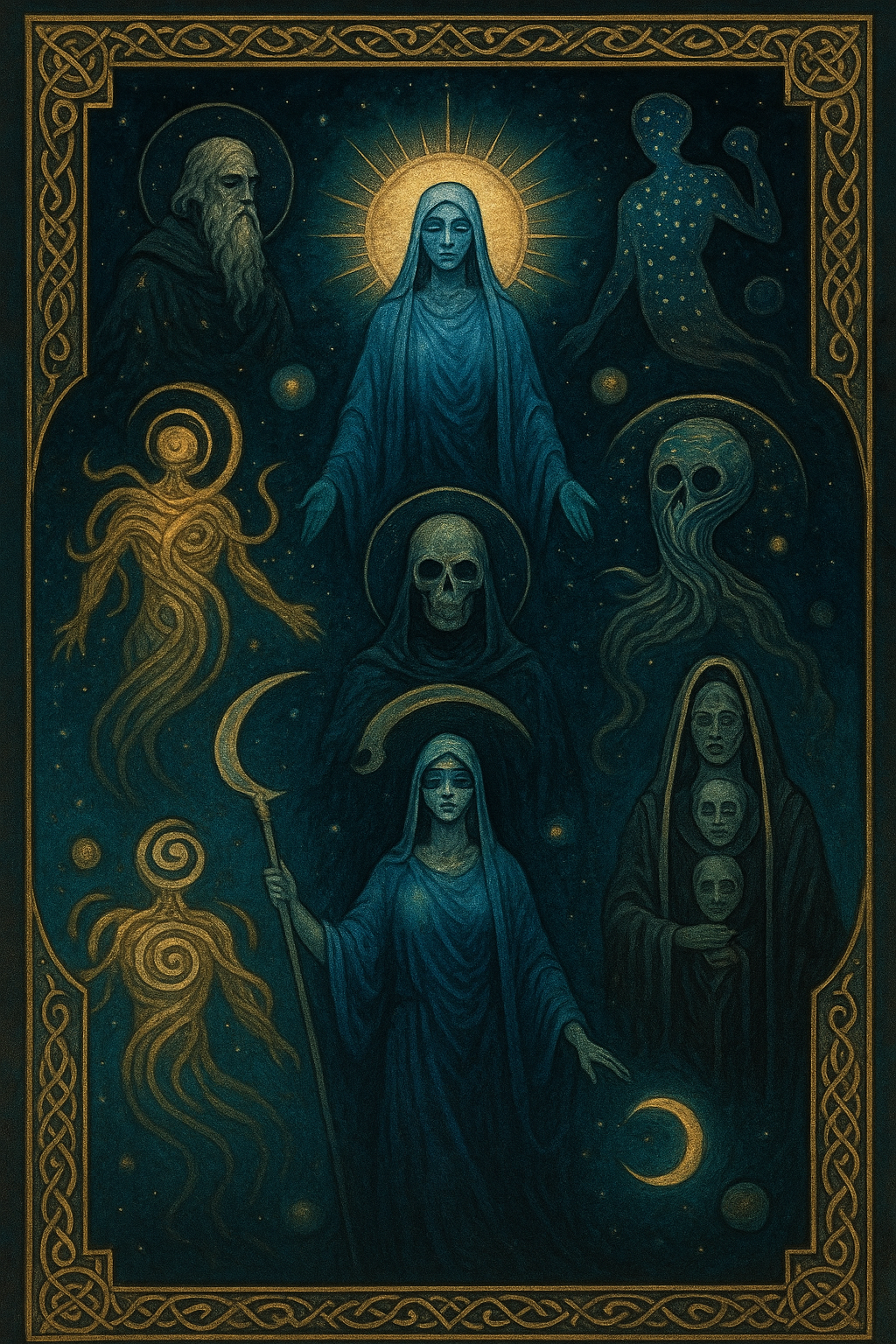
In science fantasy storytelling, gods and mystical entities don’t just live on mountaintops or rule over storms. They might exist as quantum consciousnesses, time-bending architects, or soul-weavers in dark matter realms. Your pantheon can reflect the fusion of science and mysticism, offering a rich tapestry of lore, religion, and narrative fuel.

In this guide, we’ll explore how to craft a pantheon of cosmic beings that fits naturally within a science fantasy universe.

🪐 1. Start with Cosmogenesis: How Did the Universe Begin?

The origins of your pantheon often reflect how your world began. In my world of Aztharian, the gods are not considered the most ancient of beings. There are the Nine Ancient Ones who supposedly created the universe. Some inhabitants in my world think they are literal while others believe it is allegorical. Then there are the Second Generation of beings that come from the ancient ones. They are kind of like children. After this comes the third generation of gods. Finally there are gods that are created by other gods, Nine Ancient Ones, or the Second Generation.

Was the universe sung into being by vibration entities (e.g., sound-as-magic)?
Did fractal beings of light explode into lesser gods during a stellar cataclysm?
Were the gods once mortals who ascended through magic, AI, or cosmic events? This is rare in my created world, but one of the children of the Second Generation likes to experiment and sometimes crosses into other worlds where this type of thing could happen.

Your origin myth sets the tone. For example:

“When the First Pulse echoed through the void, twelve fragments of sentient energy became the Celestials, each embodying a law of nature distorted by magic.”

🌌 2. Design Divine Domains: What Do the Gods Rule Over?

  • Rather than typical domains like “God of Fire,” consider unique cosmic and magical hybrids:
  • The Architect of Spiral Time: Deity of time loops, deja vu, and prophecy. In my world, some entities can give prophecy, although prophecy is generally frowned upon in the world because it can change people’s destinies.
  • The Weaver of Photonic Dreams: Governs light-based illusions and starborn visions
  • The Eater of Echoes: Absorbs forgotten prayers and extinct civilizations
    You might divide them by:
  • Forces of reality: Time, entropy, dimensionality
    Magical concepts: Emotion-magic, memory-spells, soul-weaving
    Scientific paradoxes: Uncertainty, quantum tunneling, dark energy

⚖️ 3. Hierarchy and Divine Politics

Is your pantheon hierarchical like the Greek gods? Or decentralized like elemental avatars? I use both in my world of Aztharian.

Options include:

  • The High Convergence: A trinity or council of primal entities
  • The Orbitals: Lesser gods bound to planets or moons
  • The Forgotten: Entities erased from records but still exerting influence
    Include divine intrigue:
  • Do gods feud over mortals?
  • Have any been banished or imprisoned in black holes or cursed stars?
  • Are there false gods, artificially created by rogue AI or deluded mystics?

✨ 4. Form and Function: What Do They Look Like?

In science fantasy, gods don’t need to look remotely human.

  • A god of entropy might appear as a collapsing waveform
  • A goddess of healing may manifest as crystalline nanobot clouds
  • The trickster deity could be a sentient constellation visible only at certain times

Let appearance reflect their domain and metaphysics. A god tied to interdimensional gates may fracture reality around them or speak in overlapping voices from multiple timelines.

🔮 5. Mortals and Worship Practices

A good pantheon shapes culture, not just cosmology.

  • Are there priesthoods, temple ships, or ritual stations orbiting sacred planets?
  • Do mortals worship gods, bargain with them, or mine their remnants?
  • Can some gods only be accessed through magic-enhanced neural implants or dream-walking rituals?

Interesting systems might include:

  • Prayer crystals that must be attuned via astral alignment
  • Pilgrimages through wormholes to reach divine nexuses
  • Forbidden rites that tear holes in space to commune with sleeping gods

🧬 6. Fallen Gods, Dead Gods, and Rogue Entities

No pantheon is complete without drama.

  • What happens when a god dies? Does it leave behind divine husks?
  • Are there rogue deities—gods corrupted by technology, madness, or betrayal?
  • Can a mortal ascend to godhood? What’s the cosmic cost?

For instance:

The Devourer of Suns was once a gentle forge spirit, but when a human empire fed it dying stars, it mutated into a god of consumption, erasing worlds to sustain its ever-hungering mass.

🌠 7. Mythical Relics and Locations

Divine beings often leave behind:

  • Artifacts: Starforged weapons, soul-etched tomes, nanite altars
  • Sacred locations: Floating temples, moonlit void caverns, reality cracks
  • Sentient ruins: Forgotten AI-gods that still whisper old commands

These locations can become pilgrimage sites, quest destinations, or the source of forbidden knowledge.

Support Me On Patreon

Purchase “Creating Life” Book (Affiliate Link)

Return to Home

Building a Science Fantasy World Map From Star Systems to Magical Realms

Tips for mapping planets, space routes, and interdimensional realms

Creating a map is one of the most immersive ways to ground your science fantasy setting. But unlike traditional fantasy maps of kingdoms and mountains, science fantasy opens the doors to planetary systems, space lanes, dimensional rifts, and magical ley networks—all of which need to be visualized creatively.

This guide walks you through how to conceptualize and construct a map that encompasses stellar navigation and mystical terrain, giving your readers a sense of place across both time and dimension. I personally like the website Inkarnate to create maps, but I’m sure there are plenty of other map makers out there.

🌌 1. Start with the Macrocosm: Star Systems and Cosmic Geography

Before detailing continents or empires, zoom out.

  • How many star systems does your world span?
  • Are there major planets, moons, asteroid belts, or artificial satellites that matter to the plot? In my Zalonia books, there are five planets and three moons that orbit the main planet. There is also a space-like station floating around where a certain species is high tech and operate from.
  • What is the political and economic relationship between systems?
  • Use terms like: Coreworlds: Old, technologically advanced hubs of civilization.
    Frontier Systems: Lawless or uncharted space.
  • Void Corridors: Safe or dangerous navigable regions through hyperspace or aether.
  • Worldbuilding Tip: Create an astronavigational chart where trade routes, pirate ambush zones, and ancient ruins are mapped along space currents or magic-tides that flow between systems like oceanic currents.

🌍 2. Planetary Mapping: From Biospheres to Biomes

Once you define your key planets or moons, determine:

  • How big are they? For example, there is one planet closer to the sun that appears for the Zalonians. It is approximately the same size as the home planet but is much too hot for life. The fourth planet out is a little bigger than jupitar. The fifth planet out is about have the size of Aztharian (The home planet for Zalonia).
  • Are they terraformed or wild?
  • Do they follow normal laws of physics or are they magically altered?
  • You might include:
    • Floating continents powered by crystal levitation
    • Ring-shaped worlds orbiting mystic black holes
    • Tectonic ley lines that divide magic into hemispheres
    • Consider a hexagonal or radial map instead of the traditional rectangular layout if the planet is non-Euclidean or has warped gravity.

🌀 3. Mystical Realms and Interdimensional Territories

In science fantasy, magic may bleed into geography.

Questions to ask:

  • Are there planes of existence, dreamscapes, or mirror realms that overlap?
  • Do people travel through portals, spacefolds, or arcane gates?
  • Is time consistent across locations?
  • These could appear on maps as:
    • Dimensional rifts marked with ancient symbols
    • Magic “knots” where ley lines converge or intersect with dark matter
    • Eclipse Zones, where multiple realities overlap temporarily
    • Add color-coded dimensional overlays, showing boundaries that change depending on cosmic alignment.

🚀 4. Space Routes and Interplanetary Navigation

Time to chart the roads between stars.

Ideas:

  • Wormhole Beacons: Anchors for stable teleportation lanes
  • Startrails: Routes powered by magical propulsion
  • Pulse-Gates: Planet-sized machines that blink ships across space
  • Travel between worlds may depend on:
  • Aetheric Winds that blow through space
  • Solar tides generated by dying stars
  • Covenant Zones: Areas where ancient treaties forbid space magic
  • Use icons or trails to mark danger zones, “slipstreams,” and protected sectors.

🏛️ 5. Cultures, Factions, and Mythic Landmarks

Maps are political and cultural tools.

Include:

  • Capitals, ruins, academies, and forbidden zones
  • Temples aligned with constellations or magical fields
  • Cosmic nexuses controlled by rival empires or ancient beings
  • Layer mythological geography: places that exist only when moons align, or which appear once every century. These could be represented with fading glyphs or temporal grids.

🧭 6. Design and Artistic Style

Your map style should reflect your world’s tone.

Style choices:

  • Digital Holographic Grid: For sleek tech-magic hybrid settings
  • Astrological Star Charts: If your setting ties fate to the stars
  • Ancient Scrolls or Codices: For magical realms remembered by myths
  • Stone-carved Circular Maps: If your cultures view time cyclically
  • Include a legend for:

Dimensional zones

Types of transport routes (magic vs tech)

Symbols for guilds, empires, and anomalies

✍️ 7. Practical Uses in Storytelling

  • A good map does more than look cool—it serves narrative functions.
  • Let characters refer to it when planning a quest or jump
  • Use it as a mystery (an old version reveals a long-forgotten gate)
  • Create conflicting maps based on cultural perspective or secrecy
  • Drop clues on map margins: coordinates to a rogue moon, or a warning in an extinct language

Support Me on Patreon

Return To Home

Developing a Unique Calendar and Timekeeping System

Create a time system influenced by your planet’s rotations, magic, and cosmic cycles

In speculative fiction and fantasy, especially science-fantasy settings, time is more than a sequence of ticking seconds—it’s a cultural rhythm, a cosmic mystery, or even a magical construct. Whether you’re designing a world orbiting a twin star system or a continent where moons shape magic tides, crafting a unique calendar and timekeeping system helps make your world feel lived-in and real.

Here’s how to create a compelling time system that is rooted in astronomy, magic, and narrative logic.

🌞 1. Start with the Basics: Planetary Motion

If your world is a planet (or spaceborne habitat), determine its rotational period (day) and orbital period (year). Ask:

Does the planet rotate faster or slower than Earth? In my world of Zalonia, the calender systems are a little different. There are 9 months with each lasting 40 days. Then there are 8 days in a week. The planet rotates close to the same speed as earth, but is slightly closer to the sun so a year lasts just under 360 days. Because of this, every 117 years there is an extra month.

Are there multiple suns or moons? The world I made has three moons. However, only one is used to keep track of time because the other two are unpredictable.

Is the orbit circular, elliptical, or erratic?

Does the planet experience seasons, tidal shifts, or axial tilts? For example, a world with a 27-hour day and a 400-day year will shape labor, sleep, and ritual patterns very differently from our Earth-centric rhythms.

Creative Hook:

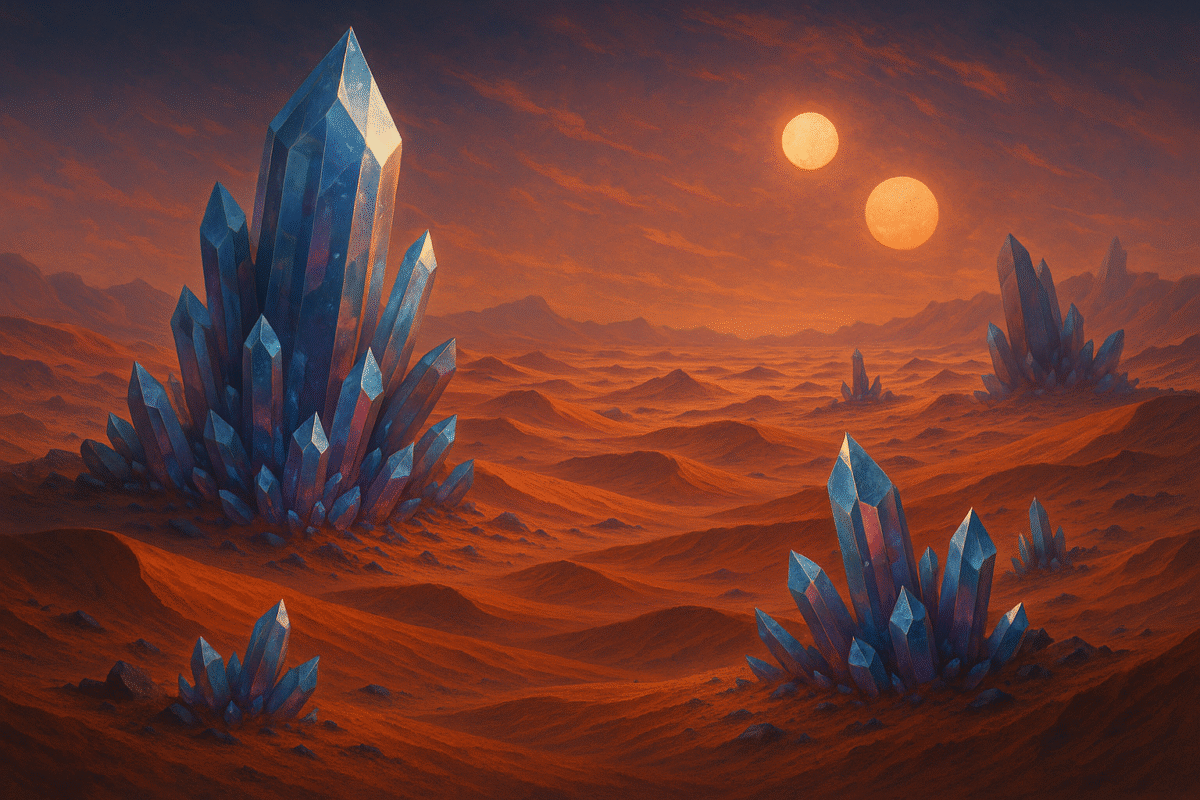
On the crystalline planet of Veloria, each “Turn” lasts 36 hours, and there are only 6 “Bends” per orbit, each defined by a different phase of a sentient moon named Thessa.

🌒 2. Invent Moons, Stars, and Cosmic Events

Moons and celestial bodies can have powerful symbolic and magical roles.
Multiple moons can shape complex tide systems or different schools of lunar magic. In my world of Zalonia where there are three moons, one moon represents dark magic while the other represents light magic. Dark doesn’t necessarily mean evil, as dark magic can be used in negating something such as weight loss magic.

A binary star system may create “lightless hours” even during the day.

Periodic alignments (conjunctions, eclipses, novas) could trigger religious festivals or magical boons.

✨ Example:

Every 88 days, the three moons of Zalonia align in a “Triune Veil,” rendering all magical items inert for a full night unless protected by sky-iron glyphs.

📅 3. Design Your Own Calendar System

Abandon the Gregorian calendar and ask yourself:

How many months or units of time make up the year?

Are weeks even a thing?

Is your system based on moons, harvests, cosmic tides, or magical pulses?
Try to name months, seasons, or “cycles” based on cultural values, magical phenomena, or astrological signs.

✨ Sample Calendar Structure:

13 Months, each 28 days (a common moon-based cycle)
364-day year, with an extra “Day of Stilling” observed in silence
Each month named after a historical figure or constellation (e.g., Ashra’s Rise, Vornak’s Grasp)

🔮 4. Integrate Magical or Mystical Time

Time might not be linear in your world—especially if magic interferes. For example, time itself could be cyclical in that everything returns to the beginning of time after so much time has passed.

Are some days “cursed,” when magic backfires or vanishes?

Are there “thin veils” between worlds that occur cyclically?

Are timekeeping devices themselves enchanted or sentient?

Your mages, shamans, or priests might keep time using:

Runestones that glow during specific planetary alignments
Water clocks enchanted with memories

Living calendars—plants that bloom only during solar flares or magical surges
Magic-Tied Example:

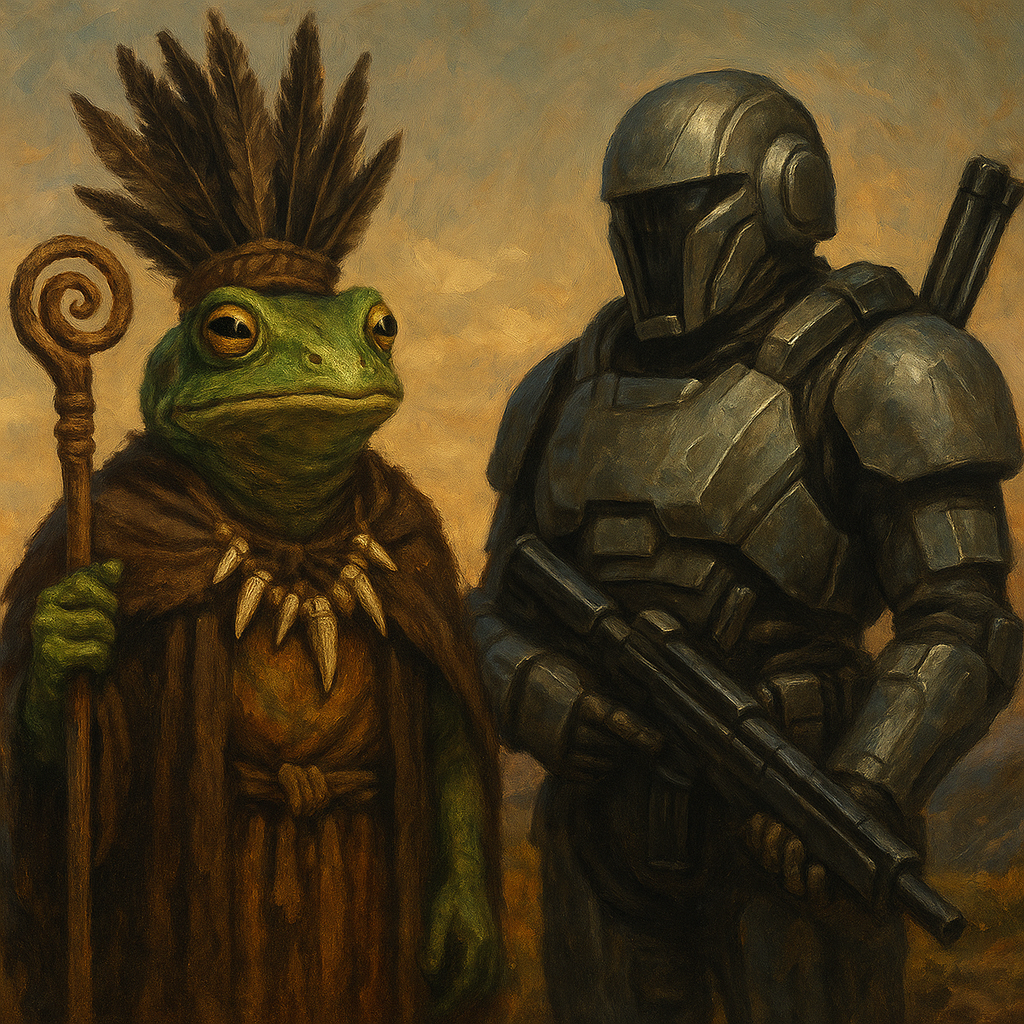
The Frolm count days by the pulse of the “Great Croak”—an ambient magical vibration that echoes through sacred reeds once every 5.2 days. No spell may be cast without the blessing of the Croakkeeper on Croakday.

🏛️ 5. Cultural and Religious Observances

Time is also social. Your world’s cultures may:

Measure years by the reign of monarchs or religious leaders

Track time using generational trees or oral myths

Denote age by how many “Harvest Moons” one has witnessed

Rituals may only be performed during:

Celestial events (e.g., solar tides, comet rains)

Specific moon phases

Anniversary of a divine appearance

✨ Frolm Idea:

During the Dimming Days, when both moons vanish for three nights, no frog may sing, and even children are forbidden to speak. This marks the sacred mourning for the “Ancestor Without Song.”

⏳ 6. Alternative Timekeeping Devices

Don’t stop with clocks and sundials. In your world, time may be told by:

Song cycles – bards sing the same tune every morning as a “wake signal”

Orbglow – a crystal that changes color with ambient cosmic energy

Elder gongs – giant toadstools that ring when stepped on by elders
Make time experiential rather than just numerical.

🛠️ 7. Practical Tips for Integration

To bring your time system into your story naturally:

Use characters to reference time organically: “Meet me on the second chill of Vornak’s Grasp.”

Show rituals based on timekeeping: “She lit the incense as the twin shadows crossed.”

Include unique units of measurement: “Two flickers past the dawn-shift” instead of “2 hours ago.”

You don’t need to explain everything—just enough to show it’s meaningful and consistent.

✅ Final Thoughts

Creating a unique calendar or time system isn’t just about adding flavor—it’s about deepening immersion, anchoring your story in a world that moves to its own rhythm. Whether based on physics, mysticism, or cultural nuance, your timekeeping system can make your setting unforgettable.

Support me on Patreon

Return to Home


Navigating Space Magic

Inventing Magical Navigation and Exploration

When we think of space travel, we often default to sleek starships, advanced propulsion systems, and blinking consoles. But in science fantasy, space is not just a physical realm—it’s a metaphysical one, where magic and mystery eclipse math and machinery. In such worlds, navigating the cosmos isn’t about fuel and gravity wells. It’s about intent, enchantment, and the will of the stars themselves.

Welcome to the arcane frontier, where sorcerers chart stardust currents, ships ride ley lines through the void, and wayfarers use ancient relics to fold space with a whisper. If you’re building a fantasy universe where magic replaces or augments space travel, this guide will help you shape your own system of mystical navigation and exploration.


🌌 1. The Nature of Space in a Magical Universe

Before building a navigation system, decide how space itself functions in your universe. Is it:

A physical void, vast but mutable by magic?

A layered reality, with spiritual or dream-like layers between stars?

A living entity, with consciousness and resistance to intrusion?

A weblike structure, with magical threads connecting worlds?

Each interpretation changes the rules. For example, if space is sentient, then navigation may require negotiation, sacrifice, or spiritual harmony. If it’s layered, travelers might shift through planes, not just parsecs.

✨ 2. Modes of Magical Space Travel

Here are some creative magical methods to traverse the stars:

🌠 Starpath Walking

Some navigators “walk” among the stars through ritual projection or transmutation. This may involve:

Dreamwalking: Traveling through the Astral Plane or Starrealm.
Body transfiguration: Becoming light, energy, or voidstuff.
Soul caravans: Traveling as a disembodied spirit, temporarily leaving the body behind.

🧭 Ley Line Sailing: Cosmic ley lines crisscross space, like mystical wormholes. Ships or mages who align with these currents can:
“Sail” on solar winds of magical energy.

Tap into ancient runes or glyphs encoded in planetary fields.
Use ritual bearings to maintain direction, lest they drift into unknown dimensions.

🌌 Portal Constellations: Magicians can summon temporary gateways between stellar points by aligning with celestial events or constellations:
Only when the constellation of the Phoenix rises does the path to the Fire Nebula open.

Ritual circles must be cast beneath mirrored skies, where stars are visible and mirrored in still water.

🔮 Sentient Navigators: Instead of tech, spacefaring societies may rely on:
Living compasses: Creatures or spirits that inherently “feel” direction.
Bound star-spirits or oracles who read the “cosmic winds” and whisper coordinates.

Symbiotic crystals that “resonate” with specific planetary harmonies.

🗺️ 3. Magical Navigation Tools & Techniques

What do explorers use to avoid getting lost in infinite space?

🧿 Arcane Star Charts: Maps made of enchanted parchment or living ink that shifts with the cosmos.

Only readable under starlight, moonlight, or with third-eye activation.

🧭 Etheric Compasses – Point not north, but to your heart’s desire, homeworld, or a beacon spell.

May malfunction near black holes, curses, or anti-magic zones.

🕯️ Cosmic Drift Beacons

Left behind by earlier travelers.

Emit telepathic pulses, glowing auras, or trails visible to “those who know how to look.”

📿 Memory Tethers

A form of spatial magic that ties a person or object to a specific location.
Cast using sacred tokens, names, or fragments of the destination.

🌒 4. Mystical Obstacles in Space

Magical travel shouldn’t be easy. Here are spaceborne hazards for tension and flavor:

🌀 Dimensional Eddies

Regions where space bends unpredictably, sending ships into alternate timelines or mirror worlds.

🐉 Astral Predators

Beings that feed on magic, or track star-sailing mages by their energy signature.

🕳️ Spellvoids

Anti-magic zones that snuff out enchantments.
Navigators may lose orientation, propulsion, or even consciousness.

🗣️ Echoes of the Past

Ghosts of old voyages, cursed chants, or time loops.

Ships may “hear” phantom distress calls or encounter long-dead versions of themselves.

🌌 5. Who Are the Navigators?

Think about who can traverse the cosmos, and what training, bloodline, or tools they require:

The Starborn: Those born during cosmic alignments, with innate navigation gifts.

Chronomancers: Mages who “read” the past and future to avoid mistakes in the present.

Void Priests: Religious sects who believe travel is communion with the divine void.

Mapwrights: Mystical cartographers who create their own paths by walking them first.

These figures might be rare, revered, feared, or exploited, adding cultural depth and stakes to your world.

🪐 6. Destinations: Mystical Worlds & Locations

Finally, space isn’t just for moving through—it’s for finding wonders:

The Singing Moons: Planets that emit song-like vibrations, altering memory and mood.

Nebulae Temples: Built from solidified stardust, holding ancient secrets.

The Mirror Belt: An asteroid field reflecting not just light, but truths about the traveler.

Stargrave: A place where gods once died, now haunted by immense arcane energy.

Each place may require specific rituals, spells, or sacrifices to reach or survive, further enriching your lore.

🔭 Final Thoughts: Magic Over Rockets

Space magic lets you break free from the constraints of physics and fuel gauges. You can build a universe ruled by wonder, spirit, and mystery, where traveling to another world is a test of heart, mind, and soul—not just engineering.

So next time you imagine your characters leaping between stars, don’t think “warp drive.” Think sigils and stardust, whispered spells and ancient maps inked in moonlight.

Let the magic guide them.

Purchase Creating Life book (Affiliate Link)

Return to Home