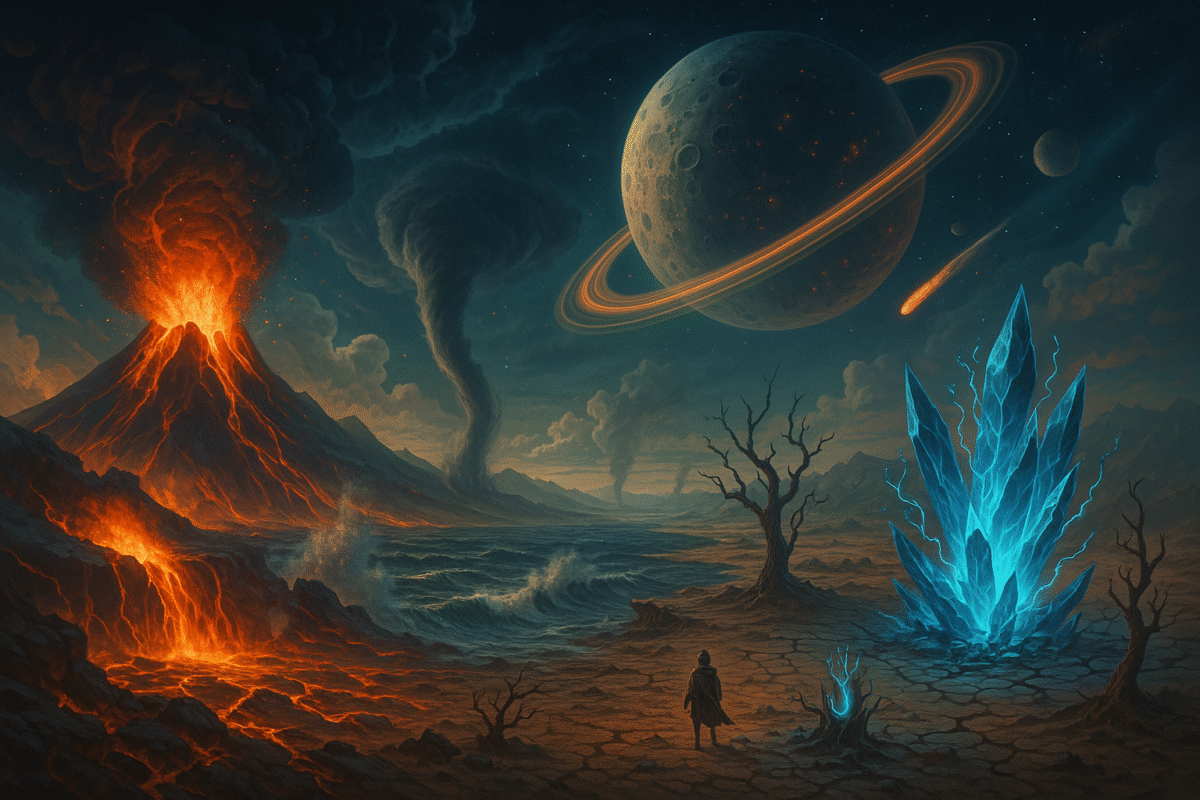
Using Real-World Science as Inspiration for Fantasy World-Building

Tips on Borrowing from Actual Scientific Concepts to Enhance the Magic in Your Setting

Fantasy world-building often feels like the realm of the wildly imaginative—floating islands, time-stopping spells, and magical beasts that defy every law of nature. But what if your fantasy world could be even more immersive, logical, and magical by weaving real-world science into the mix?

Borrowing from biology, physics, chemistry, astronomy, and even psychology can enrich your setting, making your magic feel like a natural extension of reality rather than a break from it. Below, you’ll find detailed tips and examples for blending real-world science into your fantasy setting without turning your novel into a textbook.

🌍 Why Use Science in Fantasy?

  • Incorporating science into fantasy helps you:
  • Make your world feel believable and internally consistent
  • Surprise readers with systems that make sense, even when magical
  • Ground the extraordinary in the familiar and the possible
  • Build richer, more dynamic magic systems
  • Fuel creativity with real phenomena stranger than fiction

🔬 1. Base Your Magic System on Scientific Principles

Many of the best fantasy systems feel magical, yet operate with rules—much like physics. In my world of Aztharian, certain kinds of magic come through the use of antimatter. Since the matter in the world isn’t the same as it is in our world, using antimatter doesn’t cause an explosion. However, if a magician from Aztharian tried to use magic in our world, it would result in an explosion.

Real-World Inspiration Examples:

Thermodynamics: What if mages could only create heat by draining it from nearby matter (causing frostbite while summoning fire)?

Conservation of Mass: A transmutation spell might require breaking an object down into atomic particles before reassembling it.

Entropy: High-level spells could accelerate entropy, causing rapid decay or entropy-reversal to heal wounds.

Tip:

Choose one scientific law and let it limit or shape your magic. Limitations make magic more interesting and strategic.

🧬 2. Use Biology to Design Magical Creatures and Ecosystems

Nature is already magical. You don’t need to reinvent everything—just give it a twist. In Aztharian, certain people can talk with the trees, usually people who are at an underdog position in life.

Real-World Inspiration Examples:

Bioluminescence: Glowing mushrooms or animals evolved in dark, magic-soaked forests.

Symbiosis: Magical animals could bond with wizards to channel spells more efficiently, like lichens exchanging nutrients.

Camouflage & Mimicry: A forest creature might shapeshift not by magic, but by adaptive chromatophores, like a cuttlefish.

Tip:

Use real adaptations and give them magical enhancements. The more biologically grounded your beast, the more it will feel alive.

⚛️ 3. Blend Alchemy with Chemistry

Alchemy is a staple of fantasy, but instead of vague potions and mysticism, make it tangible by borrowing from chemical principles.

Real-World Inspiration Examples:

Catalysts: Magical ingredients that only activate in the presence of certain emotional energies (fear, joy, grief).

Reagents: Potions that change when exposed to magical metals, much like how sodium reacts explosively with water.

Titration Rituals: A precise, scientific magical process requiring drop-by-drop ingredient control.

Tip:

The more precise your magical alchemy is, the more opportunities for failure, discovery, and tension in your world.

🌌 4. Build Cosmic Lore from Astronomy and Astrophysics

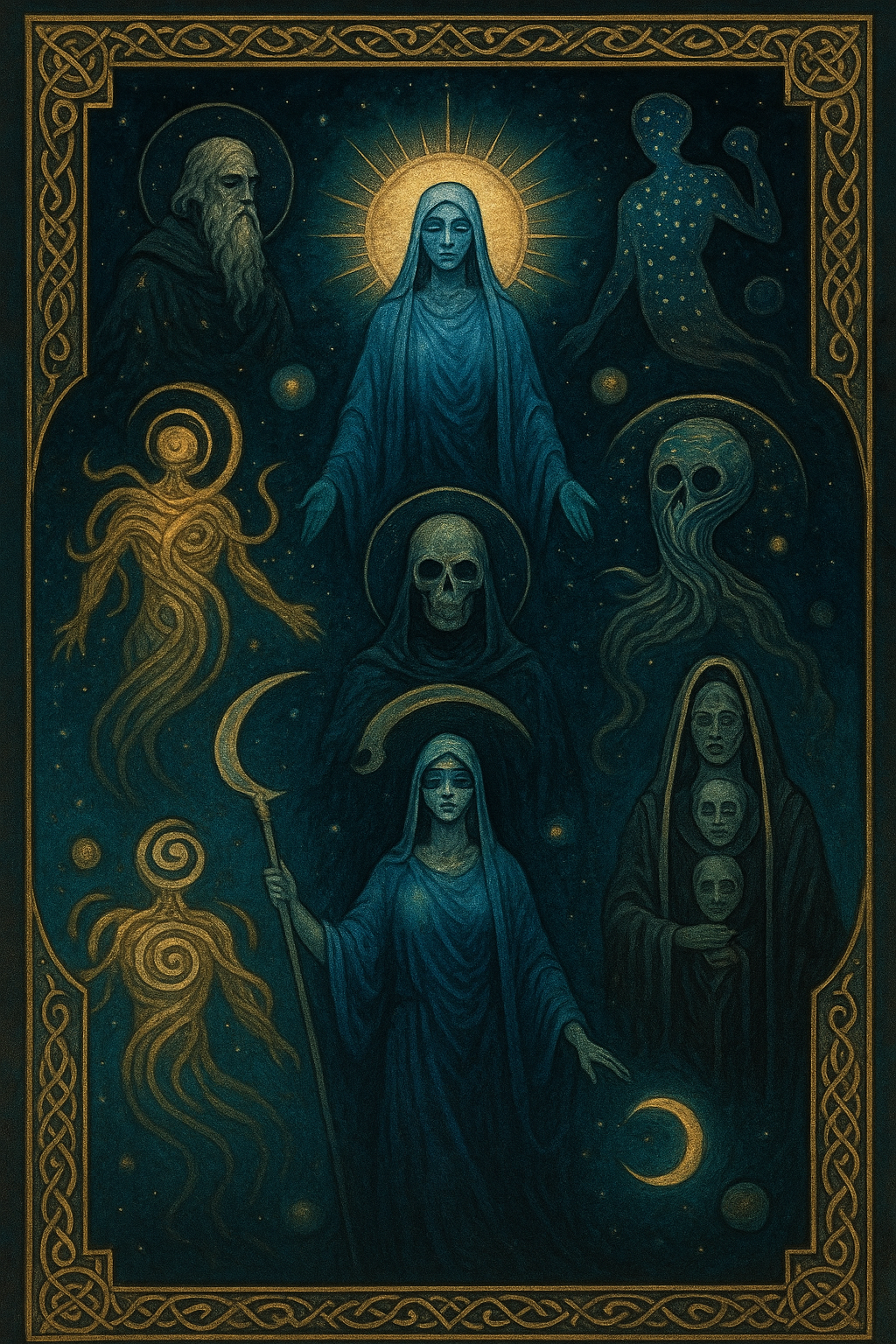
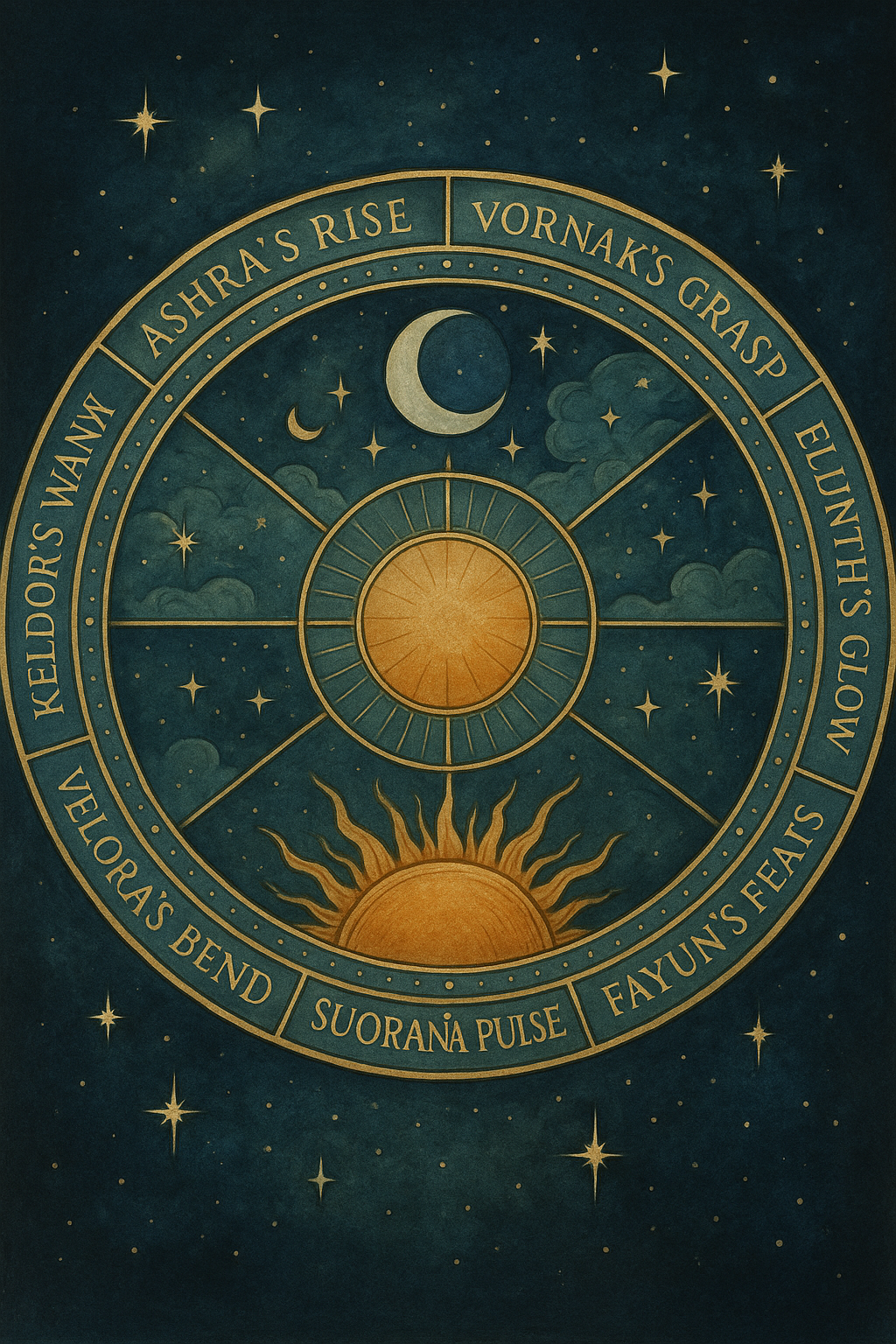
Instead of just “three moons and a red sun,” let astronomy help you create a magical cosmos. In the world of Aztharian, there are constellations that can be used for magic.  However, they are not made by stars but by a different type of matter and they were specifically created for magic use.

Real-World Inspiration Examples:

Gravity Wells: Certain places in the world might warp time because they sit on magical gravity distortions.

Tidal Forces: Magic waxes and wanes based on lunar alignment or stellar cycles.

Planetary Orbits: Ancient prophecies might be triggered by rare alignments that actually follow realistic orbital mechanics.

Tip:

Use real celestial mechanics to give your prophecies and omens weight. A magical eclipse is way more impactful when it happens once every 400 years because of how your solar system works.

🧠 5. Infuse Magic with Psychology and Neuroscience

Magic doesn’t just change the outside world—it can also twist perception, memory, and emotion.

Real-World Inspiration Examples:

Neuroplasticity: Spellcasters can rewire their brains over time to better handle magic—or go insane.

Mirror Neurons: Enchantment magic could work by mimicking brain patterns between two people.

Lucid Dreaming: Dream mages might enter the astral plane only when in REM sleep, with real psychological risks.

Tip:

Tie mind magic to real cognition and psychology, and your magical illusions, telepathy, and dreams will feel eerily possible.

🧭 6. Geography, Geology, and Magical Landscapes

Why are all magical forests just… glowing trees?

Real-World Inspiration Examples:

Plate tectonics: Your world’s fault lines might leak magical energy—like ley lines—because of pressure and crystal deposits.

Volcanic soil: Magic-rich farmland thrives in volcanic regions where the ground absorbs centuries of ash and death.

Weathering: Magical ruins could change over time based on real geological processes, giving you built-in history.

Tip:

Study earth science to shape your geography. Fantasy worlds feel more real when mountains, rivers, and deserts obey natural formation rules—with a few mystical exceptions.

🔁 7. Use Evolution and Ecology to Create Magical History

How did life evolve in a world where magic exists? In Aztharian, magic was part of the creation that the Creatrix endued the world with.

Here

Real-World Inspiration Examples:

  • Creatures evolve magical traits to survive arcane predators.
  • Sentient races develop rituals that mimic natural predator responses.
  • Entire regions adapt to fluxes in magical energy, like species in floodplains or deserts.

Tip:

Let evolution tell a story. If magic shaped life, it should have affected food chains, intelligence, and symbiotic relationships.

📚 Bonus: Science-Based Magic System Ideas

Here are some one-liner ideas for you to develop:

Chronochemistry – Magic that alters chemical reactions over time, allowing for delayed spells.

Photospellcraft – Sunlight-based magic dependent on the color spectrum.

Magnetoarcana – Spells that function through polarity and magnetic force, pulled from planetary cores.

Neuroalchemy – Emotion-linked alchemy requiring hormone extractions or brainwave stimulation.

Genethaumaturgy – DNA-based magic; spells are written into the genetic code of living beings.

🌠 Conclusion: Magic Is Just Science We Don’t Understand (Yet)

By borrowing from real-world science, you can enhance the believability, wonder, and complexity of your fantasy world. Magic doesn’t need to contradict science—it can evolve alongside it.

So whether your world has spell-runes powered by quantum theory or glowing fungi that teleport spores through alternate dimensions, use science as a springboard—not a cage.

Let the known fuel the unknown—and watch your world come to life in new, unexpected ways.

Buy Creating Life Book – Affiliate Link

Return to Home Page

Developing Alien Flora and Fauna With a Magical Element

A Guide to Creating Plants and Animals That Defy Biology Yet Feel Plausible

In science fantasy and speculative fiction, worldbuilding isn’t just about maps and languages—it’s about ecosystems. Designing alien flora and fauna with magical elements adds depth, mystery, and narrative opportunity to your story. But how do you create lifeforms that defy biology yet still feel like they belong in your world?

This guide explores how to develop plants and animals that blend magic and science, giving your setting unforgettable life without breaking immersion.

🌱 Why Magical Flora and Fauna Matter

Alien life—especially when touched by magic—can:

  • Reflect your world’s culture or magic system
  • Serve as plot devices or environmental obstacles
  • Enhance atmosphere and mystery
  • Inspire rituals, clothing, medicine, and religion
  • Show how different species interact with the supernatural

Whether it’s a tree that grows from emotion or a creature that feeds on sound, these details immerse readers in your universe.

🌿 Step 1: Define the Magical “Logic” of Nature

Before designing lifeforms, determine how magic interacts with evolution, energy, or natural law in your world.
Ask yourself:

  • Is magic a natural force, like gravity? Or is it divine?
  • Can animals evolve magical traits?
  • Does magic replace biology (e.g., plants that photosynthesize moonlight)?
  • Is magic channeled by symbiosis, like fungal networks or insect hives?


Example:

In the world of Elarion, creatures don’t eat—they absorb resonance energy from glowing lichen that sings during solar flares. This gives rise to predators who hunt silence.

🐾 Step 2: Choose One Magical Trait Per Lifeform (at First)

It’s tempting to go wild, but the most believable flora and fauna usually have one standout magical trait, grounded in purpose.

Examples of magical traits:

Emotion-based photosynthesis – Trees that bloom when people nearby are joyful.

Phase-walking predators – Beasts that vanish between dimensions to stalk prey.

Floating root systems – Plants suspended in air by anti-gravity spores

Echo-born insects – Creatures that only hatch after hearing specific frequencies

Start simple. Complexity can grow naturally over time—just like ecosystems do.

🌺 Step 3: Give Them a Role in the Environment

To feel grounded, alien species must interact meaningfully with their surroundings.

Consider:

  • What does it eat or absorb?
  • What threatens it?
  • What niche does it fill?
  • How does it reproduce or spread?

Example:

A carnivorous plant might open only under moonlight, luring animals with glowing fruit. Its seeds are spread when birds eat the glowing pulp and later excrete light-charged spores that sprout only in shadowy soil.

🧬 Step 4: Twist the Senses

Magic allows you to break the rules of reality—including sensory perception.

Try creating lifeforms that:

  • See thoughts instead of light
  • Smell memories rather than chemicals
  • Communicate by altering weather patterns
  • Camouflage by blending into the emotions of others
    These “impossible” traits feel plausible when given limits or tied to biology/magic systems already present in your world.

🧪 Step 5: Borrow From Real Nature—Then Break It

Nature is already weird. Use it as your baseline.

Real-world inspiration:

  • The mimic octopus can impersonate multiple species
  • Cordyceps fungus zombifies insects
  • Bioluminescent jellyfish use light for communication and defense
  • Some trees use chemical warfare to poison nearby competition

Now add a magical layer:

  • A tree that mimics other plants to hide its true sentience
  • A fungus that creates illusions around infected hosts
  • A jellyfish that emits memory-erasing pulses of light

The more you ground the magical element in something biologically familiar, the more your reader will accept the strange.

🧙 Step 6: Connect Flora and Fauna to Culture and Magic

Alien life shouldn’t exist in a vacuum. Show how local civilizations interact with it.

For example:

  • Sacred forests where emotion-sensitive trees judge criminal guilt
  • Healers who harvest grief-flowers to treat psychological trauma
  • Hunters who track animals by divining footprints from stardust
  • Cities that light their streets with bioluminescent herds instead of lamps

These connections deepen lore, shape belief systems, and provide story hooks.

🌌 Step 7: Create One “Legendary” Organism

Every world should have at least one mythic plant or beast that defies even the internal logic of your setting. This creature becomes a symbol—a mystery or prophecy.

Ideas:

  • A floating mountain-sized whale that dreams new galaxies
  • A vine that blooms once every thousand years and reveals portals to lost ages
  • A migrating crystal-elk herd that leaves trails of starlight seeds in their wake
  • The “Last Thought Tree,” whose roots feed on the dying thoughts of sentient beings

These legendary beings can shape religion, political conflict, and magical history.

💡 Final Tips for Plausible Magical Lifeforms

Limit omnipotence – Ground them with weaknesses or costs
Tie form to function – Magical traits should serve survival, reproduction, or symbiosis
Use consistent magical rules – If magic affects gravity, it should affect flight, water, and biology too
Make it personal – Let flora/fauna impact characters’ lives and choices

🌠 Conclusion

Alien flora and fauna with magical traits make your world feel alive, surprising, and unforgettable. When done well, these lifeforms breathe magic into every forest, cave, and star-washed desert your characters encounter.
Whether you’re writing novels, tabletop settings, or games, let your ecosystems be wild, weird, and full of wonder—but never without purpose.

Purchase Creating Life (Affiliate Link)

Return To Home

Writing Space-Faring Cultures with a Magical Twist

Ideas for Cultures That Live in Space or Travel Between Planets Using Mystical Powers

In the realm of science fantasy, where spellcraft meets star charts, space is not just the final frontier—it’s a magical tapestry waiting to be woven with the threads of the arcane. When building space-faring civilizations, you don’t have to be limited to warp drives and ion thrusters. Instead, imagine starships piloted by telepathic seers, realms that drift through space on the backs of astral leviathans, or societies that use dimensional gateways shaped by willpower and song.

This blog explores rich and immersive ideas for crafting cultures that navigate the cosmos through mystical means, allowing you to dream far beyond the typical space opera.

🌌 1. Starbound Nomads: The Weavers of the Celestial Loom

Culture Snapshot:

This ancient people don’t use ships in the traditional sense. Instead, they ride strands of magical energy that span the universe, known as the Celestial Loom. These threads can be seen in the night sky by those attuned to “sky-sight.”

Mystical Travel Method:

Threadwalking – A form of magical navigation that lets trained individuals “stitch” new pathways through the fabric of space by weaving starlight and memory.

Cultural Flavor:

Their cities are made of liquid light and song, suspended in the void.

History is passed down through woven constellation tapestries, which also chart new routes.

Only those born with “luminous blood” can become master Weavers.

🔮 2. The Spell-Engine Empires

Culture Snapshot:

A highly advanced empire whose technology is fueled by bound arcane spirits, powering ships, weapons, and even food synthesizers. Magic is harvested, refined, and stored in glowing soul-capsules.

Mystical Travel Method:

Spell-Engines – Fusion devices combining science and sorcery, allowing instantaneous jumps through “etheric fault lines.”

Cultural Flavor:

Their nobility descends from the original summoners, and bloodlines are tightly controlled.

Ships have sentient cores that must be negotiated with before they travel.
Rituals must be performed before long voyages, including “The Binding Chant,” or travel becomes unstable.

🐉 3. Drakari Clans: Riders of the Astral Beasts

Culture Snapshot:

These fierce tribal societies live atop giant void-dragons—beasts that can sail through space, guided by psychic bonds. Entire cities are built into the carapaces and wings of these celestial titans.

Mystical Travel Method:

Beastbonding – A symbiotic psychic link between Drakari and their dragons, enabling shared instinct and direction-finding through cosmic storms.
Cultural Flavor:

Coming-of-age rituals involve entering a stardream where the young must find their dragon soul.

Drakari believe space is an ocean of divine thought, and the dragons are its children.

Tribal wars are settled via duels between bonded riders, not armies.

🧭 4. The Chronoseers of Ka’Tall

Culture Snapshot:

The Ka’Tall don’t move through space—they move through time-folds, choosing different moments to visit distant planets. Time magic is a sacred and dangerous art, only allowed under the guidance of the Temporal Synod.

Mystical Travel Method:

Chronogates – Ritual portals made from obsidian, silver, and blood, allowing instantaneous movement to places only if the caster knows when to go.

Cultural Flavor:

Every citizen carries a time sigil that stores their temporal identity.
The Ka’Tall live in layered cities, where people from different centuries walk side by side.

Temporal crimes (like “memory theft” or “past poisoning”) are the greatest taboos.

🌿 5. Verdant Exiles: Gardeners of the Ether

Culture Snapshot:

Once inhabitants of a living world, these eco-mystics now travel space on gigantic seedships—organic, tree-like constructs powered by life essence and attuned to cosmic ley lines.

Mystical Travel Method:

Ley Drifting – Floating between stars by tuning their vessels to the subtle energy lines running through space.

Cultural Flavor:

Their druids are both healers and navigators, sensing space through the pulse of life.

Seedships require living sacrifice to awaken their root-thrusters.

They believe in terraforming by song, harmonizing barren worlds back to life.

🗿 6. The Stonebound Guilds

Culture Snapshot:

A dwarven-like culture that uses astral golems as both transport and defense. Their vessels are shaped from enchanted stone and crystal, animated by bound elemental spirits.

Mystical Travel Method:

Runecarving – Golem-scribes inscribe runes on starstone to direct movement, speed, and shielding.

Cultural Flavor:

Crafting a star-golem is a spiritual rite and takes decades.

Only those who’ve undergone The Chisel Rite can command these constructs.
Their cities drift through asteroid fields, hidden and ancient, carved into hollow moons.

✨ 7. The Cult of the Singing Void

Culture Snapshot:

This mysterious order doesn’t use ships at all. Instead, they sing. Through the Songs of Silence, they fold space and emerge elsewhere. Their bodies vanish into sound and re-form at distant stars.

Mystical Travel Method:

Resonant Translocation – A process of dematerialization through harmonic vibration, tied to starmaps encoded in sacred hymns.

Cultural Flavor:

They worship the Void as a living presence, a consciousness that responds to tone.

Language is sacred, and their voices are magically enhanced from birth.
Each star system has its own forbidden notes, and singing them draws attention from… something watching.

🎇 Tying It Into Storytelling

A space-faring culture’s method of travel says a lot about their values, philosophy, and politics.

Do they see the stars as gods, resources, or living beings?

Is space hostile, sacred, or transformative?

How do colonization, exploration, and first contact look when magic is involved?

Who controls the mystical travel methods—priesthoods, guilds, royal bloodlines, or corporations?

Let your cultures reflect their cosmic relationships, and make travel more than logistics—make it ritual, risk, or revelation.

Final Thoughts

Science fantasy gives you the best of both worlds: the scope and scale of sci-fi, with the soul and mystery of fantasy. Your space-faring cultures can be wild, beautiful, terrifying, or divine.

And the magic isn’t just in how they get there—but in who they become because of it.

Get the electronic version of “Curse of Kredaria” for free

Purchase book about Creating Life

Unique Celestial Events and Phenomena in Science Fantasy

Unique Celestial Events and Phenomena in Science Fantasy

Brainstorming Ideas for Rare Cosmic Events and How They Impact Your World
In science fantasy, the cosmos is not just a backdrop—it’s a living, breathing participant in the drama of your story. Unlike hard science fiction, where astronomy sticks close to physics, science fantasy gives you the freedom to mix magic with astrophysics, mysticism with orbital mechanics, and divine prophecy with planetary alignment.

Here’s your guide to crafting rare, awe-inspiring, and deeply impactful celestial events—plus ways to let them shake your world to its core.

🌠 1. The Eclipse of Memory

Description: Once every thousand years, two moons overlap during an eclipse. Anyone caught under its shadow forgets one deeply held memory—random or otherwise. This is what happens in Zalonia every 163 years when the red moon eclipses the blue moon. Neutral magic is the most powerful while this is happening.

Impacts: Societies build “Memory Vaults” to protect knowledge and identity. The medes in Zalonia use this method when gaining knowledge that can be lost easily. Their magic users will often write certain amounts of history in a memory fault.

Secret cults intentionally expose themselves, believing forgetting is a divine rebirth.

Wars pause during the eclipse to avoid commanders forgetting critical strategies. An eclipse of the blue moon can cause memory lapses, and often soldiers will not fight during an eclipse like this because they will forget their strategy.

Prophecies suggest that when the eclipse causes the same person to forget the same thing twice, a forgotten god returns.

🌌 2. The Blood Comet

Description: A deep-red comet that appears only during planetary alignments, believed to be the egg of a cosmic serpent. In Zalonia, it represents one of the great beasts, the Lupian Gnawer. There are a total of 99 great beasts according to legend, and the lupian gnawer is bound to appear when this red comet is seen.

Impacts: The red comet’s passing can cause mutation in unborn children—sometimes blessed, sometimes cursed.

Cults believe drinking water touched by the comet’s light grants visions of the future or madness, or even both.

Alchemists harvest rare “comet dust” that temporarily enhances magic. The magical aspect weakens as time goes by and is usually unworkable within a week, so it has to be used quickly. Those who keep track of the red comet do so, so they can have magic users ready for when the comet appears.

Entire cities shut off their lights, fearing the comet might “choose” souls for abduction.

🌑 3. The Hollow Moon

Description: A seemingly normal moon occasionally opens like a flower, revealing an ancient spaceborne citadel within. It stays open for 13 days before sealing shut again. This is what the golden moon in Zalonia does every 45 years.

Impacts: Certain alien races and smugglers attempt to enter the citadel before it closes.

Arcane scholars such as medes believe the citadel is the last ark of a forgotten race. Some Zalonians think it leads to a universe that leads to our Earth.
Sometimes, people disappear during the event—and reappear decades later, unchanged.

Religious sects call it the “Womb of the Stars” and believe it’s the source of all magic.

🔮 4. Starfall Chorus

Description: Every few centuries, a rain of musical meteorites falls across the land. The stones sing in alien harmonies and are believed to be fragments of a dead god’s soul.

Impacts: In Zalonia, Bards, mystics, and sound-mages flock to the event to record the melodies, which are said to alter reality when performed. They can heal the sick and strengthen the magical abilities of magic users.

Pieces of the meteorites can power music-based spells or be forged into instruments that manipulate emotion.

Rival cities race to collect the most “songs” to gain cultural and magical supremacy.

There’s also a dark legend: if all meteor melodies are played at once, the god might be resurrected—or awaken something worse.

Perhaps Meteorite shows signify something in your world.

🪐 5. The Planetary Veil

Description: In Zalonia A rare alignment of the planets causes the magical fields of several planets to connect and form an invisible web, altering magic and gravity. This alignment generally happens every 1043 years.

Impacts: Gravity weakens or strengthens depending on location—allowing for floating cities or plummeting terrain. In fact, the celestial realm of Zalonia originated when this alignment happened, combined with the use of magic, it was able to continually float in the sky.

Spellcasters suddenly find their powers inverted or magnified. This can be both beneficial or harmful, depending on the mage. Sometimes, mages lead the way in a battle if they know the planets will align. This is because in battle their offensive magic can be enhanced.

A new form of magic—Webweaving—emerges, allowing manipulation of the cosmic threads. This is good for defensive magic because webs can be used for shielding.

Political factions blame each other for exploiting the veil, leading to tensions, revolutions, or war. These have led to smaller wars within Zalonia, but not with either of the great battles.

☄️ 6. The Reverse Supernova

Description: Instead of exploding outward, a star collapses in reverse, absorbing nearby light and energy, creating a sphere of “unlight.”

Impacts: Time slows down or even reverses near the event. The medes in Zalonia believe that this happened at some point in the distant pass and are afraid it could happen again. They have no way of predicting if and when it will happen. They are always concerned about this happening to their own sun.

An entire civilization is said to have “fallen in,” to the star, and their voices still echo across time. The medes try to record their voices when they echo but it is difficult to make out what they are saying.

“Unlight crystals” can be harvested from the region are used in temporal magic, black-market espionage tools, and anti-divination spells.
The Church of Chronos considers it a holy womb of rebirth, sending pilgrims in hopes of ascending.

🌟 7. The Wandering Star

Description: A rogue star drifts through space and communicates telepathically with sentient beings as it passes. Only the Sxions can hear it, which is frustrating for others around them because they have a difficult time elaborating on the whole communication. The Sxions are at the bottom of the pole when it comes to explaining stuff. They often find themselves frustrated and not being able to express what they witnessed.

Impacts: Those who hear its voice gain temporary cosmic knowledge, often going mad or ascending to become star-priests. A Sxion who hears these voices makes them go mad because they don’t know how to get rid of them.

Empires try to weaponize the star’s whisper, capturing it in psychic resonators. Many of those who want to go to battle believe that when a sxion hears voices believe that it is a good omen for them to go into battle.

Some beings are chosen as Starborn, marked by glowing skin and alien tongues. Perhaps in your world, one of the people gain extra power by hearing these voices. This could be especially interesting for a villian gaining power because of this.

Perhaps it is in the Prophecies that say the star is seeking a host, a vessel to become mortal. You could create a being who is almost invincible because they have gained the star’s power, which makes them hundreds or thousands times as strong.

8. The Lunar Migration

Description: Every 999 years, one of your world’s moons slowly detaches from its orbit and drifts across the sky to a new location.

Impacts: Cultures tied to lunar cycles experience chaos—rituals fail, gods fall silent, tides go wild. You could invent unique whether patterns from this chaos. Perhaps a pebble becomes unattached to the moon and hits your planet like a rainstorm. However, it would be much more dangerous than a rainstorm because the small rockets would have the power of a bullet shot out of a gun.

Moon-based civilizations go to war to prevent or accelerate the migration. Perhaps one civilization sees it as a good omen and figures that it might be a good time to go to battle. Others may believe it is bad luck, so they stay in their homes, too afraid to go anywhere.

The New Moon Orbit passes over uncharted lands, activating ancient relics or reawakening buried horrors.

Myths suggest that the moon is fleeing something… this could be used as a reason that it is going across the sky. Perhaps it is being chased by a mighty bird that wants to swallow it, but it is never fast enough to catch it.

✨ 9. The Aurora of Becoming

Description: A magical aurora, visible across multiple planets, that reshapes reality based on collective dreams. In my world of Zalonia, there is a Temple of Dreams that people go to to have their dreams interpreted. They have to close down the temple when beings such as dream wraiths start manifesting in the temple outside the dream. Sometimes people have collective dreams at the temple, which means something significant. For example, two people might have the dream of getting married, which may mean that they are supposed to marry each other. The dream world in Zalonia goes beyond the planet. It isn’t unusual for a dreamer at the Temple of Dreams to have a dream about another species on another planet. Sometimes these problems can only be solved in the dream itself because they can’t go to other worlds in the physical realm.

Impacts: For one night, everyone’s desires can subtly shift the world—for better or worse. Leaders often have these kinds of dreams at the Temple of Dreams, where they can shift the course of the world.

The “Dreamguard” exists to keep nightmares from becoming real. While I don’t have these at the Temple of Dreams, there are dream interpretors who stand by and may wake someone up if they appear to be having a distressful dream.

Criminals try to infiltrate dreamspaces, influencing events or implanting psychic weapons. Sometimes in Zalonia, a criminal will pretend to be a dream interpreter, but they use magic to get into the minds of the dreamer. They then can bend the dreamer to their will whether they want to steal someone or have someone murdered, but the crime not being associated with them.
Some claim the aurora is not a natural event, but a test from a higher plane—or the last defense of reality.

🧭 10. The Astral Drift

Description: The entire galaxy temporarily enters an “astral sea,” where souls, thoughts, and magic manifest in physical form. While to a smaller extend with the Temple of Dreams in Zalonia, especially for warriors with good fighting skills. They can dream of being on another planet and helping fight in a battle. The warrior often has to stay at the Temple of Dreams for several nights before the battle is over. Sometimes, more warriors will be called to the Temple of Dreams to help with battles in another world.

Impacts: Dreams become real, ghosts re-enter the world, and thoughts take shape. It’s not unusual in Zalonia for a dream to come true, especially among elves who seem to often get advice in dreams. In the Elements Penalogy, Xandria often has dreams that give guidance.

Space travel becomes impossible—ships sail through ideas instead of coordinates.

Pirates and prophets ride this wave to raid or reshape new realities.
The gods are silent—some say they are being reshaped by the minds of the living.

 Final Thoughts: Make Your Celestial Events Matter

Rare cosmic phenomena shouldn’t just look cool—they should affect people, belief systems, governments, and natural laws. A single event can:

  • Reshape the economy (think magic-meteor harvests).
  • Set off a cultural revolution.
  • Mark the rise or fall of empires.
  • Give birth to entire religions or mythologies.
  • Be the trigger for your entire plot.

The best celestial events blend mystery, danger, awe, and opportunity. Let them inspire wonder—and make sure your characters, cultures, and conflicts respond in meaningful ways.

Give birth to entire religions or mythologies.

Be the trigger for your entire plot.

The best celestial events blend mystery, danger, awe, and opportunity. Let them inspire wonder—and make sure your characters, cultures, and conflicts respond in meaningful ways.

Sign up for my Newsletter Here

Creating Life – By Ralph Ellefson

The Art of World Building Workbook – By Ralph Ellefson

Fantasy World Building: A Guide To Developing Mythic Worlds and Legendary Creatures – By Mark Nelson

Support Me on Patreon

Interstellar Trade and Economics

Crafting Interstellar Trade and Economics in Your World

A Guide to Developing Trade Systems That Use Both Magical and

Technological Resources

Whether you’re building a galaxy-spanning empire, a cluster of magic-infused star systems, or a spacefaring fantasy civilization, interstellar trade is the lifeblood of a living universe. Trade and economics add depth, conflict, realism, and opportunity for stories to unfold.

In this guide, we’ll dive into how you can design believable, exciting interstellar economies that incorporate both magical and technological resources, while giving you tools to tie them into the cultures, politics, and tensions of your world.

1. Start With Scarcity: What’s Valuable and Where?

Every trade network begins with scarcity. What do planets or realms lack, and what do others abundantly produce? The gnonows in my world are a high-tech species that isn’t from Zalonia and need purple gems in order to survive on their home planet. Therefore, they manipulate the species of Zalonia to work hard finding these purple gems since they are found all throughout Zalonia. However, this plays into the monetary system of Zalonia, as purple gems are often up for trade even though they aren’t really worth anything in and of themselves. It’s like gold is on our planet. It is only worth the amount that it is sold for; however, the gnonows need it, and they only press down on the population when they are not receiving enough purple gems.

Tech-Based Examples:

A planet with rare hypercrystals that fuel faster-than-light engines. Hypercrystals are found on the original world that the gnonows came from and are used to power their space ships.

You could have a colony with access to superintelligent AI labor, but lacking raw materials. Perhaps they can build computer systems, but don’t have the material needed to create vehicles. Zalonia is lacking in resources that would make it high-tech. If there were a way to do it, the medes would have discovered it with all the research they do.

Another idea is A space station that trades in quantum computing cores made from frozen neutronium.

Magic-Based Examples:

A moon rich in etherium dust, necessary for spellcasting. An alien species called The Elyndor have this in abundance. Fortunately they are not hostile toward the races of Zalonia because magic that comes from their moon is quite powerful. Sometimes they help the people of Zalonia if they are facing a formidable enemy.

A society of mages that exports illusion-weaving silk that can shift shape on command. This can only be found in Zalonia at the school in Magdad unless someone sneaks it out without permission. It can be magic that is difficult to control with even seasoned magicians which is why it is kept within Magdad. People who sneak it out are often after something that will require the use of dangerous magic.

A dying world that trades life-essence potions to extend longevity. Oddly, in Zalonia, a magician will usually live a longer life than others within their species. It is a price they pay for the use of magic since magic use can have a variety of negative effects. They have to live a long time with these effects.
By establishing the unique magical or technological assets of each world, you’re not just creating an economy—you’re crafting relationships, rivalries, and dependencies.

2. Define the Medium of Exchange

Is there a universal currency, or is barter still in play? Do different societies accept different forms of payment—tech credits, magical essence, promissory blood-oaths? In Zalonia there is no universal currency to trade with extraterrestrial races. There is only currency among the inhabitants of Zalonia, and sometimes between seas. However, the primary extraterrestrial race is hostile. However, sometimes they partake in Zalonia’s currencies in order to obtain the purple gems that they depend on. There is also another alien race which is more friendly toward those in Zalonia and will sometimes use Zalonia’s primary currency while visiting.

Some hybrid options:

Aethercoins: Magical currency infused with power, accepted for both spells and trade.

Trade Sigils: Enchanted seals bound to a merchant’s soul that function like digital contracts.

Data-Platinum: A high-density mineral that stores both digital and arcane information, used by hackers and wizards.

Tip: Establish exchange rates and conflicts. Is there inflation in magical currency because a world figured out how to mass-produce enchanted gold? Is tech currency destabilizing old mystic economies?

3. Design Trade Routes and Limitations

Just like the Silk Road or maritime empires, interstellar trade routes are shaped by geography, risk, and bottlenecks.

Think about:

Wormholes or stargates: Who controls them? Are they stable or taxed? The gnonows who are an extraterrestrial species that visit Zalonia carry their purple gems through a wormhole in order to reach their planet, which is in a parallel universe. The process of going through is that it activates the purple gems’ properties to be distributed throughout the atmosphere of their own planet.

Leyline currents through space: Magical pathways only accessible to spell-powered ships. The Myrr are an extraterristial species that visit Zalonia and sometimes bring items from the magical pathways in space in which they are able to travel. There are certain gems that they can access and are worth quite a bit among Zalonians.

Time distortion zones: Regions of space where time passes differently, affecting perishable cargo or aging merchants. In the abandoned city of Ruineneo, there are pockets of energy throughout the city that can transport people and make time go by differently. Sometimes it feels like they are transported to some other world.

These natural and magical features become strategic choke points, breeding grounds for pirates, guild wars, and diplomatic tensions.

4. Mix Magical and Technological Interdependence

The most interesting interstellar economies are ones where magic and tech intersect—and conflict.

A high-tech planet needs mage-powered encryption keys to communicate beyond a light barrier.

A magical society relies on AI navigation systems to chart leyline-safe flight paths. Since the gnonows manipulated people from Zalonia to be on their side, they sometimes will provide landing areas with the technology that the gnonows use, so they don’t have to take as many risks when landing one of their spaceships on Zalonia.

Enchanted bio-hybrids can only be maintained by both technomancers and genetic engineers. In Zalonia, technomancers work secretly with the gnonows who provide them with technology in exchange for fortune-telling. This is a great benefit for the gnonows when helping them prepare for attacks.
Interdependence opens the door for cultural tradeoffs, hybrid professions, and universal guilds or unions with strict codes.

5. Account for Culture, Ethics, and Black Markets

Not all goods are traded equally—or legally.

Questions to explore:

Are soul contracts outlawed in tech-centric systems but openly sold on necromancer planets?

Does a technological society ban sentient spell-creatures as slaves, while others see them as property? There are rumors of a lost age in Zalonia where a race called stiminites were used for slavery by the humans and gnonows. The humans that worked for the gnonows made the stiminites do their work for them.
I

s there an interstellar black market for memory elixirs, forbidden AIs, or divine artifacts? The Soluum, which are an extraterrestrial species in Zalonia, will trade certain elixirs from their home planet with certain people, particularly the medes who want to gain knowledge about it. These elixers have a valuable purpose. During the rule of King Etan, elixirs like this were banned. However, even with the banthe soluum helped out the Zalonian’s who were hoping to overthrow the king.

You can also develop ethics-based trade bans or moral tariffs:

“No planet dealing in cursed relics shall enter the Galactic Pact.” Most alien races that visit Zalonia don’t abide by these kind of laws because Zalonians don’t enforce them, mostly because they are ignorant of other high tech items. They do ban the use of the weapons the gnonows, especially during the Great Battle of the Fourth Age when the gnonows try to overtake Zalonia.

“Trade of artificially evolved sentient species is forbidden.”

These cultural value systems affect diplomacy, war, and internal rebellion. What happens when a colony trades illegal dream-dust to survive?

6. Who Controls the Flow? (And Who Tries to Stop It)

Behind every robust trade system is power—and those who want to manipulate it.

Potential power structures:

Trade Consortiums that operate across empires with their own private fleets. There are sometimes humans from Zalonia who the gnonows allow to use their guns in order to fight on their side. However, they are very careful who they choose because they don’t want their guns getting into the hands of spies.

Arcane Banking Houses that tie spells to credit lines and magically enforce interest.

Smuggler Guilds that use invisible ley paths and cloaked AI drones.
Guild Arbiters—neutral zones where even warring nations must honor trade law.

There generally isn’t too much intergalactic space trade in Zalonia because they are a low-tech area, and aliens are relatively rare, with the exception of the gnonows in the Great Battle of the Fourth Age. During this time, aliens that are on the side of Zalonians will trade items for spells or other items.

7. Logistics Magic and Sci-Fi Workhorses

Don’t forget to address how goods move.

Is there teleportation-based freight? Maybe it’s expensive, limited, or dangerous for living cargo. Sometimes the mysterious portals in Zalonia are used for trade, especially if they create a shortcut to a far-off land. Zalonia is riddled with these kinds of portals.

Are goods stored in pocket dimensions or data-beads? The Soul Chaser, who often inhabits Ruinoneo, sometimes hides things in pocket dimensions within the city. Ruinoneo is a great abandoned city, cursed with magic that kills almost anything that enters.

Are space freighters infused with sentient navigation spirits that negotiate their own routes? There are alien races in my world that partake in this, like the Thaless alien race. When a thaless dies, it becomes a spirit that still helps out with the living thaless to help power their ships.

Are there magic-proof containers to prevent cursed items from leaking? The elves in Zalonia can make a magic-proof container, but it requires drawing blood from their hand in order to make it magic-proof. This is because elven blood is immune to magic.
By thinking through shipping infrastructure, you add realism and opportunities for sabotage, theft, or disaster.

8. Conflict Breeds Story

Trade isn’t just a backdrop—it can drive entire plotlines:

A diplomatic crisis when a magical substance goes missing during a trade exchange.

A rebellion on a planet that’s been economically strangled by a tech monopoly.
A merchant-turned-hero smuggling illegal life-saving potions to a plague-ridden colony. During the reign of King Etan, there was a lot of smuggling that took place in Zalonia to help those in need. King Etan was a tyrannical ruler during the Second Age, and he made many trade routes illegal unless they served his purposes of taking over all of Zalonia.

A war ignited when two empires fought for control over a ley-crossing that only opens once a century.

When trade affects lives, culture, and survival, it becomes a powerful storytelling engine.

Final Thoughts: Make It Dynamic

Economies shift. Planets collapse. New discoveries disrupt entire industries.

Let your interstellar economy evolve in your world:

What happens when teleportation becomes cheap?

How do people react to the collapse of a trade monopoly?

How does inflation affect spell prices across systems?

Can technology “out-magick” the magicians—or vice versa? In Zalonia, it is pretty evenly matched with it comes to the gnonows and their technology against the inhabitants of Zalonia, especially the magicians. However, this leaves the elves at a severe disadvantage because they aren’t able to use magic, and while they are immune to magic, they aren’t immune to high-tech weapons. This is part of the reason they avoid the Great Battle of the Fourth Age.

Trade isn’t static—it’s a breathing, pulsing force that binds your galaxy together or tears it apart.

Sign up for my Newsletter Here

Creating Life – By Ralph Ellefson

The Art of World Building Workbook – By Ralph Ellefson

Fantasy World Building: A Guide To Developing Mythic Worlds and Legendary Creatures – By Mark Nelson
Support Me on Patreon