Religion in Science Fantasy

Building Religions and Spiritual Beliefs in Science Fantasy: A World-Builder’s Guide

Religion and spirituality are powerful elements that shape civilizations, inspire conflict, and provide a sense of meaning in any world—whether real or fictional. In science fantasy, where technology and magic intertwine, belief systems can be even more complex, blending gods with cosmic forces, faith with science, and divine beings with interstellar travelers.

Crafting religions in a science fantasy setting allows for endless possibilities, from celestial deities ruling from deep space to mystical energy guiding civilizations. This article explores how to create compelling religious structures, spiritual beliefs, and divine figures that enrich your world while maintaining internal logic. At times, I will use my own world of Zalonia.

1. The Foundations of Religion: Why Do They Exist?

Before diving into temples, rituals, or gods, consider why religion exists in your world. In both our world and fictional settings, religions typically arise to:

Explain the Unknown

People seek answers to life’s mysteries: Where did we come from? What happens after death? Why do celestial phenomena occur? In my Zalonia series, a race called the medes (eagle-like humanoids) are very interested in this aspect of religion. They want to have an explanation of everything, including how life came to be in the first place. While there is no set religion among the medes, they are still driven by curiosity. The most popular belief in Zalonia is that they originated from a Creatrix who made everything in 99 days. Whether it is literal or allegorical, it is often debated.

Provide Moral Guidance

Religion often dictates ethics, laws, and customs, shaping societal structures. Another race called the frolm in my book are very tribal-like. They often have religious ceremonies that are custom for them. They also have laws that are based on religious ideas and acknowledge many gods. Since their gods are part of nature, they see the trees, animals, and plants as being sacred.

Offer Comfort and Community

Faith can provide hope in dark times and unite followers under shared beliefs. During the Fifth Age in Zalonia, many temples are constructed for specific deities that rule over a certain area. Sometimes people get together at these temples and share in celebrations.

Serve Political or Social Control

Religious institutions might wield power, influence kings, or act as ruling bodies themselves. In Zalonia, some of the human rulers use religion as a way to rule over people. There are also aliens called gnonows that disguise themselves as gods in order to manipulate the population.

Bridge Science and Mysticism

In science fantasy, a religion might attempt to explain natural phenomena using magic, divine intervention, or lost technology. The magic system of Zalonia is complex, but there are some people who pay homage to the gods in order to channel their powers through that god.

How This Translates into Science Fantasy:

A post-apocalyptic civilization might worship ancient AI systems as gods.

A spacefaring empire could see black holes as divine entities consuming sinful souls.

A planet-bound species may believe in spirits that guide their evolution, using psionics instead of prayer.

2. Types of Religions in Science Fantasy

There are many ways to structure a fictional religion, each with its own implications for your world.

1. Monotheism – One Supreme Being

A single god or force oversees the universe. There are some monotheism people within the world of Zalonia. Some pay homage to the Creatrix alone, but others worship other individual gods. Others believe in an all-encompassing deity that is the center of attention. Then there are fractions that think their god is the only one.

Example: A futuristic religion that worships the “Prime Light,” an ancient supernova that birthed their galaxy.

Questions to Ask:

Is this god distant or actively involved in daily affairs? Are the god(s) personal, even if there isn’t much evidence of their existence? Or perhaps they have no trouble showing themselves and are heavily involved in your world. There might be a universal belief that accompanies all the species, or perhaps different territories acknowledge different gods. In Zalonia some gods and goddesses show themselves while others do not. There is a deity name Syvania that appears throughout the First Age as a child.

Does the god have prophets, chosen ones, or avatars? In the land of Zalonia, there are a few prophets, but they may or may not get their information from gods. In a lot of places, it is illegal to give a prophecy because it can become catastrophic can come just  knowing something is going to happen. There is the story of the a prophet warning the Creatrix that the child she would bear would cause her great problems. Upon hearing this, she tried to abort the child but failed and the child escaped. Later the child returns to take vengaence upon the Creatrix. If the Creatrix wasn’t given the prophecy in the first place, she may not have tried to abort the child.

Does technology challenge or support this belief?

2. Polytheism – A Pantheon of Gods

Multiple deities exist, each governing different aspects of life.

Example: A celestial pantheon where each god is an ancient alien race that shaped different worlds.

Questions to Ask:

Do these gods interact with mortals, or are they abstract forces? In Zalonia, the gods communicate with certain people if they want to send a message. Whether or not this message is received depends upon how much the people believe in the gods. If they don’t believe in the gods, then they usually ignore the messages. Many of the gods have their own agendas and aren’t exactly trustworthy.

Do rival deities cause conflict, mirroring real-world polytheistic mythologies?

Are gods linked to real celestial bodies, like stars or planets?

3. Animism – Spirits in Nature

Every tree, river, or animal has a soul or a guiding force.

Example: A jungle-dwelling species believes spirits inhabit massive bio-luminescent fungi that provide wisdom.

Questions to Ask:

Can people communicate with these spirits? In Zalonia, some of the races can speak with spirits. For example, elves can talk to animals and certain humans can communicate with the trees. The trees only seem to speak with the less fortunate of people.

Are spirits good, neutral, or dangerous?

How does technology affect the natural world and these beliefs?

4. Ancestor Worship – The Power of the Past

The souls of the dead influence the living, offering guidance or punishment.

Example: Space travelers seek blessings from ancient “Stellar Elders,” the digital consciousness of their ancestors stored in vast databases.

Questions to Ask:

Are ancestors truly present (as AI, spirits, or ghosts), or is it just cultural tradition? The frolm in Zalonia give a high importance to ancesters and will communicate with them throughout their forest.

Can they intervene in mortal affairs?

Are certain bloodlines considered divine?

5. Cosmic Energy & The Force-Like Belief System

A universal force or energy connects all living things, shaping reality itself.
Example: The “Astral Stream,” an energy field that lets trained individuals channel power through meditation.

Questions to Ask:

Is this force sentient, or just an energy to be manipulated?

Can anyone access it, or is it limited to an elite few?

Does science recognize its existence, or is it dismissed as superstition?

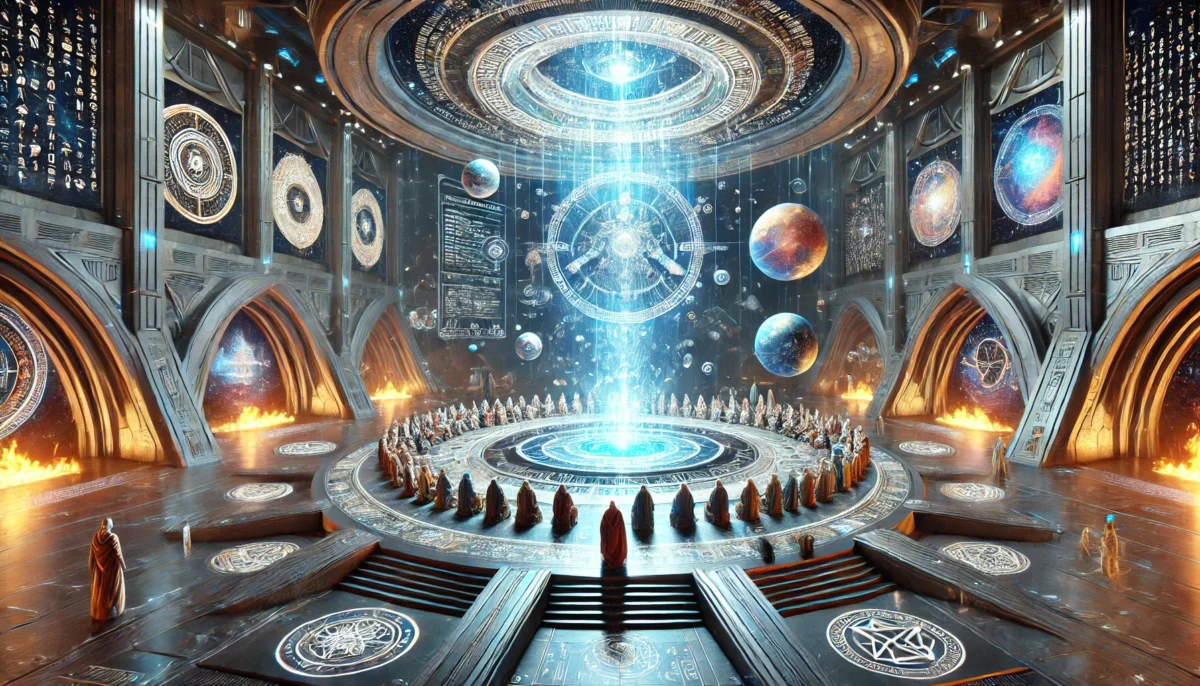
6. Religious Structures: Temples, Priests, and Rituals

Religions aren’t just beliefs; they come with places of worship, spiritual leaders, and daily practices that define a culture.

Temples and Sacred Spaces

Are places of worship cathedrals of glass and metal, or living trees infused with magic?

Do temples float in orbit around gas giants, or are they hidden underground?

Are sacred spaces tied to natural phenomena, like eclipses, planetary alignments, or magnetic fields?

Priests and Religious Leaders

Are they scholars, mystics, cyborgs, or warrior-monks?

Do they possess divine powers, cybernetic implants, or lost technological knowledge?

Is priesthood open to all, or is it inherited through noble bloodlines?
Common Religious Rituals

Pilgrimages – Followers must visit a sacred place to achieve enlightenment.
Sacrifices or Offerings – Gifts to the gods range from blood rituals to energy donations.

Prophecy & Visions – Certain individuals foresee the future through divine intervention or genetic enhancements.
Rites of Passage – Coming-of-age ceremonies involving tests of faith, combat, or intellectual pursuit.

7. Religion and Conflict: Holy Wars, Schisms, and Taboos

Religious belief often leads to division, conflict, and change.

Holy Wars & Religious Crusades

Do spacefaring empires wage war over divine mandates?

Do religious extremists seek to exterminate non-believers?

Is faith used to justify colonization of new planets? In Zalonia, the people who have Zalonia as their homeland dont grasp the concept of colonization new planets because they don’t have the technology. However, the gnonows try to colonize Zalonia.

Schisms & Heresies

Has a prophet or rogue AI challenged the existing order?

Do certain sects see technology as divine, while others see it as blasphemy?

Have rebel priests formed underground movements to oppose religious corruption?

Sacred Taboos and Laws

Are certain sciences forbidden because they intrude upon divine realms?

Do people refuse to set foot on a planet because it is “holy ground”?

Are specific numbers, colors, or symbols considered lucky or cursed?

8. The Role of Religion in Everyday Life

A well-integrated religion influences:

Government & Law – Is it a theocracy? Does the ruling class claim divine authority?

Technology & Science – Are advancements seen as holy, or heretical?

Daily Life & Superstitions – Are people expected to pray at sunrise, avoid flying ships on certain days, or carry religious artifacts?

9. Unique Science Fantasy Religion Ideas

The Celestial Shepherds

A species of sentient beings believes their souls are reincarnated into stars.
Astronomers act as priests, reading constellations as messages from their ancestors.

The Biotech Cult

Worshipers believe in “genetic purity”, bio-engineering their bodies to mimic divine forms.

Elders splice their DNA with “godly” genes harvested from ancient alien remains.

The Eternal Code

A religion based on sacred digital texts left behind by an ancient AI.

The faithful embed scripture into their neural implants and recite prayers in binary.

Final Thoughts: Crafting a Living Religion

A well-designed religion isn’t just a backdrop—it’s an active force in your

world. It influences characters, cultures, conflicts, and progress. Ask yourself:

How does this religion shape daily life?

What role does science or magic play in its beliefs?

Does faith bring people together, or divide them?

By blending science, spirituality, and culture, your world will feel richer, more immersive, and truly alive.

What unique religious beliefs exist in your science fantasy world? Share your ideas below!

Support Me At Patreon

Crafting Mystical Planets and Unique Ecosystems in Science Fantasy

be Crafting Mystical Planets and Unique Ecosystems in Science Fantasy

Crafting Mystical Planets and Unique Ecosystems in Science Fantasy

Introduction

One of the most exciting yet challenging aspects of building a science fantasy world is creating mystical planets with unique ecosystems, cultures, and symbolic meanings. Planets can serve as more than mere backdrops for your story—they can be characters in their own right, shaping the narrative and enriching the setting. In my science fantasy world of Aztharian, I’ve incorporated a diverse solar system filled with intriguing planets, each with its own symbolism and purpose. Here’s how I approached this, along with tips and ideas for crafting your own celestial wonders.

1. Starting with the Heart of Your World

At the center of my solar system is Aztharian, the second planet from the sun. Similar to Earth in its proximity to the sun, Aztharian serves as the focal point of the story. Its climate, ecosystems, and civilizations mirror Earth’s diversity, making it relatable yet fantastical. When designing your primary planet, think about how it connects to the rest of your solar system.
Ecosystems and Symbolism

Aztharian is a magical world where advanced alien species, such as the Gnonows, interact with its inhabitants. Its three moons add layers of symbolism, each representing different omens or natural phenomena. Phantom moons occasionally appear, serving as harbingers of major events—such as a green moon signaling a plague or a red moon symbolizing fortune.

When designing your main planet:

Consider its role: Is it a hub of life, a battleground for cosmic forces, or a sacred place for your story’s mythology?

Add symbolic elements: Moons, natural phenomena, or celestial alignments can reflect the spiritual or cultural beliefs of its inhabitants.

2. The Gnonows’ Artificial Planet: A Technological Marvel

Beyond Aztharian lies an artificial planet built by the Gnonows, a high-tech alien species with a vested interest in monitoring and influencing Aztharian. This planet, small and invisible to the naked eye, serves as their vantage point for observing and occasionally manipulating the inhabitants below.

Designing Artificial Worlds

Artificial planets offer endless creative opportunities. They can be sleek, sterile hubs of technology or chaotic amalgamations of machinery and alien life forms. For the Gnonows, their planet houses advanced vehicles and spaceships equipped with tools to monitor Aztharian’s ecosystem and civilizations.

Questions to consider for artificial planets:

Purpose: Is the planet designed for surveillance, research, or conquest?

Environment: Does it have an atmosphere, or is it a barren technological shell?
Aesthetic: Is it a metallic orb, a crystalline structure, or something entirely alien?

3. Latrina: A Planet of Artistry and Indulgence

The closest planet to the sun in my solar system is Latrina, a world associated with romantic and sensual love, creativity, artistry, and self-expression. It’s a planet of contrasts, symbolizing beauty and pleasure on one hand and selfishness, greed, and indulgence on the other. Latrina’s hieroglyphic—a sphere with a cross—serves as a reminder to balance self-expression with moderation.

Symbolism and Cultural Impact

Planets like Latrina can influence the culture and belief systems of your world’s inhabitants. For instance:

Cultural Significance: Latrina might inspire artists, poets, and dreamers, while also warning against excess.

Astrological Influence: Inhabitants of Aztharian might interpret planetary alignments involving Latrina as omens for creativity or warnings of greed.

Ideas for symbolic planets:

A planet of war, inspiring fear and courage.

Wisdom could be symbolized by a planet, associated with learning and enlightenment.

A planet of chaos, representing unpredictability and change.

4. The Outer Gas Giants: Guardians of the Solar System

Further out in the solar system are two massive gas giants, which act as cosmic protectors for smaller planets like Aztharian. Their immense gravitational pull shields Aztharian from comets and asteroids, ensuring its continued survival.

Designing Gas Giants

Gas giants offer a wealth of storytelling potential, with their vibrant atmospheres, countless moons, and hidden secrets. In my solar system, the fourth planet, Anohpmi, is a colorful giant with swirling hues of red, yellow, blue, and brown. Though uninhabitable due to its extreme gravity, its hundreds of moons hold the promise of life and exploration.
Key considerations for gas giants:

Atmosphere and Appearance: Unique coloration, storms, or magnetic fields can make your gas giant stand out.

Moons and Exploration: These planets often have numerous moons, which can host civilizations, hidden treasures, or ancient ruins.

Cultural Lore: Gas giants can symbolize protection, power, or mystery, depending on how they’re perceived by the inhabitants of your world.

5. Moons and Phantom Satellites

Moons play a vital role in shaping the identity of planets. In Aztharian’s case, its three moons not only illuminate the night sky but also carry deep symbolic meaning. Phantom moons—celestial phenomena that appear sporadically—add an air of mystery and serve as omens.

Creating Unique Moons

Moons can vary widely in size, color, and purpose:

Habitable Moons: Some moons might support life, serving as colonies or sanctuaries.

Mysterious Phenomena: Phantom moons could represent rare cosmic alignments or magical forces, appearing only during significant events.

Symbolic Meanings: Each moon might correspond to an element, emotion, or deity, influencing the culture and rituals of the planet below.

6. Building Unique Ecosystems for Each Planet

Each planet in your solar system should have a distinct ecosystem that sets it apart. While some planets may teem with life, others might be barren yet rich in resources.

Ecosystem Ideas

Latrina: A lush, jungle-like world with bioluminescent plants and creatures that thrive in heat. Its vibrant landscapes inspire creativity, while its predators symbolize indulgence gone awry.

Anohpmi’s Moons: These moons could host icy tundras, volcanic landscapes, or deep oceans filled with bioluminescent sea creatures. Perhaps one moon has ancient ruins left by a lost civilization.

Artificial Planets: The Gnonows’ planet might have artificial ecosystems, like gardens sustained by advanced technology or holographic environments for training and experimentation.

7. Incorporating Storytelling into Planetary Design

Planets can serve as more than just settings; they can drive the plot, embody themes, and shape character development. Here’s how:

Conflict: A rare resource on one planet might fuel wars or alliances.

Exploration: Characters could venture to uncharted worlds, uncovering secrets or ancient relics.

Cultural Exchange: The unique traits of each planet can influence trade, diplomacy, and even conflict among civilizations.

Conclusion

Creating mystical planets for a science fantasy world is a rewarding challenge, offering opportunities to blend science, magic, and storytelling. From the romantic allure of Latrina to the technological marvel of the Gnonows’ artificial planet, each celestial body in your solar system can enrich your world and captivate your audience. By adding symbolic meanings, diverse ecosystems, and cultural significance, you can craft a universe that feels alive and vibrant.

When building your own planets, ask yourself: What role does each planet play in the larger narrative? How do its ecosystems and symbolism influence the inhabitants of your world? With these questions as your guide, the possibilities are endless.

Creating Life – By Ralph Ellef

The Art of World Building Workbook – By Ralph Ellefson

Fantasy World Building: A Guide To Developing Mythic Worlds and Legendary Creatures – By Mark Nelson

Support Me on Patreon

Get the electronic version my book, “Curse of Kredaria” for free at various websites including Amazon.

Incorporating Space Travel in Science Fantasy

Incorporating Space Travel in Science Fantasy: Blending Technology and Magic for Epic Journeys

Incorporating Space Travel in Science Fantasy

Introduction

In the world of science fantasy, space travel holds a unique allure. Unlike traditional sci-fi, where space travel is often purely technological, science fantasy offers the freedom to combine advanced technology with mystical forces. Imagine starships powered by magic, teleportation methods linked to ancient rituals, or interstellar travelers who can slip between dimensions. Blending science and magic allows for endless possibilities, opening up new pathways to create a compelling, immersive universe.

In my world of Aztharian, space travel plays a fascinating role. Though the inhabitants of Aztharian can’t travel through space themselves, an alien species known as the Gnonows has mastered the art of interstellar travel, often visiting and influencing the world. Here’s a look at how you might create a science fantasy space travel system in your own world, with examples, questions, and ideas to spark your creativity.

1. Defining the Nature of Space Travel in Your World

The first step in designing a space travel system is to define the methods by which travel is achieved. Think about whether it’s accomplished solely through magic, advanced technology, or a blend of both.

Technology-Driven Space Travel

If your world leans heavily into sci-fi, consider space travel powered by technology. This could mean spacecraft with engines that rely on traditional physics, high-powered energy sources, or fuel systems that mimic nuclear energy or antimatter. Technology-driven travel allows for structures like spacecraft maintenance bays, space stations, and engineering challenges, adding realism and depth.

Mechanical Starships: For a science-leaning approach, you could design spacecraft that resemble the complex structures we see in modern space travel. Think rockets, space shuttles, or vast cruisers with control panels, engineering rooms, and complex fuel systems.

Advanced Propulsion Systems: In Aztharian, the Gnonows use high-speed spacecraft that can travel faster than 100,000 miles per hour. Their ships are equipped with engines that generate powerful thrust, propelling them across galaxies. You could create propulsion systems that harness antimatter, nuclear fusion, or even solar sails that harness the power of stars.

Alien Aesthetic: Consider unique ship designs. Perhaps the Gnonows’ ships resemble traditional flying saucers, while other alien races use craft shaped like pyramids or even biological organisms that pulse and grow. Each design adds a layer of intrigue and sets your races apart.

Magic-Infused Space Travel

Adding magic to space travel is a hallmark of science fantasy, allowing for unique and otherworldly methods of interstellar movement. Magic-based travel systems can work through spells, enchanted relics, or powerful mystical energy sources.

Spell-Powered Ships: Imagine starships that rely on runes and incantations to stay aloft. They could be fueled by mystical crystals or energy fields rather than conventional fuel. In Aztharian, an alien race uses magic to power their rocketships, making them capable of reaching speeds up to 40,000 miles per hour.

Space Wizards: Certain elite space travelers or wizards could have the knowledge to navigate the stars through ancient spellcasting, creating paths through space where there are none. They could use magical maps or summon entities to guide them through the void.

Elemental Magic Engines: Ships might be powered by elemental magic such as fire, wind, or even darkness, giving them unique abilities in space. A ship powered by wind magic might generate invisible sails that harness the solar winds, while one powered by fire magic might leave a trail of blazing energy behind it.

2. Vehicles of Space Travel: Starships, Teleportation, and Wormholes

Once you decide on the source of travel power, think about the vehicles or methods by which interstellar journeys are made. In science fantasy, you’re free to explore ships, portals, wormholes, and even teleportation magic.

Traditional Starships with Magical Twists

Starships can serve as more than just transport; they can be integral to the story. Some starships might use traditional designs with futuristic features, while others rely on bizarre, fantastical forms.

Gnonows’ Spaceships: In Aztharian, the Gnonows use high-speed, saucer-shaped ships capable of holding various weapons like lasers, missiles, and bombs. These ships allow them to explore and interact with Aztharian’s inhabitants, maintaining a close watch on the planet from a satellite they orbit.

Living Ships: Imagine ships that are alive, with organic bodies that heal themselves, pulse with energy, and respond to their captain’s commands as if they were sentient beings. These living vessels could bond with their pilots, providing companionship as well as transport.

Dimension-Shifting Craft: Some starships might have the power to slip between dimensions, appearing and disappearing at will. They could leave faint afterimages or distort the space around them as they move between realities.

Teleportation and Wormholes

Teleportation and wormholes are popular science fantasy concepts that offer immediate or near-instantaneous travel, creating dramatic plot possibilities.

Wormhole Travel: In Aztharian, the Gnonows create wormholes that allow them to traverse dimensions, instantly covering vast distances. Wormholes could be natural phenomena, harnessed by those who understand their mysteries, or engineered constructs that require high levels of magic or technology to open and control.

Teleportation Relics: Perhaps certain magical artifacts allow for short-range or long-range teleportation, letting characters bypass traditional travel methods entirely. The artifact could require activation through a spell or an energy source, making it a valuable and potentially dangerous item.
Gateways to Other Worlds: For a more mystical touch, your world could have ancient, enchanted gateways that transport travelers across galaxies or dimensions. These gateways might be hidden, guarded by mythical creatures, or protected by magical wards that only the worthy can bypass.

3. Navigating Space Travel Challenges in Science Fantasy

Creating a dynamic space travel system means balancing the power of technology and magic with realistic challenges. Consider what obstacles travelers may face in your world.

High-Speed Travel and Time Effects

If your ships travel faster than light, think about the potential consequences. How does this impact time for the travelers? Will they experience time dilation, where time passes slower for them than it does back home? This could lead to fascinating narrative twists, where a traveler returns to find that centuries have passed.

Aging and Time Distortion: In Aztharian, the Gnonows’ high-speed travel could hypothetically allow them to escape black holes or reverse time effects. You might explore whether certain characters age more slowly due to frequent interstellar journeys, adding an element of mystery and longevity.

Space Travel Strain: Traveling faster than light could put intense strain on both the body and the mind, requiring specialized training or equipment. Characters could face physiological changes or mental fatigue after prolonged space journeys, adding stakes to each trip.

Protective Magic or Technology Shields

In a science fantasy setting, space is filled with cosmic dangers. Shields—whether magical, technological, or a blend of both—can provide protection.
Energy Barriers: Advanced alien civilizations might use powerful energy fields that deflect space debris or enemy fire. These shields could require a steady power source or regular recharging, adding tension during extended journeys.

Magical Aura: A ship might be surrounded by a magical aura that repels threats, providing defense against cosmic hazards and attacks. Perhaps these auras can only be activated by skilled wizards or a rare magical element, making them highly valuable and sought after.

Unknown Space Phenomena

Space is full of mysteries, and for science fantasy, these mysteries can be magical as well as scientific.

Dimensional Rifts: Ships could encounter rifts in space that lead to strange, uncharted territories, each with unique rules and environments. These rifts might be home to bizarre creatures, energy anomalies, or lost civilizations.
Sentient Nebulae: Imagine star systems where nebulae are sentient and aware of travelers passing through. These entities could communicate telepathically, offer guidance, or even impede journeys, forcing travelers to negotiate passage.

4. Building the Societies and Cultures of Space Travelers

Consider the cultural impact of space travel on your world. Some cultures might view space travel as a rare and revered skill, while others treat it as routine.

Elite Space Navigators: In Aztharian, only the alien Gnonows possess advanced space travel abilities, making them a formidable presence. You might have a class of elite space navigators who are highly trained in both technology and magic, respected or feared by those who stay planet-bound.
Intergalactic Diplomacy: Space travel could foster alliances or tensions between planets or species. Diplomatic ships might be equipped with advanced communication tools, allowing ambassadors to interact and negotiate with distant worlds.

Conclusion

Incorporating space travel in a science fantasy world offers a wealth of possibilities. By combining magical and technological travel methods, you can create a unique setting that stands out. Whether it’s starships powered by magic, wormholes that bend dimensions, or high-speed vessels equipped with advanced weapons, space travel adds depth, excitement, and intrigue to any science fantasy world.

By asking questions about the origins, mechanics, and social impact of space travel, you’ll bring new layers of realism and mystery to your setting, inviting readers to explore a universe where technology and magic coexist in harmony—or conflict.

Creating Life – By Ralph Ellef

The Art of World Building Workbook – By Ralph Ellefson

Fantasy World Building: A Guide To Developing Mythic Worlds and Legendary Creatures – By Mark Nelson

Support Me on Patreon

Get the electronic version my book, “Curse of Kredaria” for free at various websites including Amazon.

Science-Based Magic System

Building a Science-Based Magic System in Fantasy Worlds

Science-Based Magic System

Introduction

In fantasy worlds, one of the most captivating elements is often the magic system. Some stories keep magic shrouded in mystery, barely explaining its inner workings, while others dive deeply into the mechanisms behind every spell and incantation. For writers, developing a unique magic system is an exciting way to set their world apart, especially in science fantasy, where magic can be combined with scientific principles.

In my created world of Aztharian, I’ve blended science with magic to create a unique system. This approach opens up endless possibilities, allowing for magical abilities that interact with the laws of physics, biology, and chemistry. Whether building a new world from scratch or expanding an existing one, incorporating scientific elements into magic can add complexity and make it even more immersive. Here’s a look at how to design a science-based magic system, with examples from Aztharian and tips to inspire your own creations.

1. Establishing the Foundations of a Science-Based Magic System

To create a science-driven magic system, consider grounding it in principles inspired by real science. Whether it’s physics, chemistry, or biology, using established scientific concepts can lend a level of believability to your world, especially in a genre where magic is expected to have logical rules.

Defining the Source of Magic

Begin by defining the source of magic in your world. In a science-based system, magic might be harnessed from specific particles, forces, or energy sources. This approach can allow you to create limitations and rules for magic, making it feel more grounded.

Antimatter: In Aztharian, I designed a magic system called “inner magic,” where spells are powered by antimatter. Antimatter can release immense energy upon interacting with matter, making it a potent, dangerous power source. This brought challenges—namely, how to prevent catastrophic explosions every time a spell was cast. To solve this, I imagined that the very essence of the world in Aztharian was built from a “neutral” material unaffected by either matter or antimatter. This neutral essence allows magic users to tap into antimatter without risking a fatal reaction, creating a stable yet robust form of magic.

Dark Energy: Another form of magic in Aztharian is derived from dark energy, a mysterious force that’s poorly understood even in modern science. In Aztharian, dark energy magic is raw, volatile, and often forbidden, as it’s primarily used to harm others. This magic type isn’t just dangerous; it’s secretive, often passed down through generations or guarded by hidden societies. Its unpredictability and misdirection abilities make it elusive to law enforcement, adding an aura of mystery and fear around dark energy practitioners.

Setting Rules and Limitations for Balance

When magic is rooted in scientific principles, it’s essential to set rules and limitations. By building restrictions into the system, you create a balance that prevents magic from being an all-powerful force.

Energy Requirements: Perhaps spells require enormous energy, limiting how often they can be used. In the case of antimatter magic, users might be physically drained after casting a powerful spell, needing rest or sustenance to replenish their energy.

Complexity of Spells: Some spells might need advanced knowledge of chemistry or physics to work properly. If a character lacks this expertise, their spells might be weaker or prone to failure, encouraging them to pursue study and practice.

2. Exploring Different Types of Science-Based Magic

With a science-based approach, magic can take many forms, each drawing from different scientific fields. Here are a few to consider:

Physics-Based Magic

Using physics as a foundation, your characters could manipulate matter and energy on a molecular or atomic level.

Quantum Manipulation: Characters could influence the behavior of particles at a quantum level, bending probability to their advantage. Perhaps they can affect particle entanglement, allowing them to communicate instantly with others across distances.

Control: Imagine a system where characters can influence gravity, allowing them to levitate objects or even themselves. This control could come from manipulating gravitational fields, giving rise to defensive or offensive tactics.

Biology-Based Magic

Biological manipulation allows for magic that affects living organisms, from healing to harm.

Cellular Healing: In a scientifically-rooted magic system, a healer might use magic to accelerate cell regeneration or stimulate immune responses. They could draw on knowledge of anatomy and physiology to repair injuries, making their healing grounded in science.

Genetic Manipulation: Magic users could temporarily alter their genes to grant themselves new abilities, like enhanced strength or speed. However, this kind of magic might come with risks, such as genetic instability or unintended mutations.

Chemistry-Based Magic

Chemistry opens up the world of potions, elixirs, and even alchemical transformations.

Potion Making: In Aztharian, certain characters create potions that require knowledge of chemical reactions. A love potion, for instance, could be crafted by combining elements that affect emotions or behaviors. Invisibility potions might alter light-reflecting molecules in the skin, effectively “cloaking” the user.

Explosive Reactions: A fire mage might need to understand combustion and use ingredients that spark specific reactions. For example, a spell that produces flames might require a mix of flammable materials or a catalyst that ignites upon activation.

3. Introducing Forbidden Magic: The Appeal of Dark Energy

Forbidden or dark magic often carries moral and ethical implications, making it a compelling narrative device.

Creating Dark Magic Societies

Dark magic practitioners could form underground networks or guilds, teaching forbidden spells and offering protection to each other. These groups might have unique rituals, symbols, or secret languages, deepening the mystery surrounding them. The secrecy and mistrust associated with dark magic can create tension, especially if law enforcement or rival magical factions try to crack down on these societies.

Dark Magic as a Tool for Manipulation

Since dark energy magic in Aztharian allows for deception and misdirection, practitioners often use it for clandestine activities. Characters skilled in this magic might be adept at planting illusions, clouding memories, or hiding their tracks, making them difficult to capture or identify. This could be an ideal tool for spies, assassins, or anti-heroes, adding depth to your character roster.

4. Endless Possibilities: Combining Magic and Science in New Ways

The beauty of science-based magic systems is that they can evolve in limitless ways. Here are some additional ideas to inspire your own system:
Molecular Manipulation: Imagine a form of magic where practitioners manipulate atoms or molecules to change the structure of objects. This could allow characters to turn stone into metal or transmute base elements into valuable materials.

Weather Manipulation: For those interested in meteorology, a character might control weather patterns by influencing air pressure, moisture levels, and wind currents. This could allow for everything from creating rain to summoning powerful storms.

Electrical Magic: Characters could harness electricity by controlling ions in the air, creating lightning or powering devices. This approach might draw on scientific principles of conductivity and electromagnetism, making the spells more realistic.

5. Designing Your Own Science Fantasy Magic System

If you’re creating a science fantasy world, start by selecting a scientific principle that interests you. Ask yourself the following questions:

What scientific principle or field will serve as the foundation of the magic system? (e.g., physics, chemistry, biology)

What are the rules and limitations? (Consider energy requirements, rare ingredients, or skill level.)

Who can access this magic, and how is it learned? (Is it taught in schools, passed down in families, or discovered accidentally?)

What are the social implications of this magic? (Is it revered, forbidden, or feared?)

Using science as a basis, you can create a magic system that feels authentic, logical, and rooted in real-world principles.

Conclusion

Designing a science-based magic system adds layers of complexity and realism to a science fantasy world. By drawing on scientific fields like physics, biology, or chemistry, you can create magic that feels both powerful and grounded in logic. In Aztharian, antimatter and dark energy form the basis of two unique magical paths, each with distinct rules and consequences.

Blending science with magic invites readers to imagine how magic might work in our own world, offering a captivating mix of the mystical and the rational. Whether it’s healing magic that requires knowledge of anatomy or potions that rely on chemical reactions, this approach enriches your fantasy setting and enhances the experience for readers.

Creating Life – By Ralph Ellef

The Art of World Building Workbook – By Ralph Ellefson

Fantasy World Building: A Guide To Developing Mythic Worlds and Legendary Creatures – By Mark Nelson

Support Me on Patreon

Get the electronic version my book, “Curse of Kredaria” for free at various websites including Amazon.

Bringing Aliens into a Fantasy World

Bringing Aliens into a Fantasy World: How to Create a Unique Science-Fantasy Setting

Bringing Aliens into a Fantasy World

Introduction

Fantasy and science fiction are two distinct genres, but what if you could merge them by bringing aliens into a fantasy world? Imagine a setting where medieval kingdoms, magic-wielding wizards, and dragons exist alongside advanced alien civilizations. In my own world of Aztharian, I’ve incorporated high-tech alien species into a traditional fantasy realm, creating new layers of intrigue, mystery, and conflict. While Aztharian’s technology level resembles that of medieval Earth, these aliens bring futuristic technology and ulterior motives, often presenting themselves as gods or supernatural beings to the native people. This blend of genres can open up fascinating storytelling possibilities.

If you’re considering adding aliens to your fantasy world, here are some ideas to get you started, along with key questions to help you define their role, motives, and interactions with your world’s inhabitants.

1. Alien Deities: Using Ancient Astronaut Theories in Fantasy

The idea that aliens might have influenced ancient civilizations, often presented as “ancient astronaut theories,” has fascinated people for decades. While these theories are controversial, they provide a compelling concept to explore in a fantasy world. Imagine that aliens with advanced technology once visited your world, leaving behind artifacts or knowledge that shaped its cultures. In Aztharian, some alien races present themselves as gods, wielding their technology to awe and control the population.

How Alien “Gods” Influence Culture

When aliens pose as gods, they can manipulate civilizations, shaping religions, social hierarchies, and even influencing wars. They might grant technology or knowledge to those they favor or withhold it from those they deem inferior. The locals, unaware of the aliens’ true nature, could revere these beings and develop entire belief systems around them. This dynamic can add depth to your world, raising questions about faith, power, and manipulation.

Story Ideas with Alien Deities

Relics of the Gods: Create ancient relics that supposedly contain divine power but are actually alien artifacts. These relics might grant abilities or powers but come with hidden dangers.

The Return of the Gods: Imagine that the aliens left long ago but have returned to reclaim their “kingdom” or reestablish control. How do the people react? Are they terrified, or do they rally against the “false gods”?

2. Deciding on Alien Motives: Friend, Foe, or Observer?

When bringing aliens into your fantasy world, their motives will shape how they interact with its inhabitants. Here are some options to consider:
Hostile Aliens

In Aztharian, some alien species are hostile, using their advanced technology to manipulate or subjugate the local population. They might see the natives as a lesser species, controlling them for resources, territory, or sheer amusement. Hostile aliens could even manipulate different factions within the world to incite wars or foster chaos, all while remaining in the shadows.

Benevolent or Curious Aliens

Not all aliens have to be enemies. Some could be peaceful explorers, visiting the planet to learn more about its cultures, resources, or magical systems. Perhaps they are intrigued by the presence of magic and seek to study it, offering technological insights in exchange for knowledge about magical practices. These aliens might even be allies, helping local populations develop or defend themselves against other threats.

Neutral Observers

Some aliens may choose not to interfere with the world at all, observing from afar and adhering to a “non-interference” policy similar to Star Trek’s Prime Directive. These aliens could be an elusive presence, occasionally spotted but never directly interacting with the locals. Such a dynamic can create an air of mystery around them, making them a subject of legends and speculation.

3. Different Alien Species and Their Roles in Your World

Incorporating multiple alien species with different purposes or levels of technology can add complexity to your world. Each species could have its own agenda, causing tensions not only with the locals but also among themselves.

Types of Alien Roles

The Manipulators: Aliens who meddle in local affairs for personal gain, posing as gods or wielding power to control populations.

The Scientists: Those who visit purely for research, respecting the local ecosystem and studying the native species and magical phenomena.
The Explorers: Adventurous aliens who form alliances, help locals, or perhaps even fall in love with the people of your world, integrating into their society.

The Conquerors: A warlike species that sees the world’s resources as theirs to take, possibly triggering a planet-wide conflict

How Alien Species Interact with Each Other

Consider creating rivalries or alliances between alien species. Perhaps one species tries to protect the world from the influence of another, creating a cosmic struggle with the local population caught in the middle. Or, two species could be vying for control over a unique resource found only on this planet, bringing their conflict directly into the world.

4. The Locals’ Reactions to Alien Visitors

How the inhabitants of your fantasy world react to aliens can vary widely based on cultural context, prior contact, and the aliens’ behavior.

Fear and Reverence

For many locals, the appearance of aliens with advanced technology would be terrifying. They may revere these beings as deities, fearing their wrath and seeking their favor. This could lead to the formation of cults, rituals, or even sacrifices in honor of the aliens.

Curiosity and Adaptation

If the locals are used to alien visits, they may react with curiosity rather than fear. Over time, they might adapt by integrating alien technology, language, or customs into their own culture. In Aztharian, for example, certain tribes have come to expect periodic encounters with these “divine beings” and have even developed symbols and rituals that reflect this influence.

Resistance and Rebellion

If alien interference becomes oppressive, some groups might band together to resist, possibly forming underground movements to reclaim their autonomy. These rebels could seek to acquire alien technology or ally with sympathetic alien species, creating the potential for a sci-fi-inspired resistance storyline within a fantasy setting.

5. Alien Technology vs. Magic: Balancing Powers in Your World

When adding high-tech aliens to a fantasy world, it’s essential to consider how alien technology interacts with local magic systems. Does magic counteract technology, or do the two coexist without interference?

Magic That Thwarts Alien Technology

One option is to make magic an equalizing force against alien technology. Perhaps certain spells or magical wards can disrupt alien devices, forcing them to rely on non-technological methods when interacting with locals. You could even create an order of wizards dedicated to defending the world from extraterrestrial threats, using ancient spells to counteract alien invasions.

Technology That Mimics or Enhances Magic

Alternatively, alien technology could mimic or enhance magical abilities. In Aztharian, for example, certain aliens possess devices that appear to locals as powerful magical artifacts, furthering the belief that they are divine. By incorporating elements that blur the line between magic and technology, you can create a seamless science-fantasy world where the two are interconnected.

6. Alien Travel and Cosmic Distance: How Do They Reach Your World?

How the aliens travel to your fantasy world can influence their level of involvement. Do they arrive via starships, or do they use advanced portals or wormholes?

Starships and Spacecraft

Aliens with visible starships add a sci-fi aesthetic, creating opportunities for stories of alien invasions, crashed vessels, or cosmic exploration. Locals might see a landing starship as a sign of gods descending from the heavens, giving the aliens an aura of mystery and power.

Wormholes and Portals

Alternatively, aliens might access the world through interdimensional portals or wormholes, allowing for quick, unpredictable visits. This method adds a mystical element to their arrival and departure, keeping locals in awe and maintaining an air of mystery.

Conclusion: Building a Science Fantasy World with Aliens

Incorporating aliens into a fantasy world allows you to blend two genres, adding unique dynamics and endless storytelling potential. In my own world of Aztharian, alien species serve as powerful, sometimes manipulative figures, creating both allies and enemies among the locals.

Whether you want aliens to be gods, conquerors, or curious explorers, they can add mystery, conflict, and cultural complexity to your setting.
As you build your world, ask yourself: What role do these aliens play, and how do they impact the lives and beliefs of the native people? By answering these questions and thinking through the implications of alien presence, you’ll craft a world that’s as wondrous as it is complex, inviting readers to explore a place where the boundaries between magic and science are beautifully blurred.

Creating Life – By Ralph Ellefson

The Art of World Building Workbook – By Ralph Ellefson

Fantasy World Building: A Guide To Developing Mythic Worlds and Legendary Creatures – By Mark Nelson

Support Me on Patreon

Buy my book, “Curse of Kredaria” for free at various websites.