
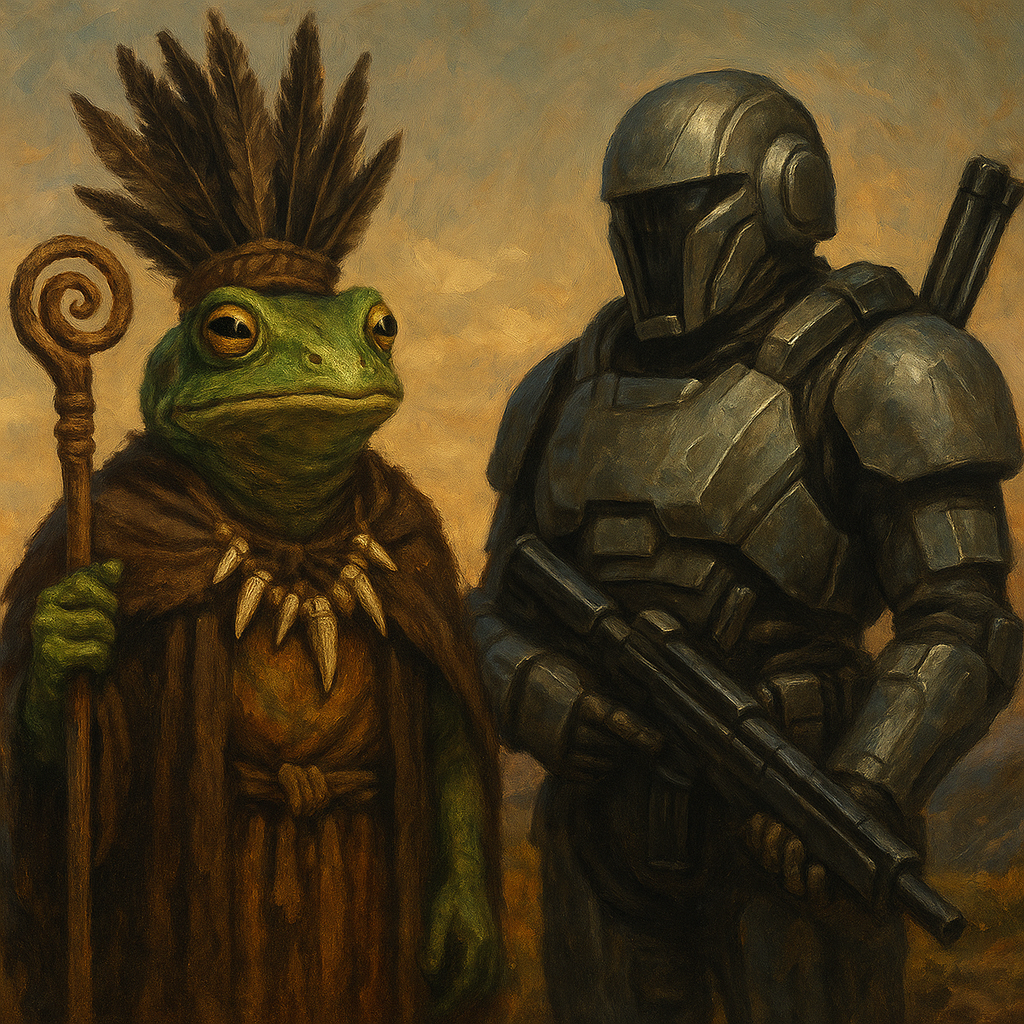
A guide to creating societies that vary in technological advancement and magical reliance.
In science fantasy worldbuilding, few things are more fascinating than the collision of worlds: spacefaring civilizations wielding advanced AI-powered technology alongside mystic clans who divine truth through runes and spirit walks. The tension between high-tech and low-tech cultures can create dynamic storytelling, rich conflict, and layered world development—but it requires careful balance.
In this guide, we’ll explore how to design technologically varied cultures that coexist (or clash) within your universe.
⚙️ 1. Define the Axes of Advancement: Technology vs. Magic
Start by imagining two major axes that define the civilizations in your world:
Technological Advancement: From stone tools to quantum computing
Magical Reliance: From completely non-magical to fully mystic-dependent
Not every high-tech society needs to dismiss magic—and not every tribal group needs to be ignorant of it. In fact, some of the most interesting cultures exist in the overlap, like:
- A tribal caste that binds spirits into energy weapons
- A planetary empire with hyperdrives fueled by ley-line energy
- A monastic society that controls nanotech through ceremonial chants
This allows for a spectrum of development that keeps things nuanced and compelling.
🧭 2. Geographic and Cosmic Distribution
Just like on Earth, the level of technological or magical advancement in a society may be influenced by:
Geography: Isolated societies may rely more on spiritual knowledge and oral traditions, while trade-hub cities develop tools, machines, or weaponry.
Cosmic Conditions: Some planets may block magical fields, while others are steeped in arcane energies that fry electronics.
Historical Events: Was there a techno-magical war that caused some civilizations to retreat to simpler ways of life?
Think about resource availability, climate, and interplanetary relations to explain disparities.
🧙♂️ 3. Cultural Identity Through Tech or Magic
Societies often define themselves through their dominant toolset:
Culture Type: High-Tech Rationalists
Description: Distrust magic; value logic, science, computation
Example: A planetary government run by a central AI council
Culture Type: Mystical Guardians
Description: Protect ancient magical sites; reject machines
Example: A forest realm ruled by druids who manipulate time
Culture Type: Hybrid Cultures
Description: Blend ancient rites with future-tech Example: A desert tribe that channels sand spirits through nano-glass tablets
Culture Type: Post-Apocalyptic Mystics
Description: Use scavenged tech as relics in sacred rituals
Example: Wasteland nomads who “worship” a satellite array as a divine voice
Culture isn’t just about tools—it’s about beliefs, values, and fears. Use these as your foundation.
⚔️ 4. Sources of Tension and Cooperation
Creating conflict (or uneasy alliances) between different levels of development adds drama:
Possible Conflicts:
High-tech invaders seek to “uplift” low-tech societies, causing spiritual and ethical unrest
Low-tech zealots see machines as corrupting forces and sabotage them
A magical caste controls information flow to keep others in check, resisting “progress”
Possible Collaborations:
A technomage who studies both runes and circuitry
A low-tech society that possesses a forgotten superweapon, requiring outsiders to seek their guidance
Shared enemies that force alliances between clashing worldviews
This tension allows you to explore themes of colonialism, spiritual preservation, innovation, and mutual misunderstanding.
🧩 5. Communication and Misinterpretation
Different levels of advancement mean different ways of speaking, thinking, and perceiving the world:
- A shaman may interpret starship exhaust as divine smoke
- A scientist may dismiss an enchantment as “localized anomaly”
- A translator may mistranslate a simple greeting into a declaration of war
You can use these gaps in understanding to create rich scenes full of dramatic irony, confusion, and unexpected bonding.
🪐 6. Story Hooks and Worldbuilding Opportunities
Here are some ideas to spark inspiration:
The Code That Casts Spells: A civilization discovers that programming language accidentally taps into magical currents.
The Last Spellsmith: A lost low-tech people hold the only key to reawakening a starmap long thought dead.
Ascension Divide: An empire of high-tech immortals outlaws magic, driving sorcerers into rebellion.
Magical Conduits: A low-tech society lives on a ley-line hub that powers faster-than-light ships, giving them political leverage.
🛠️ 7. Tips for Balancing Believability
Give both sides strengths and flaws: Don’t make high-tech = superior and low-tech = primitive. Each should shine in its own way.
Avoid stereotypes: Tribal doesn’t mean ignorant. Scientific doesn’t mean soulless.
Design trade networks: Let these societies need each other—maybe one offers alchemical ingredients while the other provides medical bots.
Let characters bridge the gap: Introduce people who straddle both worlds—a hacker who became a druid, a golem-tamer who joins a space crew, etc.
Support Me On Patreon
Buy “Creating Life” – Affiliate Link
Return to Home