Blog

Crafting Fantastical Forests

Types of Forests in Science Fantasy Worlds

Forests have long served as rich backdrops for fantasy tales—from enchanted glades hiding ancient secrets to misty jungles teeming with magic. But in science fantasy, forests can evolve into ecosystems that blur the line between biology and arcane or technological influence. Let’s dive into unique forest types you can craft to elevate your worldbuilding and immerse readers in wonder, mystery, and danger.

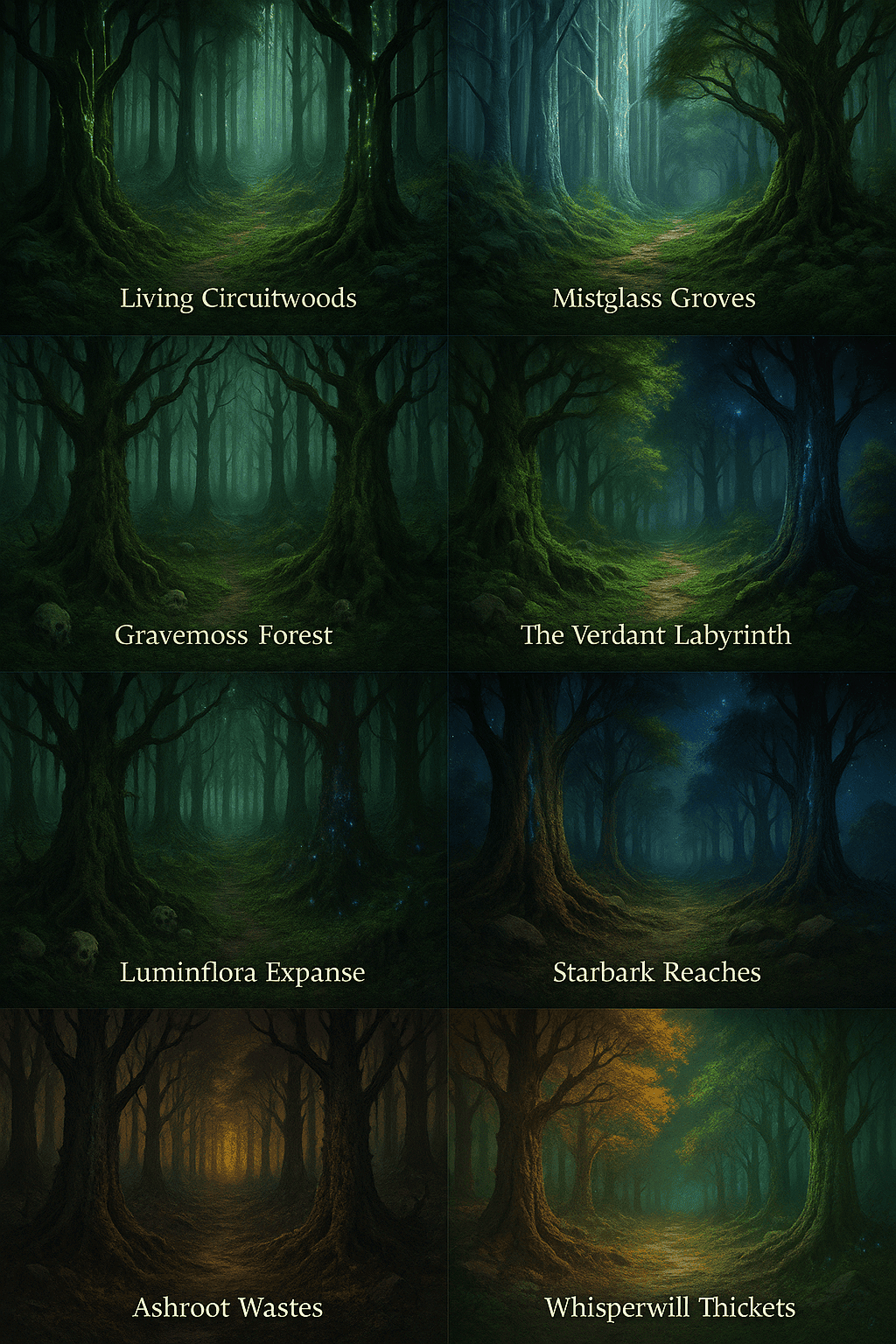
1. The Living Circuitwoods

Overview

These forests combine organic plant life with technological integration. Trees have bark laced with glowing circuits, and leaves pulse with data transmissions. Some trees can communicate with each other using bio-electric signals like an organic internet.

Use in Worldbuilding:

  • Druids may “upload” spells into the forest’s memory.
  • Ancient AI deities may slumber beneath the roots.
  • Data for maps, prophecies, or spells could be found encoded in the tree rings.

2. Mistglass Groves

Overview:

A forest made of semi-transparent crystal trees that hum in the wind. The mist is infused with magical particles that alter memory, emotion, or even reality. Navigation is disorienting as the environment changes with perception.

Use in Worldbuilding:

  • Used as sacred pilgrimage sites.
  • Home to seers or reality-bending mages.
  • Forest “blooms” may reveal past or future visions.

3. The Verdant Labyrinth

Overview:

A forest that is alive and sentient. It reconfigures its layout to protect its secrets—or trap intruders. No two paths through are ever the same. Legends tell of entire civilizations lost within.

Use in Worldbuilding:

  • Houses ancient magical creatures or exiled gods.
  • May serve as a test for heroes on a sacred quest.
  • Could be a punishment for war criminals sent to wander it eternally.

4. Gravemoss Forest

Overview:

  • A cursed or post-apocalyptic forest that feeds on death. The trees sprout from the remains of fallen titans, and the moss glows with necromantic energy.
  • Vines move like tendrils, pulling bones back into the soil.

Use in Worldbuilding:

  • Ideal place to gather death-based magic.
  • Home to necromancer cults or death druids.
  • Ghostly wildlife might appear and vanish.

5. Luminflora Expanse

Overview:

A bioluminescent rainforest with plants that glow in various colors depending on the magic saturating the soil. Some plants can sing, others cause hallucinations or heal wounds.

Use in Worldbuilding:

  • Source of rare magical ingredients.
  • Often protected by native species who believe it sacred.
  • Constantly shifting colors serve as warnings or omens.

6. Starbark Reaches

Overview:

Set on an asteroid or spacefaring worldship, these forests grow under artificial gravity domes. Trees are bioengineered with bark that absorbs starlight, while leaves glow with photosynthetic energy.

Use in Worldbuilding:

  • Used for oxygen and food on space stations.
  • Forest spirits might be fused with AI cores.
  • Cultures might worship the trees as guardians of life between the stars.

7. Ashroot Wastes

Overview:

A dying forest choked by volcanic eruptions or magical wildfire. Blackened trees still stand, but their roots have developed arcane adaptations to survive underground. Some trees move slowly through the ash.

Use in Worldbuilding:

  • Source of fire and shadow magic.
  • Dwellers may ride fire beetles or hunt magma serpents.
  • Used as symbolic settings for rebirth or revenge arcs.

8. Chronogroves

Overview:

Forests where time does not behave normally. A single day may pass outside while centuries drift inside. Trees grow in reverse, seasons collapse in on themselves, and relics from all eras can be found scattered on the forest floor.

Use in Worldbuilding:

  • Travelers might age or de-age.
  • Beings trapped in time may appear in your story.
  • Cultures may use this forest to escape or hide history.

9. Whisperwill Thickets

Overview:

A gentle, dreamlike forest filled with telepathic flora. The trees and flowers project emotions or thoughts into nearby minds. Some plants can “sing” to people’s subconscious, influencing behavior or offering comfort.

Use in Worldbuilding:

  • Site of deep meditation or magical training.
  • Dangerous if the forest is corrupted and implants nightmares.
  • Priesthoods may use it to hear divine whispers.

Final Thoughts

Forests in a science fantasy setting can be far more than backdrops—they can shape culture, magic, religion, and even technology. Consider what role your forest plays: is it a barrier? A sanctuary? A forgotten memory?
By blending the wild organic beauty of nature with mystical and technological possibilities, you’ll craft unforgettable places that breathe life into your world.

Support Me on Patreon

Designing Unique Bodies of Water in Science Fantasy Worlds

Rethinking Rivers, Oceans, and Aquatic Mysticism Beyond Earthly Logic

In a world where science and magic intertwine, bodies of water don’t just quench thirst or serve as travel routes—they pulse with ancient intelligence, carry dimensional echoes, or respond to arcane frequencies. Whether you’re building planets with liquid methane lakes or rivers that rewrite history, crafting aquatic systems in your world can unlock rich symbolism, culture, and drama.

This post dives into inspired and original types of water bodies for science fantasy settings and how to use them meaningfully in your story.

🌊 Classic Oceans with a Twist

1. The Endless Deep

  • A sentient ocean that forgets and remembers you depending on the tide.
  • Its tides are pulled by twin moons—one physical, one spectral.
  • Sailors whisper prayers into bottles; the ocean answers weeks later.
  • Creatures evolve from thoughts lost at sea.

Narrative Hooks:

  • A civilization that treats the ocean as a god—or a demon.
  • Naval expeditions aimed at reaching the fabled “Center Memory Reef.”

2. Etheric Oceans

  • Oceans made not of water, but liquid magic.
  • Shimmering tides emit energy that boosts or scrambles spellcasting.
  • Ships must be partially alive to survive its arcane surges.
  • Water changes color depending on the emotional state of its nearest civilization.

Uses in Storytelling:

  • Port cities built on rituals as much as docks.
  • Coral libraries that “record” ambient magical history in the Ethersea.

🪷 Invented Bodies of Water

3. Lacuna Pools

  • Still, mirror-like pools found in craters where time behaves strangely.
  • Gazing into them shows your past lives or potential futures.
  • Dropping items in may either erase them from history or teleport them elsewhere.
  • Worshiped by seers and outlawed by empirical societies.

4. The Meltflow Network

  • Underground rivers of radiant, molten material—part magma, part life force.
  • Used to power cities above with geothermal-spell converters.
  • Accessible only to tunneling creatures or via soul anchors.
  • Exposure causes vivid dreams—or permanent hallucinations.

Narrative Potential:

  • A city’s reliance on the Meltflow drives political unrest as its temperature rises.
  • Creatures who can “swim” through both lava and consciousness.

5. Rivers of Echo

  • Flowing streams that “remember” sound and replay moments of great importance.
  • Whispered words become audible again during certain moon phases.
  • Entire battles, confessions, or proposals echo through the water centuries later.
  • Rogue mages use it to trace secret histories.

🧊 Exotic Lakes and Seas

6. Glacial Seas of Thought

  • Massive frozen oceans on an ancient moon where thoughts freeze into sculptures.
  • Walkers on the ice hear the frozen screams and songs of ancient civilizations.
  • Magic users can chisel memories into the ice and cast them as spells.
  • Civilizations trade frozen emotions as currency.

7. The Sinking Sea

  • A dense, bottomless body of dark liquid that pulls even air and light inward.
  • No known bottom—used as a dumping ground for cursed or unstable tech.
  • Myths say the sea is a tear from a dead god’s eye.
  • Creatures that live here can only be described in dreams.

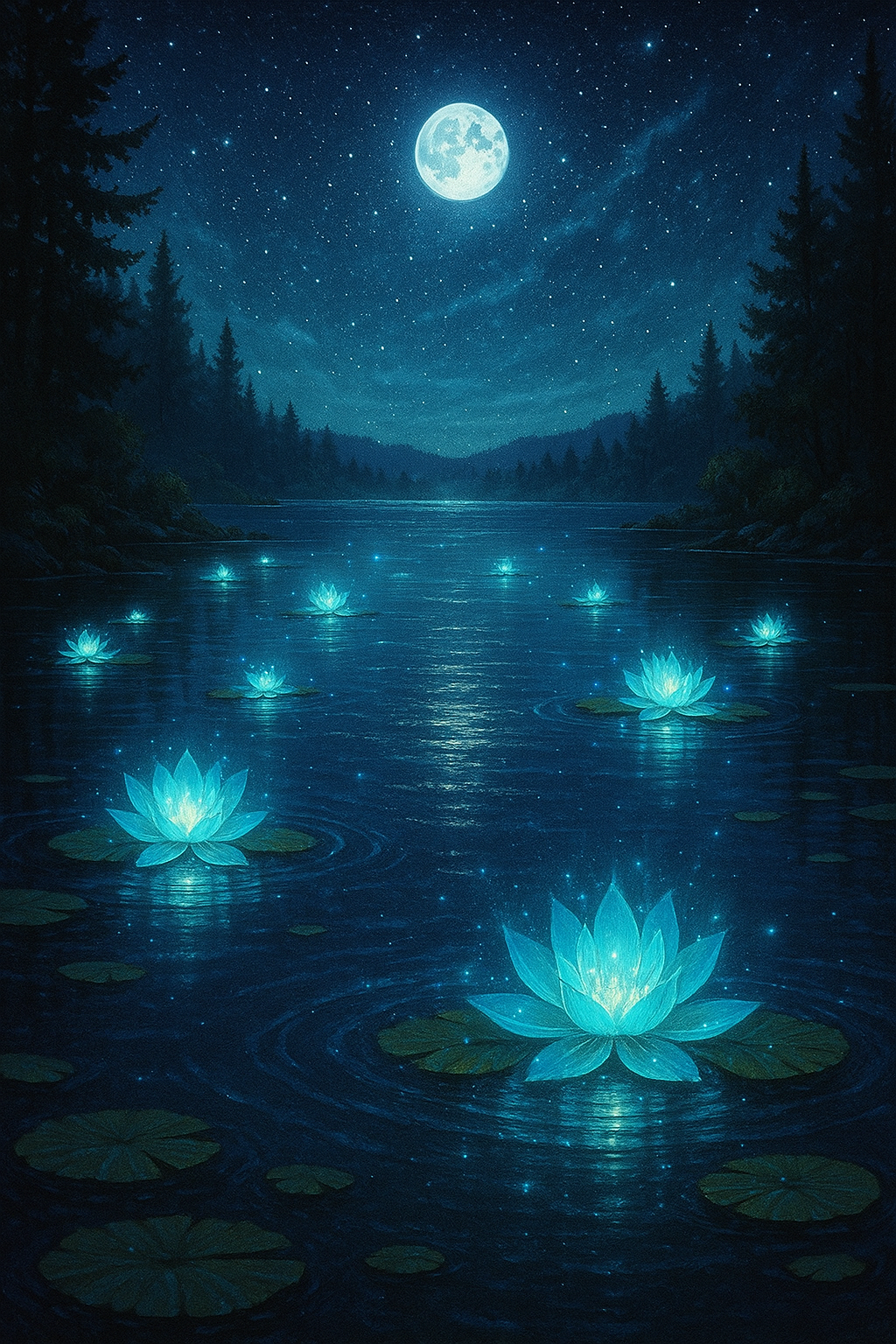
8. The Blooming Bay

  • A shallow, luminous bay where aquatic plants bloom into the air, forming floating gardens.
  • Used as a neutral diplomatic zone by warring nations.
  • The plants produce spores that enhance psionic abilities.
  • Local fauna feed on psychic residue and mimic thoughts.

🌌 Cosmic and Interdimensional Waters

9. Star Tides

  • Rivers of water flowing through space between moons or ships.
  • Carried by gravity wells and magical conduits.
  • Traveled by creatures that breathe vacuum and vapor.
  • Often mined for their pure aether content.

10. The Veil Lakes

  • Interdimensional “pools” that exist simultaneously on several planes.
  • Stepping into one takes you to an identical lake… but on another planet or timeline.
  • Used by smugglers, sages, and invading armies.
  • Veil-lakes shift location without warning—mapping them is a lost art.

🛶 Cultural Roles of Water

Even if your water isn’t magical, how people interact with it can be world-defining.

  • Sacred Rivers: Used for memory cleansing or as part of coming-of-age rituals.
  • Forbidden Seas: Rumored to house weaponized weather or exiled gods.
  • Floating Cities: Built on AI-maintained archipelagos or atop dreaming sea creatures.

📝 Tips for Inventing Aquatic Features

Anchor one law of physics or magic, then twist it: e.g., water that flows upward, evaporates into memory mist, etc.
G

ive each body of water cultural significance—how does it affect trade, belief, and diplomacy?
T

ie fauna and flora into the water—bioluminescent jellyfish with prophetic patterns? Carnivorous lotus? Herds of semi-intelligent plankton?

🎇 Final Thought

In science fantasy, water is never just H₂O. It’s a mirror, a memory, a weapon, a gateway. Let oceans be stained with starlight, rivers hum with haunted voices, and lakes reflect dimensions as yet unborn. The more alive your water feels, the more immersive your world becomes.

Support Me On Patreon

About my Short Stories

Hi all. If you haven’t, submit your E-mail address for my free short stories on the side link.

Here is what inspired me to write the short stories for Tales of Zalonia. I have a lot to say about “Black-Eyed Kid” and a little to say about “The Golden Light.”

Black-Eyed Children – What Are They, Really?

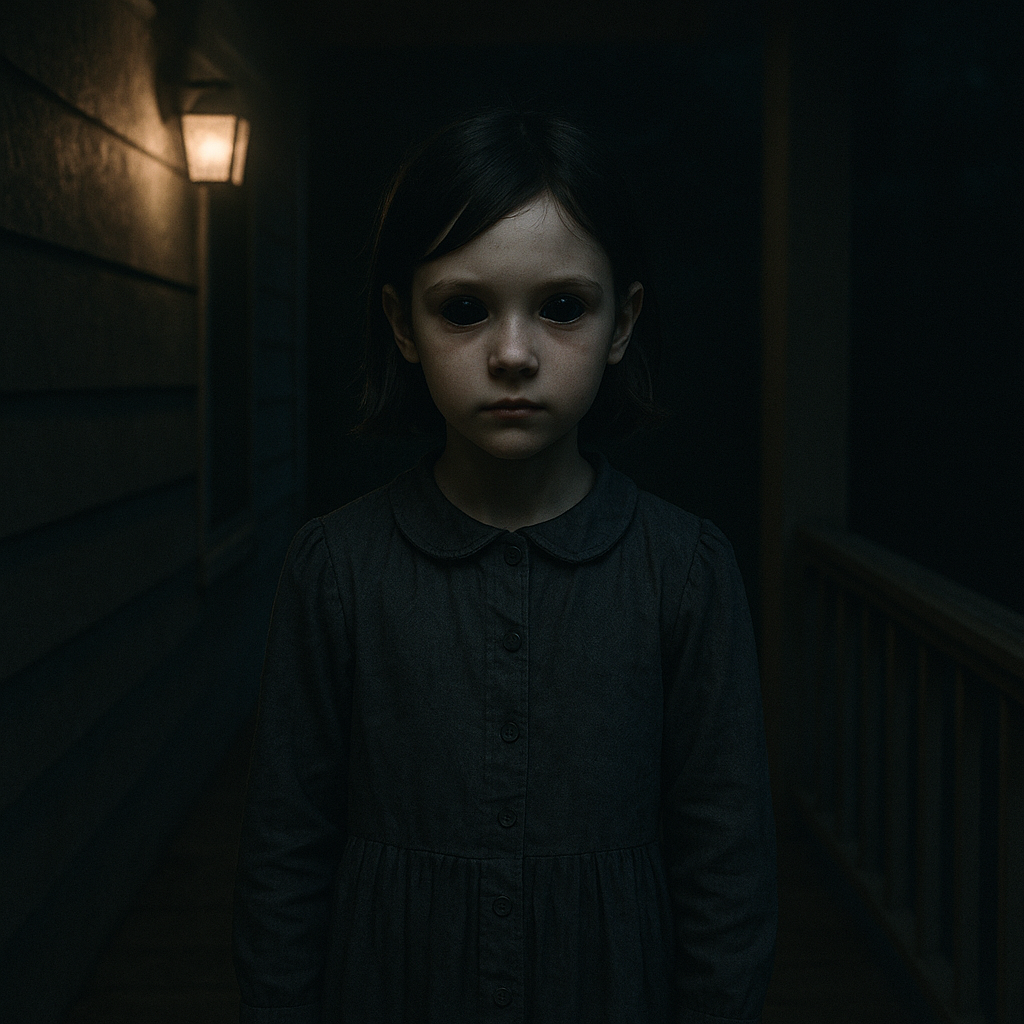
While my story is fictional, reports of encounters with so-called “black-eyed kids” or “black-eyed children” have surfaced for decades. These mysterious figures are usually described as pale-skinned children or teenagers—typically sixteen or younger—with completely black eyes.

The first widely publicized account came from Texas journalist Brian Bethel in 1996, who wrote about his own chilling experience. After his story spread, others began sharing similar encounters, some claiming their experiences dated back to the 1970s.

Typical Characteristics of Black-Eyed Children

Most reports share striking similarities. Witnesses describe the children as:

  • Pale and emotionless
  • Often appearing at night
  • Wearing outdated clothing
  • Causing pets to act fearful or aggressive

They are said to knock on doors or car windows, asking to come inside—usually claiming they need to call their parents or want a ride home. Encounters usually involve one or two children, though some accounts mention up to three.

A key detail in many stories is that black-eyed children cannot enter a home or car without permission. They often emphasize this themselves—an eerie parallel to vampire lore, where the undead cannot cross a threshold uninvited. It’s curious that these beings can approach a porch or car but seem barred from crossing without explicit consent.

The Fear Factor

People who encounter black-eyed children often describe a sudden, overwhelming sense of fear—a primal, almost paralyzing terror. Whether that fear is a natural reaction or something these entities induce remains uncertain.

Witnesses frequently say they felt frozen, unable to move or look away, caught in that instinctive “freeze” response—a survival mechanism that kicks in when fight or flight seem impossible.

Interestingly, BEKs (as they’re often abbreviated) rarely display overt violence. Still, many witnesses warn that ignoring them is best, as those who invited them in supposedly suffered misfortune afterward—illness, bad luck, even death of pets.

Urban Legend or Something More?

Skeptics argue that black-eyed children are nothing more than an urban legend. All known reports came after Bethel’s 1996 story, raising an obvious question:
If these beings existed earlier, why weren’t they reported before?

Some suggest people feared ridicule until Bethel’s account made the subject more public. Others believe cultural suggestion plays a role—once a story enters popular consciousness, it shapes how people interpret unusual experiences.

Like seeing shadows after watching a horror movie, our brains can turn an ordinary moment into something frightening.

Unexplainable Phenomena

In some accounts, only the witness can see the children; neighbors or bystanders nearby claim to see nothing. They often leave no footprints in snow or mud and sometimes vanish suddenly. Reports of flickering lights or electrical outages often accompany these visits. In rare stories, BEKs ask for strange items—like fruit—which are later found discarded in odd places.

Possible Explanations and Theories

So, what could these children be—if the reports are genuine? Several theories have been proposed.

👽 Extraterrestrial Hybrids

Some believe BEKs are alien-human hybrids, which could explain their strange behavior and dark eyes. But this theory raises questions:
If extraterrestrials can abduct humans at will, why would hybrids need permission to enter a home? The inconsistency makes the alien explanation shaky.

🕴️ Connection to the Men in Black

Others suggest a link to the Men in Black (MIB)—mysterious figures said to intimidate UFO witnesses.
In one report, witnesses claimed to see black-eyed children leaving with two tall men in dark suits. While not confirmed, the similarity in description has fueled speculation.

🧛 Vampiric or Energy Entities

The “invitation rule” draws comparisons to vampires, though BEKs lack other vampiric traits. Some describe them more like energy vampires—draining emotional energy and leaving behind intense fear or exhaustion.

😈 Demonic Offspring

Another theory holds that BEKs are demonic beings or the offspring of demons. Throughout history, demons have taken many forms. Could black-eyed children be a modern manifestation of that same evil?

📜 Biblical or Mythological Origins

In Genesis 6, the “Sons of God” mate with human women—interpreted by some as fallen angels. The apocryphal Book of Enoch expands on this story.
If one takes these texts literally, BEKs could be descendants of these fallen beings—echoes of ancient hybrid lore.

🪶 Iroquois Legend of Otkon

The Iroquois tell of Otkon, an evil spirit that could mate with human women, producing black-eyed offspring. These children were said to spread chaos within the tribe, and were often killed to stop the curse.
Some versions claim Otkon could possess wandering children who returned with black eyes—spreading misfortune wherever they went.

Harbingers of Misfortune

Many believe black-eyed children are omens of bad luck. People who’ve let them in often report illness, the deaths of pets, or a string of tragedies soon after. Yet BEKs never seem to harm anyone directly—almost as if they carry misfortune with them rather than cause it.

Could they be some kind of curse? A warning? Or simply coincidences interpreted through fear? No one knows.

Similar Beings Around the World

Interestingly, similar entities exist in other cultures.
In India, for instance, there’s the Acheri—a spirit with dark eyes who preys on the elderly and children.
However, Acheris are usually described as female and sickly, while BEKs appear as both genders and often target adults.
You can read more about Acheris here.

Could They Just Be Pranksters?

Could black-eyed kids be teenagers in costume using black scleral contacts to scare people?
Possibly—but that doesn’t explain the intense fear witnesses describe, the vanishing acts, or the electrical disturbances.

It also seems unlikely that pranksters would risk getting shot or arrested for trespassing.

Psychological Explanations

Perhaps the simplest explanation is misinterpretation.
After reading countless stories online, people may subconsciously expect to see something strange. In low light, our pupils expand, and faces can look pale and unnatural—especially during stressful moments.

Combine darkness, fear, and imagination, and it’s easy to see how a normal encounter could transform into something terrifying.

Final Thoughts

Whether black-eyed children are paranormal entities, mass delusion, or simply urban folklore, their stories continue to spread—and to fascinate.

Maybe they’re the 21st century’s update to old vampire tales, or maybe they’re something entirely new.

Either way, the next time you hear a knock on your door at night, and soft voices ask to be “let in”…

you might think twice before answering.

Books

Black Eyed Children by David Weatherly – Affiliate Link

The Golden Light

The story about the golden light originated when I offered to write a short story to share while I was in rehab for alcohol abuse. The white light was a representation of addiction and how it can draw people in at the expense of others. Unfortunately I got sick in rehab and had to go to the hospital before I was able to use it during our short story time. However, the story also has a connection with Marcamples in my book, “Marcamples’ Daughter” the third book in the elements pentalogy.

Support Me on Patreon and get to read all my fictional books plus other bonus material

Designing Deserts in Science Fantasy: Beyond Sand and Sun

Deserts often conjure up images of endless dunes and blistering heat, but in a science fantasy setting, deserts can be far more diverse, dangerous, and magical. From crystal wastelands scorched by twin suns to freezing plains haunted by sand spirits, deserts offer compelling environments rich with storytelling potential.

In this guide, we’ll explore a variety of desert types you can include in your world—each infused with unique science fantasy elements.

🌵 1. The Classic Arid Dune Sea

Inspiration: Sahara, Arabian Desert, Dune

This is the iconic desert—seas of sand dunes, scorching temperatures, and rare water sources.

Science Fantasy Twist:

  • Giant, subterranean beasts that surf the sands, creating waves.
  • Magical sand that retains memories—whispering when disturbed.
  • Desert storms charged with plasma from magical atmospheric shifts.

Uses in Storytelling:

  • Home to wandering mystics or hidden rebel tribes.
  • Ancient temples buried beneath shifting sands.
  • Rituals that involve walking a “memory trail” left by past pilgrims.

❄️ 2. The Cold Desert

Inspiration: Gobi Desert, polar regions of Mars

Not all deserts are hot. Cold deserts are defined by dryness, not temperature.

Science Fantasy Twist:

  • Snow made of crystalline mana, fragile and volatile under certain spells.
  • Ghost winds that carry echoes from other planets.
  • Underground steam geysers used as sacred spots by native frostcasters.

Uses in Storytelling:

  • Home to ancient tech buried in frozen time vaults.
  • Ruled by reclusive frost witches or cryomancers.
  • Dangerous terrain where temperature drops trigger memory loss.

🪨 3. The Rocky or Badlands Desert

Inspiration: Utah’s Canyonlands, Atacama Desert

Characterized by jagged rock formations, deep canyons, and dry mesas.

Science Fantasy Twist:

  • Floating rock islands bound by gravitational rifts.
  • Ruins etched with runes that pulse under moonlight.
  • Metallic dust storms that scramble electronics and enchantments alike.

Uses in Storytelling:

  • Hiding place for rogue mage-scientists.
  • Home to bandit factions who tame rock dragons.
  • Sacred site of cosmic alignment once every thousand years.

🌋 4. The Volcanic Ash Desert

Inspiration: Iceland’s lava fields, volcanic calderas

These are dark, toxic, and barren plains formed by lava flows and volcanic debris.

Science Fantasy Twist:

  • Ash that mutates creatures or grants prophetic visions.
  • Rivers of slow-moving magma with strange gravitational pull.
  • Fire spirits that haunt old craters, bargaining with souls.

Uses in Storytelling:

  • Source of rare “pyrocrystal” used in advanced tech or fire spells.
  • Military no-man’s-land between two warring empires.
  • The last surviving habitat of a race adapted to heat and shadow.

💎 5. The Crystal Desert

Inspiration: Sci-fi imagination, geode caves, salt flats

Instead of sand, imagine vast stretches of shimmering crystalline formations.

Science Fantasy Twist:

  • Singing crystals that emit harmonic energy—used for navigation or communication.
  • Entire cities grown from crystalline organisms.
  • Crystals that record history like memory banks, read only by attuned minds.

Uses in Storytelling:

  • Pilgrimage sites for magic users seeking clarity.
  • High-value trade zones fiercely contested by merchant guilds.
  • An ancient AI imprisoned inside a crystal network.

🧪 6. The Bio-Mutagenic Desert

Inspiration: Alien worlds, post-apocalyptic wastelands

These are deserts that corrupt or evolve everything that enters.

Science Fantasy Twist:

  • The terrain is alive, shifting like a labyrinth to trap intruders.
  • Fungal spires release spores that rewrite DNA or spellcode.
  • Mutated fauna that exist between biology and sorcery.

Uses in Storytelling:

  • Former testing grounds of an extinct civilization.
  • Home to outcasts who’ve adapted to the mutations.
  • Forbidden zone where the boundary between dimensions is weakest.

🌀 7. The Temporal Desert

Inspiration: Time loops, metaphysical space

This is a conceptual or magical desert where time flows unpredictably.

Science Fantasy Twist:

  • Footprints appear before they’re made.
  • Speaking too loudly rewinds the past.
  • Oases that age you backward, causing regression or reincarnation.

Uses in Storytelling:

  • A test for heroes seeking lost knowledge.
  • Ground zero for a time fracture caused by an ancient war.
  • Domain of timeless beings who guide or deceive travelers.

🪐 8. The Stellar or Cosmic Desert

Inspiration: Deep space, astral planes

Deserts don’t have to be on planets. Cosmic deserts are vast, empty stretches of space devoid of life or light.

Science Fantasy Twist:

  • Ships navigate using constellations that only exist in dreamspace.
  • Magical energy tides that sweep across systems like stellar sandstorms.
  • Forgotten space stations adrift in voids where magic is strongest.

Uses in Storytelling:

  • Region where lost worlds were consumed by ancient celestial entities.
  • Final trial for soul-ascension or arcane enlightenment.
  • Battlegrounds of ancient cosmic wars now preserved in stasis.

🔮 Tips for Writing Desert Settings

Use contrast: Deserts are often empty—but that makes encounters, relics, and ruins stand out.

Build lore into the land: Let every grain of sand hold history, whether magical or scientific.

Don’t forget desert cultures: Nomads, mystics, merchants, and monsters—create societies adapted to these landscapes.

🧭 Bonus: Desert-Based Story Hooks

A desert that changes shape every night—guided by an imprisoned elemental god.

A cold desert where the stars speak directly to dreamers.

An order of desert monks who harness solar flares to charge spell-tech.

📝 Final Thoughts

Science fantasy deserts are more than just settings—they’re arenas of mystery, transformation, and survival. Whether your desert burns, freezes, sings, or thinks, make it an active presence in your story, influencing characters, cultures, and quests alike.

Support Me On Patreon

Balancing High-Tech and Low-Tech Cultures in Your World

A guide to creating societies that vary in technological advancement and magical reliance.

In science fantasy worldbuilding, few things are more fascinating than the collision of worlds: spacefaring civilizations wielding advanced AI-powered technology alongside mystic clans who divine truth through runes and spirit walks. The tension between high-tech and low-tech cultures can create dynamic storytelling, rich conflict, and layered world development—but it requires careful balance.

In this guide, we’ll explore how to design technologically varied cultures that coexist (or clash) within your universe.

⚙️ 1. Define the Axes of Advancement: Technology vs. Magic

Start by imagining two major axes that define the civilizations in your world:
Technological Advancement: From stone tools to quantum computing

Magical Reliance: From completely non-magical to fully mystic-dependent

Not every high-tech society needs to dismiss magic—and not every tribal group needs to be ignorant of it. In fact, some of the most interesting cultures exist in the overlap, like:

  • A tribal caste that binds spirits into energy weapons
  • A planetary empire with hyperdrives fueled by ley-line energy
  • A monastic society that controls nanotech through ceremonial chants

This allows for a spectrum of development that keeps things nuanced and compelling.

🧭 2. Geographic and Cosmic Distribution

Just like on Earth, the level of technological or magical advancement in a society may be influenced by:

Geography: Isolated societies may rely more on spiritual knowledge and oral traditions, while trade-hub cities develop tools, machines, or weaponry.

Cosmic Conditions: Some planets may block magical fields, while others are steeped in arcane energies that fry electronics.

Historical Events: Was there a techno-magical war that caused some civilizations to retreat to simpler ways of life?

Think about resource availability, climate, and interplanetary relations to explain disparities.

🧙‍♂️ 3. Cultural Identity Through Tech or Magic
Societies often define themselves through their dominant toolset:

Culture Type: High-Tech Rationalists
Description: Distrust magic; value logic, science, computation
Example: A planetary government run by a central AI council

Culture Type: Mystical Guardians
Description: Protect ancient magical sites; reject machines
Example: A forest realm ruled by druids who manipulate time

Culture Type: Hybrid Cultures
Description: Blend ancient rites with future-tech                                          Example: A desert tribe that channels sand spirits through nano-glass tablets

Culture Type: Post-Apocalyptic Mystics
Description: Use scavenged tech as relics in sacred rituals
Example: Wasteland nomads who “worship” a satellite array as a divine voice

Culture isn’t just about tools—it’s about beliefs, values, and fears. Use these as your foundation.

⚔️ 4. Sources of Tension and Cooperation

Creating conflict (or uneasy alliances) between different levels of development adds drama:

Possible Conflicts:

High-tech invaders seek to “uplift” low-tech societies, causing spiritual and ethical unrest

Low-tech zealots see machines as corrupting forces and sabotage them
A magical caste controls information flow to keep others in check, resisting “progress”

Possible Collaborations:

A technomage who studies both runes and circuitry

A low-tech society that possesses a forgotten superweapon, requiring outsiders to seek their guidance

Shared enemies that force alliances between clashing worldviews

This tension allows you to explore themes of colonialism, spiritual preservation, innovation, and mutual misunderstanding.

🧩 5. Communication and Misinterpretation

Different levels of advancement mean different ways of speaking, thinking, and perceiving the world:

  • A shaman may interpret starship exhaust as divine smoke
  • A scientist may dismiss an enchantment as “localized anomaly”
  • A translator may mistranslate a simple greeting into a declaration of war

You can use these gaps in understanding to create rich scenes full of dramatic irony, confusion, and unexpected bonding.

🪐 6. Story Hooks and Worldbuilding Opportunities

Here are some ideas to spark inspiration:

The Code That Casts Spells: A civilization discovers that programming language accidentally taps into magical currents.

The Last Spellsmith: A lost low-tech people hold the only key to reawakening a starmap long thought dead.

Ascension Divide: An empire of high-tech immortals outlaws magic, driving sorcerers into rebellion.

Magical Conduits: A low-tech society lives on a ley-line hub that powers faster-than-light ships, giving them political leverage.

🛠️ 7. Tips for Balancing Believability

Give both sides strengths and flaws: Don’t make high-tech = superior and low-tech = primitive. Each should shine in its own way.

Avoid stereotypes: Tribal doesn’t mean ignorant. Scientific doesn’t mean soulless.

Design trade networks: Let these societies need each other—maybe one offers alchemical ingredients while the other provides medical bots.

Let characters bridge the gap: Introduce people who straddle both worlds—a hacker who became a druid, a golem-tamer who joins a space crew, etc.

Support Me On Patreon

Buy “Creating Life” – Affiliate Link

Return to Home