
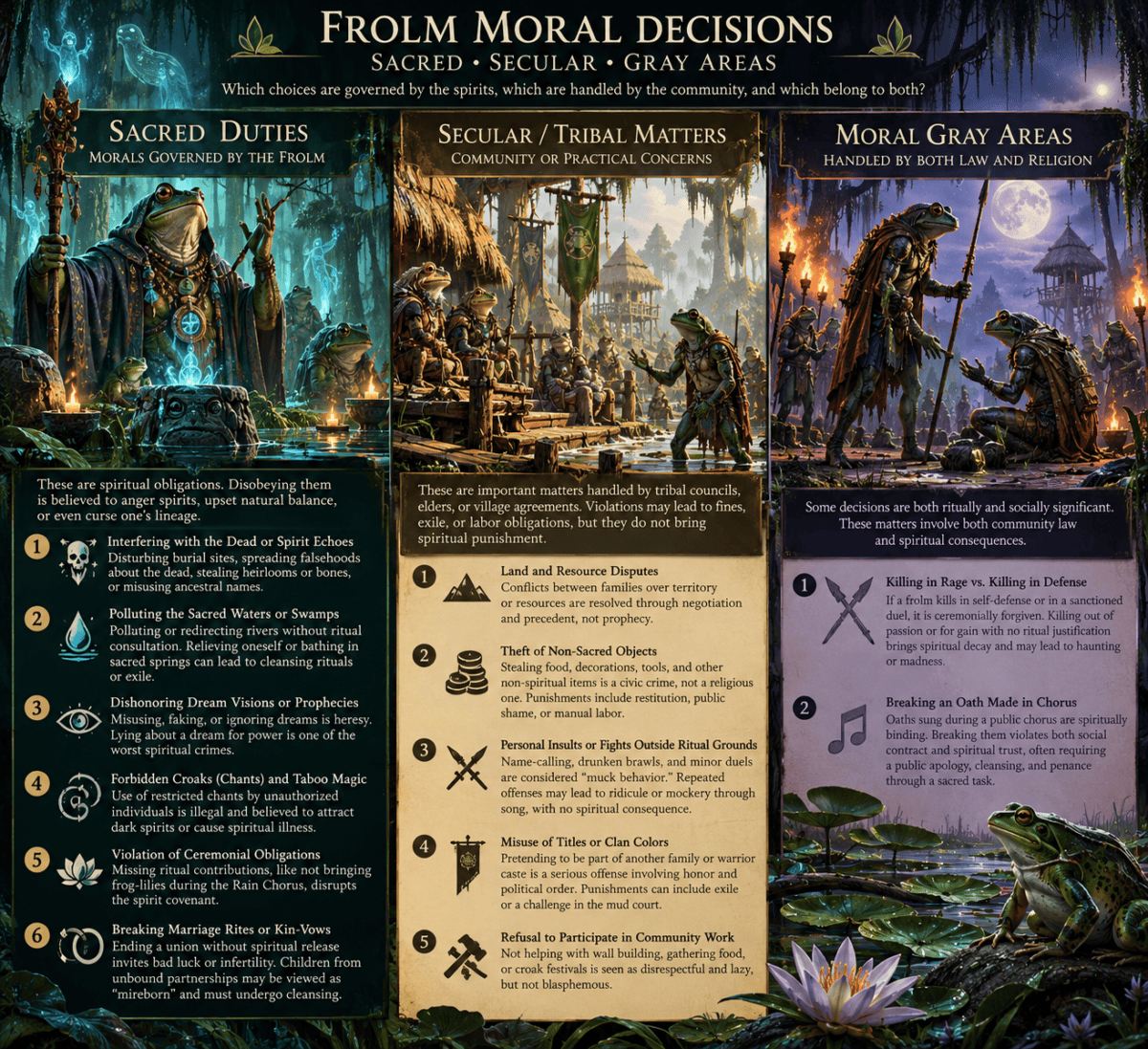
Here’s a look at which ethical or moral decisions the frolm would consider sacred and which are secular (civic or tribal), along with the cultural reasons behind those divides
Sacred Duties (Morals Governed by the Frolm
These are spiritual obligations rather than just a simple set of rules. Disobeying them isn’t just unethical. It is believed that breaking them can anger spirits, upset natural balance, or even curse one’s lineage.
1. Interfering with the Dead or Spirit Echoes
This is sacred because the dead are seen to still have an influence on the world through “spiritwater,” which is a metaphysical current of memory. A few examples would be disturbing burial sites, spreading falsehoods about the dead, stealing heirlooms or bones, or the misuse of ancestral names.
2. Polluting the Sacred Waters or Swamps
According to frolm belief, water is a spiritual conduit. Both polluting and redirecting rivers without consultation through ritual are seen as an offense to the land’s soul. Relieving oneself or bathing in the sacred springs may result in a public cleansing ritual or even exile.
3. Dishonoring Such Things as Dream Visions or Prophecies
In frolm culture, dreams are viewed as communications from the marsh spirits or ancestors. Misusing, faking, or ignoring them is heresy. One of the worst spiritual crimes among the frolm is to lie about a dream for the sake of power.
4. Forbidden Croaks (Chants) and Taboo Magic
There are songs or chants (called “Croaks of Binding” or “Croaks of Drowning”) that are only to be used for high shamans or specific times. When someone uses these without authorization, not only is what they have done illegal, but it is thought to attract dark spirits or cause spiritual illness.
5. Violation of Ceremonial Obligations and Ritual Offerings
Missing ritual contributions (like not bringing frog-lilies during the Rain Chorus) isn’t only rude, but it disrupts the spirit covenant. Shamans and Elders may interpret sickness or crop failure as a punishment for these things.
6. Breaking Marriage Rites or Kin-Vows Without Spiritual Release
When it comes to frolm relationships, they are often spirit-bound through water or song rituals. Ending a union without “unbinding” can invite bad luck of infertility.
7. Breaking Kin-Vows or Marriage Rites Without Spiritual Release(h3)
Frolm relationships are often spirit-bound through song or water rituals. Ending a union without “unbinding” invites bad luck or infertility. Children who were born from unbound partnerships may be viewed as “mireborn” and must go through a cleansing process.
Moral Decisions that are Considered Secular or Tribal (Community or Practical Matters.
These are usually seen as important but not necessarily sacred. The tribal councils, elder gatherings, or village agreements usually handle them. If someone violated them, it may cause fines, exile, or labor obligations, but there aren’t spiritual punishment for these things.
1. When There is Land and Resource Disputes Between Familys
While the land is highly respected, there may be disputes over territory or resource sharing which are handled through negotiations and not religion.
Elders can invoke precedent, but they can’t invoke prophecy to help resolve these disputes.
2. Theft of Non-Sacred Objects
Things like stealing food, decorations, tools and so on is considered a civic crime, not a religious crime—with the exception of the item is a relic or spiritually bound.
Punishments for this include restitution, public shame, or manual labor.
3. Personal Insults or Fights Outside Ritual Grounds(H3)
Such things as name-calling, drunken brawls, and minor duels are viewed as “muck behavior,” rather than spiritual offenses.
Those who repeatedly offend this law might be ridiculed or mocked through song, and there is rarely a spiritual consequence.
4. Misuse of Titles or Clan Colors(H3)
While it isn’t considered spiritually wrong, pretending to be a member of another family or warrior caste besides your own is a serious offense since it is about honor and political order.
This could lead to exile or being challenged in the “mud court” which is a form of public confrontation.
5. Refusal to Participate in Community Work(H3)
When it comes to not helping with wall building, gathering food, or croak festivals, it may be considered disrespectful and lazy, but it isn’t blasphemous.
Moral Gray Areas (Handled by Both Law and Religion)
There are some decisions that are culturally blend and are considered both ritually and socially significant.
1. Killing in Rage vs. Killing in Defense
If one frolm kills another in self-defense or when a duel is sanctioned, it is ceremonially forgiven.
However, killing out of passion or for gain with no ritual justification, will bring spiritual decay and may even lead to haunting or madness.
2. Breaking an Oath Made in Chorus (h3)
Oaths that are sung during a public chorus are considered spiritually binding. If one breaks them, they violate both social contract and spiritual trust.
This often requires a public apology, cleansing, and penance through something such as a sacred task.




One thought on “Frolm Moral Decisions”